Introduction
Many young children recognize letters and try to write their names long before their fine motor control and hand muscles are fully developed to support legible handwriting. According to Reading Rockets, early writing development relies heavily on building foundational motor memory and visual-motor integration before formal penmanship is expected. Bridging that crucial developmental gap requires targeted practice that respects physical readiness while offering engaging visual guides. The free printable lowercase curves and straight line tracing resource provides exactly this type of supportive practice. By combining fundamental geometric strokes with early letter forms, children bridge the divide between unstructured scribbling and controlled, purposeful writing.
💡 Educational Key Takeaways:
- Core Skill: Structured Lowercase Curves And Straight Line Tracing focused on developing pencil grip, stroke control, and early literacy/math confidence.
- Target Scope: Suited for homeschoolers, preschool, kindergarten, and elementary learners.
- Best Recommendation: Practice 10–15 minutes daily with ergonomic writing tools to reinforce muscle memory without hand fatigue.
What This Worksheet Covers
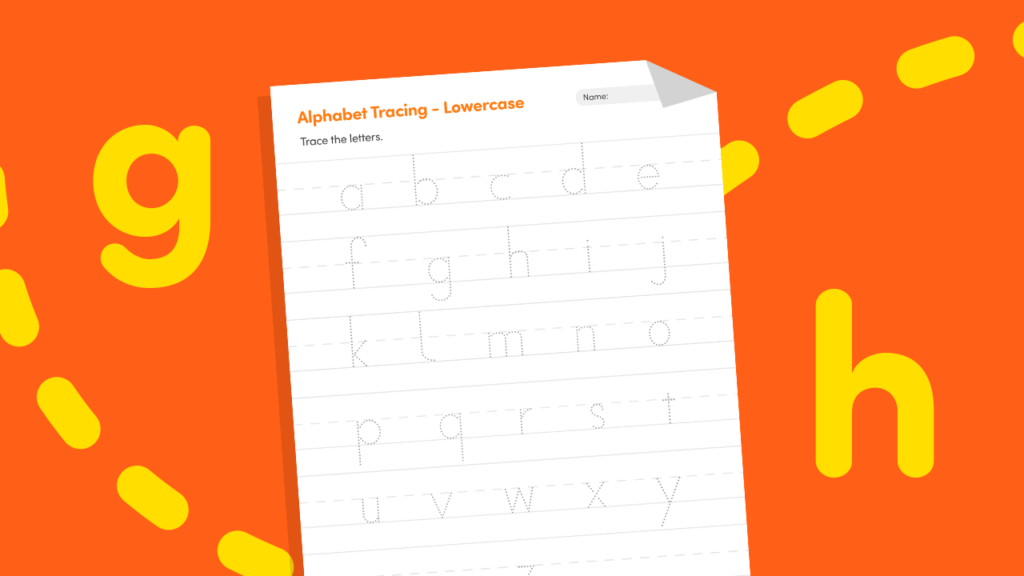
Mastering lowercase letters requires an understanding of how individual strokes fit together to form recognizable symbols. This specific resource breaks down complex letter shapes into manageable components, focusing specifically on the foundational curves and vertical or horizontal lines that make up the lowercase alphabet. Rather than demanding immediate mastery of entire words, the layout isolates directional movements, giving learners ample space to build muscle memory for strokes found in letters like c, o, l, t, and s. It sounds simple, and that is the exact point of the design. Simplifying the visual field allows developing brains and hands to concentrate purely on pencil control and spatial awareness without cognitive overload.
Key Learning Outcomes
Working through these targeted tracing sheets fosters several vital developmental milestones simultaneously. First, children refine their visual-motor integration, which is the brain’s ability to coordinate visual input with precise hand movements. Second, the repetitive motion strengthens intrinsic hand muscles, preparing fingers to sustain a functional grasp during longer writing tasks. Third, learners internalize correct stroke directionality, establishing the essential habit of starting letters at the top and moving downward or counter-clockwise. Finally, children build confidence through low-stakes repetition, transforming frustrating physical hurdles into satisfying mechanical successes that pave the way for broader Fine Motor and Pre-Writing Skills development.
How to Use This Worksheet
Successful implementation relies heavily on creating a low-pressure environment where effort matters more than absolute perfection. Begin by presenting the sheet on a flat, stable surface with appropriate seating that allows the child’s feet to rest flat on the floor for postural stability. Encourage the child to trace the lines using a variety of mediums, such as short crayons or broken chalk, which naturally encourages a functional tripod grasp by limiting the space available for a whole-hand fist grip. Observe closely to see where the hand hesitates, and gently guide the wrist or paper angle to maintain smooth, continuous motion throughout each curved or straight path.
Practical Tips for Parents and Teachers
Scaffolding the experience makes all the difference for children who tire easily or show early signs of hand fatigue. Start by demonstrating the stroke in the air or on a sensory tray filled with sand before touching pencil to paper, as multi-sensory encoding reinforces physical memory faster than visual observation alone. According to the American Occupational Therapy Association, incorporating tactile and kinesthetic cues significantly improves a child’s ability to replicate functional motor patterns. If standard pencils prove too slippery or thin, wrap a small rubber band or foam grip around the barrel to offer immediate tactile feedback. Keep practice sessions brief, ending the activity before frustration sets in to ensure the child associates writing practice with positive feelings.
Age-Appropriate Recommendations
Developmental expectations must shift according to the child’s age and neurological maturity. For toddlers and preschoolers aged two to four, the focus aligns with the National Association for the Education of Young Children guidelines for developmentally appropriate practice, emphasizing broad stroke control, horizontal and vertical lines, and simple sweeping curves rather than precise letter formation. Children in kindergarten and early elementary school, spanning ages five to eight, can transition toward more structured letter-specific mechanics, refining their pencil pressure and maintaining consistent sizing. During these older years, exploring companion resources like Dotted Letters For Tracing helps solidify the transition from basic pre-writing strokes to actual alphabet fluency.
Early writing development relies heavily on building foundational motor memory and visual-motor integration before formal penmanship is expected. — Reading Rockets
Frequently Asked Questions
Navigating early writing milestones often brings up common questions regarding materials, pacing, and physical development. The answers below address the most frequent inquiries from educators and families supporting young writers.
How do I download and print this worksheet?
Click the download link on the resource page to save the PDF file directly to a device, then open and print it using standard letter-sized paper.
How does tracing support pre-writing development?
Tracing builds hand strength, finger dexterity, and visual-motor coordination, teaching the brain to translate visual cues into controlled hand movements.
What does the American Occupational Therapy Association say about pencil grasp?
The American Occupational Therapy Association notes that functional grasps evolve naturally as intrinsic hand muscles strengthen through play and drawing.
Explore More Free Printable Tracing Worksheets
Supporting a young learner through the journey of pre-writing and early literacy requires a diverse library of engaging, accessible resources. Families and educators can discover a wide variety of supplementary materials spanning foundational shapes, numbers, and seasonal themes by exploring the complete collection available at KidTraces.com. Whether the goal is refining basic stroke control through Shape and Line Tracing or expanding alphabet fluency with Alphabet And Numbers Tracing, consistent and joyful practice sets the stage for lifelong academic confidence.
Developmental Milestone & Activity Table
| Development Stage | Recommended Daily Duration | Primary Learning Objective |
|---|---|---|
| Preschool & Pre-K | 10 – 15 Minutes | Pencil grip development & basic pre-stroke lines |
| Kindergarten | 15 – 20 Minutes | Letter/number formation & spatial line awareness |
| Early Elementary (Grade 1–2) | 20 – 30 Minutes | Fluency, sentence construction & neatness |
Images References