Introduction
Many children recognize letters, shapes, and numbers long before their fine motor skills can actually form them on paper. This common disconnect often frustrates eager learners who possess the cognitive readiness for writing but lack the foundational hand strength. According to the American Occupational Therapy Association, purposeful fine motor activities are essential for developing the intrinsic hand muscles required for successful handwriting and daily classroom independence. Bridging the gap between cognitive understanding and physical execution requires intentional, repetitive practice with simple geometric foundations. The dotted tracing circles printable addresses this precise developmental need by offering children a structured path to build hand-eye coordination without the pressure of complex letter formation.
💡 Educational Key Takeaways:
- Core Skill: Structured Dotted Tracing Circles focused on developing pencil grip, stroke control, and early literacy/math confidence.
- Target Scope: Suited for homeschoolers, preschool, kindergarten, and elementary learners.
- Best Recommendation: Practice 10–15 minutes daily with ergonomic writing tools to reinforce muscle memory without hand fatigue.
What This Worksheet Covers
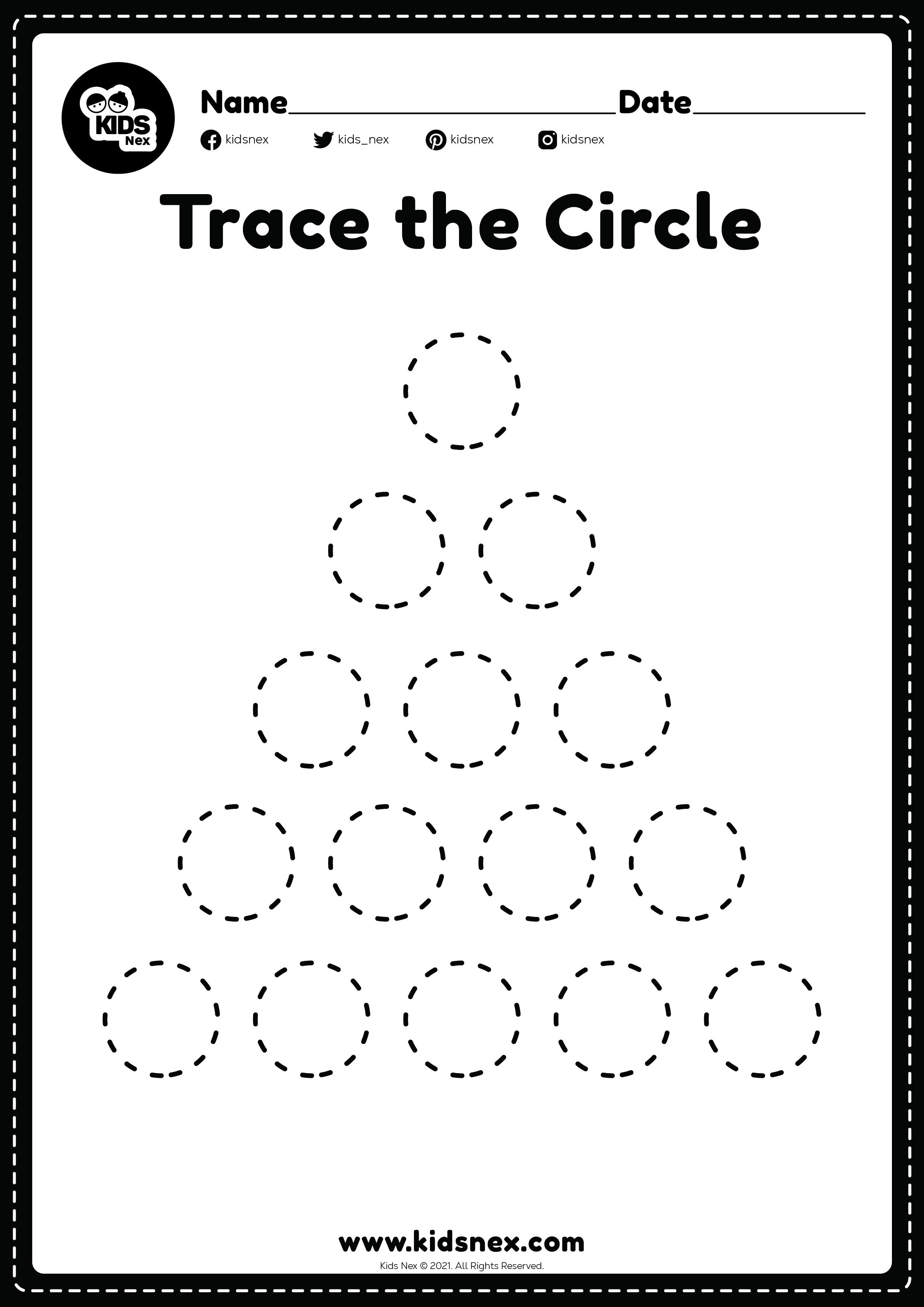
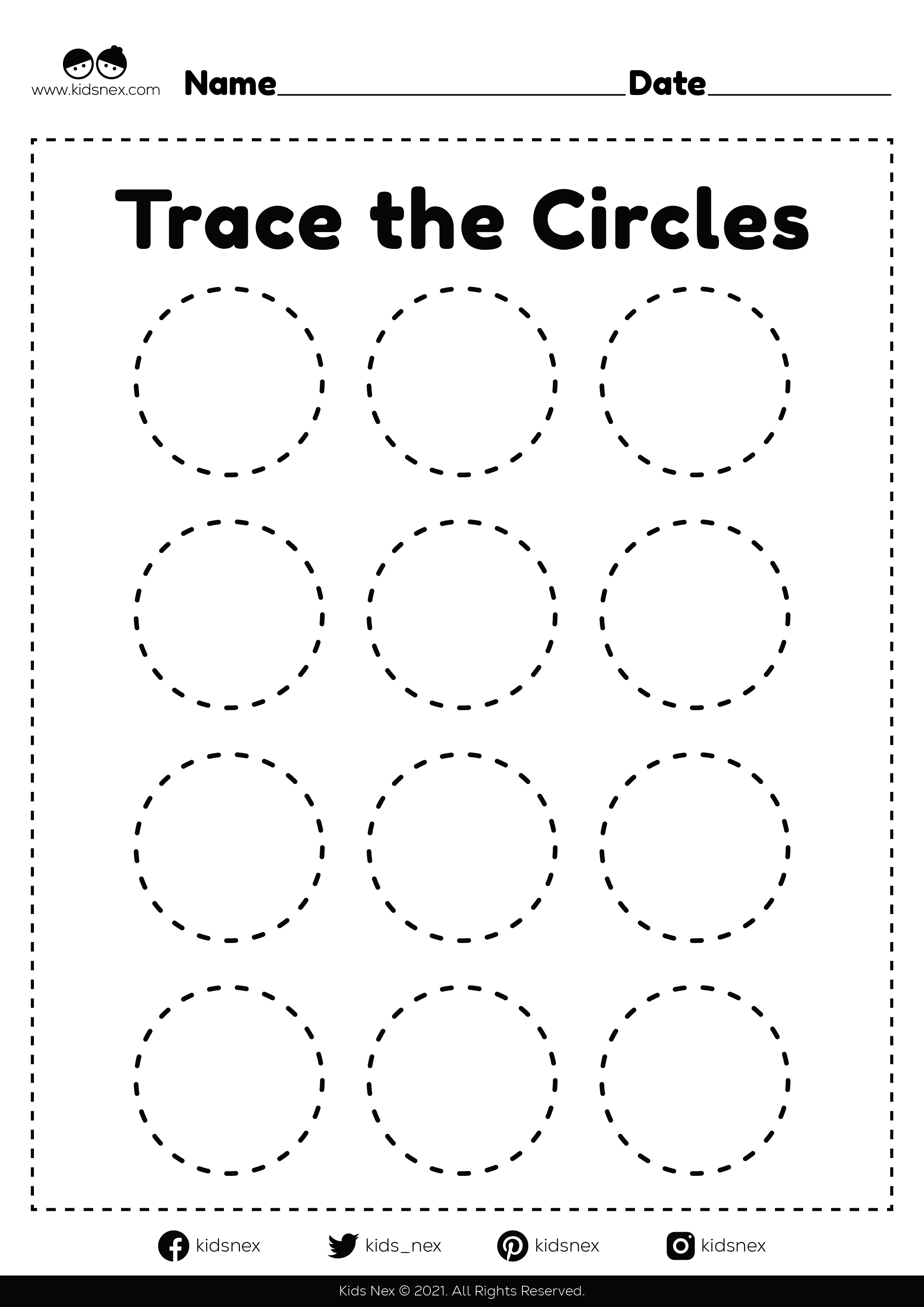
Circular shapes form the foundational building blocks for numerous letters, including c, o, a, g, q, and d. Working with continuous curved lines requires continuous visual-motor integration, teaching little hands how to fluidly change direction rather than stopping abruptly at sharp angles. Children navigate concentric circles of varying sizes, which naturally builds the wrist flexibility and finger control necessary for advanced Fine Motor and Pre-Writing Skills. As pencils move continuously around the curved dotted paths, young learners strengthen their visual tracking abilities and learn to maintain consistent pressure against the page.
Key Learning Outcomes
Mastery of curved strokes directly supports future letter formation and spatial awareness. Learners refine bilateral coordination by holding the paper steady with one hand while the dominant hand executes the circular motion. According to the National Association for the Education of Young Children, active manipulation of writing tools during early childhood fosters essential motor planning capabilities that translate to broader academic success. Children also develop sustained attention span and visual closure, learning to anticipate where a shape begins and ends as their pencils glide smoothly across the page.
How to Use This Worksheet
Success with circular tracing begins before the pencil ever touches the paper. Adults can invite children to trace the dotted outlines using index fingers first, mapping the sensory pathway of the circle in the air or directly on the sheet. Transitioning to writing utensils requires observing how little fingers grasp the crayon or pencil, ensuring a functional grip that prevents early hand fatigue. It sounds simple, and that is the point: keeping the initial task focused purely on fluid motion rather than rigid perfection reduces anxiety and encourages repeated attempts.
Practical Tips for Parents and Teachers
Scaffolding the learning experience makes all the difference for children who struggle with pencil control. Adults can demonstrate starting points explicitly, using verbal cues like “start at the top and curve all the way around” to anchor the visual path. For children needing extra sensory input, slipping the worksheet inside a heavy-duty plastic sleeve and letting them trace with dry-erase markers adds a playful element while making accidental mistakes easy to wipe away. Extending the activity might involve coloring inside the completed circles or incorporating Shape and Line Tracing templates to connect curves with straight vertical and horizontal lines.
Age-Appropriate Recommendations
For children ages two to four, focus heavily on large arm movements and thick writing tools like crayons or palm-grip markers, aligning closely with CDC developmental milestones for toddler grasping patterns. At this stage, children explore circular motions spontaneously, and the dotted circles provide a helpful visual boundary for their natural scribbling tendencies. For children ages five to eight, the expectations shift toward precision, pencil control, and adherence to specific stroke directions in accordance with Kindergarten and first-grade Common Core ELA standards for print concepts. Older children benefit from smaller concentric circles that challenge fine motor endurance and prepare the hand for fluid cursive loops down the road.
Purposeful fine motor activities are essential for developing the intrinsic hand muscles required for successful handwriting. — American Occupational Therapy Association
Frequently Asked Questions
Answers to common inquiries regarding the implementation and developmental benefits of circular tracing practice.
Explore More Free Printable Tracing Worksheets
Every child progresses through pre-writing stages at an individual pace, and having access to varied practice materials helps maintain enthusiasm. Beyond circular paths, expanding into Alphabet And Numbers Tracing or exploring themed Seasonal and Fun Themes keeps young learners motivated day after day. Caregivers and educators are encouraged to browse the full library of resources available at KidTraces.com to support continuous skill growth.
Developmental Milestone & Activity Table
| Development Stage | Recommended Daily Duration | Primary Learning Objective |
|---|---|---|
| Preschool & Pre-K | 10 – 15 Minutes | Pencil grip development & basic pre-stroke lines |
| Kindergarten | 15 – 20 Minutes | Letter/number formation & spatial line awareness |
| Early Elementary (Grade 1–2) | 20 – 30 Minutes | Fluency, sentence construction & neatness |
Images References