Introduction
Many children recognize letters and geometric shapes long before their fine motor skills can actually form them on paper. According to the American Occupational Therapy Association, foundational hand strength and pencil control must develop progressively through purposeful play and targeted pre-writing strokes before complex handwriting tasks become automatic. It sounds simple, and that is the point. Mastering slanted lines and intersecting angles paves the way for both artistic expression and future literacy. The diamond worksheet for toddlers bridges this exact developmental gap by offering structured geometry practice disguised as engaging early drawing fun. Early educators and pediatric occupational therapists consistently observe that children who master diagonal pre-writing strokes transition into letter formation with significantly less frustration. Here’s what makes this worksheet different: it treats the diamond not merely as a shape to memorize, but as a critical motor map that trains the hand for letters like ‘v’, ‘w’, and ‘k’.
💡 Educational Key Takeaways:
- Core Skill: Structured Diamond Worksheet For Toddlers focused on developing pencil grip, stroke control, and early literacy/math confidence.
- Target Scope: Suited for homeschoolers, preschool, kindergarten, and elementary learners.
- Best Recommendation: Practice 10–15 minutes daily with ergonomic writing tools to reinforce muscle memory without hand fatigue.
What This Worksheet Covers
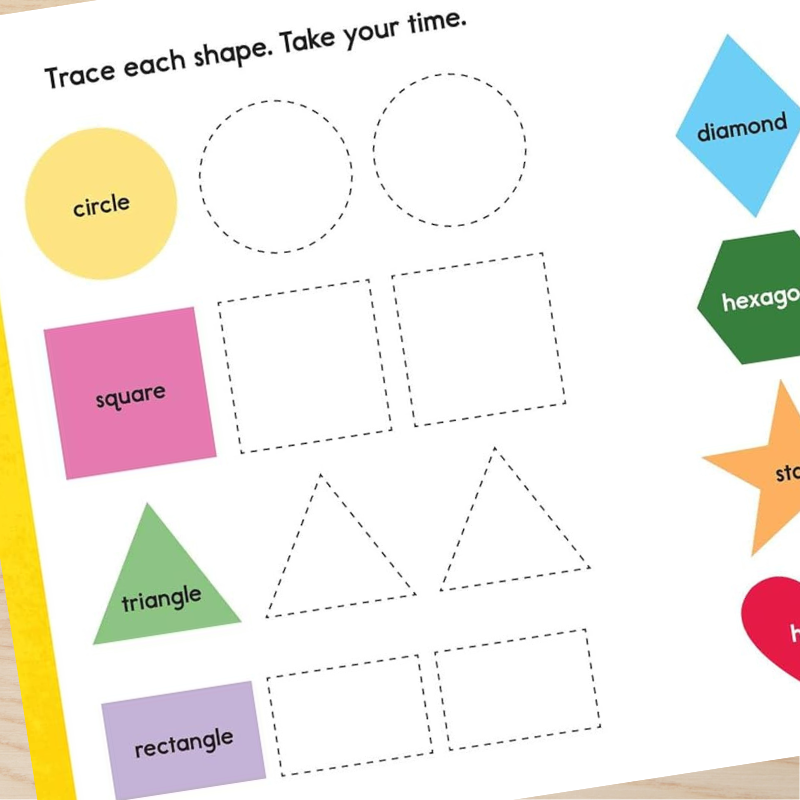
The diamond worksheet focuses heavily on diagonal lines, sharp directional changes, and bilateral hand coordination. Tracing straight vertical and horizontal lines relies primarily on elbow and shoulder motion, but drawing a diamond requires complex wrist rotation and precise finger adjustments. As little ones guide their writing tools along the dotted contours, they refine the exact visual-motor integration needed for academic readiness. This printable provides scaffolded support by moving from thick, prominent outlines down to subtle tracing guides, allowing children to build independence stroke by stroke. Integrating these targeted tracing activities helps mitigate the common hand fatigue often observed during early coloring and writing sessions in preschool classrooms. For more related activities, check out our What Are Some Pentagon Shapes For Kids.
Key Learning Outcomes
Young learners develop enhanced spatial awareness by navigating the four distinct corners of the diamond shape. Hand-eye coordination improves rapidly as eyes track the pencil tip while the hand executes controlled directional shifts. Muscle memory strengthens within the small intrinsic muscles of the hand, stabilizing the pencil grasp for sustained drawing. Children also learn crucial concepts of closure and symmetry by completing the continuous path back to the starting point. According to the National Association for the Education of Young Children, active engagement with manipulative-based visual art and tracing materials fosters essential cognitive mapping and self-regulation skills in early childhood.
How to Use This Worksheet
Adults should always introduce the printable in a relaxed, low-pressure environment where playful exploration takes priority over rigid perfection. Setting up a stable workspace with appropriate child-sized seating encourages proper posture and optimal wrist alignment from the very beginning. Begin by having the child trace the diamond shape using an index finger before introducing a writing utensil, reinforcing the tactile path of the lines. It sounds basic, but finger-tracing builds an essential neuromuscular blueprint in the brain. Once the physical path feels familiar, transition to short-barreled crayons or thick colored pencils to naturally encourage a functional grasp pattern.
Practical Tips for Parents and Teachers
Modeling correct pencil grip right beside the child provides a powerful visual cue that mimics natural hand mechanics. Scaffolding the activity means lightly guiding the child’s hand through the first difficult corner and gradually fading physical support as confidence builds. Extending the learning can be as simple as having the toddler pinch playdough into the outline of the diamond before picking up a pencil. When observing signs of frustration or hand cramping, introduce immediate movement breaks to stretch those hardworking fingers and wrists. Consistency matters far more than duration, so brief, daily practice yields the most remarkable fine motor gains over time.
Age-Appropriate Recommendations
For children ages two to four, foundational work aligns closely with the CDC developmental milestones regarding basic shape awareness and gross pre-writing strokes. At this stage, adults should focus heavily on gross motor arm movements, large-scale air tracing, and thick writing utensils that require palmar or transitional digital grasps. For older preschoolers and kindergarteners ages five to eight, the expectations shift toward precision, pencil control, and adherence to the strict guidelines outlined in the Handwriting Without Tears curriculum. Older children benefit from using finer writing tips, minimizing accidental slips outside the dotted boundaries, and eventually drawing independent diamonds free of guide dots.
Mastery of diagonal pre-writing strokes around age four directly predicts successful letter and number formation by early elementary school. — American Occupational Therapy Association
Frequently Asked Questions
Answers to common questions regarding printing, developmental readiness, and fine motor growth provide extra clarity for caregivers.
Early fine motor manipulation of geometric shapes builds the neural pathways required for advanced reading and mathematical graphing. — National Association for the Education of Young Children
Explore More Free Printable Tracing Worksheets
Expanding a child’s pencil control journey requires a rich variety of engaging resources that grow alongside developing hands. Discover endless opportunities to strengthen hand-eye coordination by browsing the complete library of printables available at KidTraces.com. Children exploring diagonal lines often enjoy additional practice found within the Shape and Line Tracing collection. To foster broader wrist control and foundational coordination, explore the diverse activities listed under Fine Motor and Pre-Writing Skills. Every small stroke contributes to a lifetime of confident writing.
Developmental Milestone & Activity Table
| Development Stage | Recommended Daily Duration | Primary Learning Objective |
|---|---|---|
| Preschool & Pre-K | 10 – 15 Minutes | Pencil grip development & basic pre-stroke lines |
| Kindergarten | 15 – 20 Minutes | Letter/number formation & spatial line awareness |
| Early Elementary (Grade 1–2) | 20 – 30 Minutes | Fluency, sentence construction & neatness |
Images References