Introduction
Many children recognize letters, shapes, and complex environmental symbols long before their developing fine motor skills possess the strength and dexterity to form those same patterns on paper. According to the American Occupational Therapy Association, foundational fine motor control and visual-motor integration are critical prerequisites for functional academic participation and successful written expression. Bridging this gap requires targeted preparatory tools that build foundational hand strength without causing frustration. The free circles handwriting resource addresses this exact developmental need by focusing entirely on continuous circular motion, a fundamental stroke required for forming letters like o, c, a, and g. It sounds simple, and that is precisely the point. By stripping away complex letter formations, young learners can concentrate purely on fluid hand movements, wrist positioning, and sustained visual attention. This early intervention supports smooth transitions into broader Fine Motor and Pre-Writing Skills practice across early childhood settings.
💡 Educational Key Takeaways:
- Core Skill: Structured Circles Handwriting Resource focused on developing pencil grip, stroke control, and early literacy/math confidence.
- Target Scope: Suited for homeschoolers, preschool, kindergarten, and elementary learners.
- Best Recommendation: Practice 10–15 minutes daily with ergonomic writing tools to reinforce muscle memory without hand fatigue.
What This Worksheet Covers
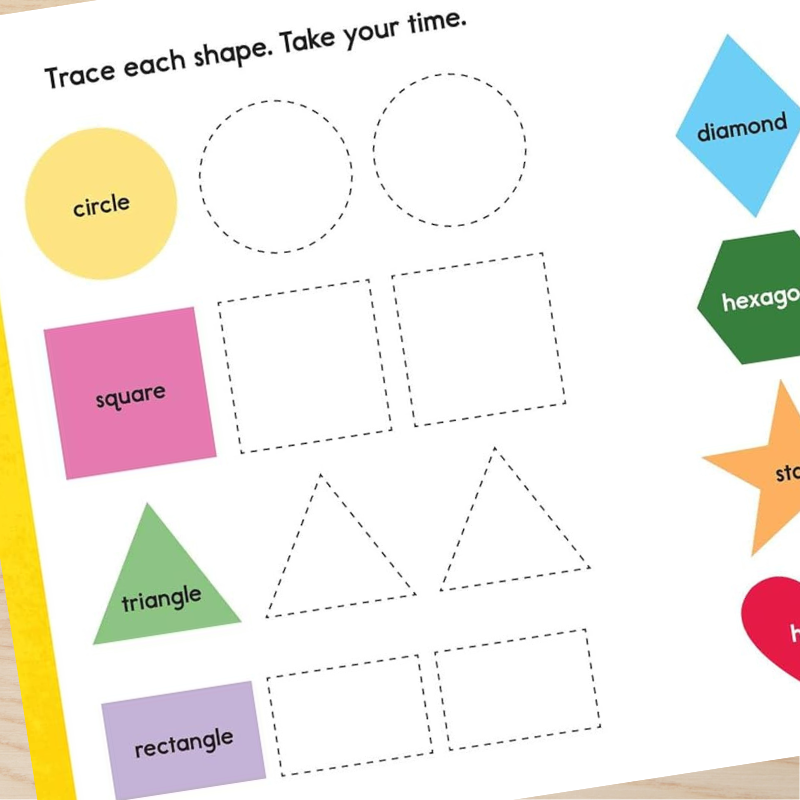
The layout of this specific print page focuses on repeating concentric circles, spiraling paths, and progressive sizing sequences designed to challenge hand-eye coordination. Children encounter varying line thickness, dotted pathways, and open-ended tracing boundaries that naturally encourage multi-directional movement. Progression through the page moves from large, sweeping hand motions originating at the shoulder down to smaller, refined movements controlled strictly by the fingers and wrist. This gradation helps develop intrinsic hand muscles while training the brain to anticipate spatial boundaries. Furthermore, mastering the continuous curve serves as a natural stepping stone before introducing linear intersecting lines found in Shape and Line Tracing activities.
Key Learning Outcomes
Engaging with circular tracing sheets promotes bilateral coordination, requiring one hand to stabilize the paper while the dominant hand executes fluid, controlled strokes. Learners build crucial postural stability as they anchor their forearms and adjust trunk alignment to maintain control across the page. Visual-motor integration improves significantly as eyes track the pencil tip continuously, refining the feedback loop between visual perception and physical execution. Additionally, developing muscle memory for counterclockwise rotation establishes a reliable baseline for letter formation, aligning directly with broader milestones tracked in Alphabet And Numbers Tracing curricula.
How to Use This Worksheet
Success with pre-writing sheets depends heavily on the environment and the physical approach adopted during the activity. Adults should introduce the task during peak energy windows, keeping initial sessions brief to prevent hand fatigue and negative associations with writing. Placing the paper on a slight slant matching the natural angle of the child’s forearm promotes ergonomic wrist extension and posture. If a child struggles to maintain grip control, sliding a small piece of textured grip material underneath the paper prevents slipping and reduces the compensatory pressure children often apply when frustrated.
Practical Tips for Parents and Teachers
Observing a child’s pencil grasp provides immediate insight into which muscles are doing the work, making it easier to scaffold support effectively. Adults should model the correct tripod or modified grasp openly, demonstrating how the thumb and index finger oppose each other while resting comfortably on the middle finger. Scaffolding can involve hand-over-hand assistance for the first few loops, gradually fading physical guidance into verbal prompts like “round and round like a wheel.” To extend the activity beyond paper, children can practice forming large circles in the air, tracing tactile templates filled with salt, or using chunky dry-erase markers on vertical surfaces to engage shoulder stability.
Age-Appropriate Recommendations
For toddlers and preschoolers aged two to four, the focus centers entirely on gross motor integration, using large-scale circular motions that engage the shoulder and elbow joints in alignment with NAEYC Developmentally Appropriate Practice guidelines. According to the Centers for Disease Control and Prevention developmental milestones, children in this age bracket typically begin drawing circles by imitating strokes, making targeted tracing sheets an ideal companion for natural skill emergence. As children transition into kindergarten and early primary grades up to age eight, expectations shift toward precision, directional accuracy, and controlled pressure modulation using standard writing utensils.
Foundational fine motor control and visual-motor integration are critical prerequisites for functional academic participation and successful written expression. — American Occupational Therapy Association
Frequently Asked Questions
Clear answers to common questions help caregivers maximize the educational value of early writing resources.
Young children frequently begin drawing recognizable circles by imitating vertical and horizontal strokes around age three. — Centers for Disease Control and Prevention
Explore More Free Printable Tracing Worksheets
Building a robust foundation in pre-writing requires variety, patience, and access to engaging, developmentally appropriate printables. Exploring supplementary materials helps maintain enthusiasm while reinforcing crucial pencil control concepts across different domains. Caregivers and educators can browse the complete collection of resources designed to support early learners at KidTraces.com. Whether transitioning toward seasonal templates found in Seasonal and Fun Themes or exploring foundational letter templates via Dotted Letters For Tracing, consistent practice yields lasting developmental progress.
Developmental Milestone & Activity Table
| Development Stage | Recommended Daily Duration | Primary Learning Objective |
|---|---|---|
| Preschool & Pre-K | 10 – 15 Minutes | Pencil grip development & basic pre-stroke lines |
| Kindergarten | 15 – 20 Minutes | Letter/number formation & spatial line awareness |
| Early Elementary (Grade 1–2) | 20 – 30 Minutes | Fluency, sentence construction & neatness |
Images References