Introduction
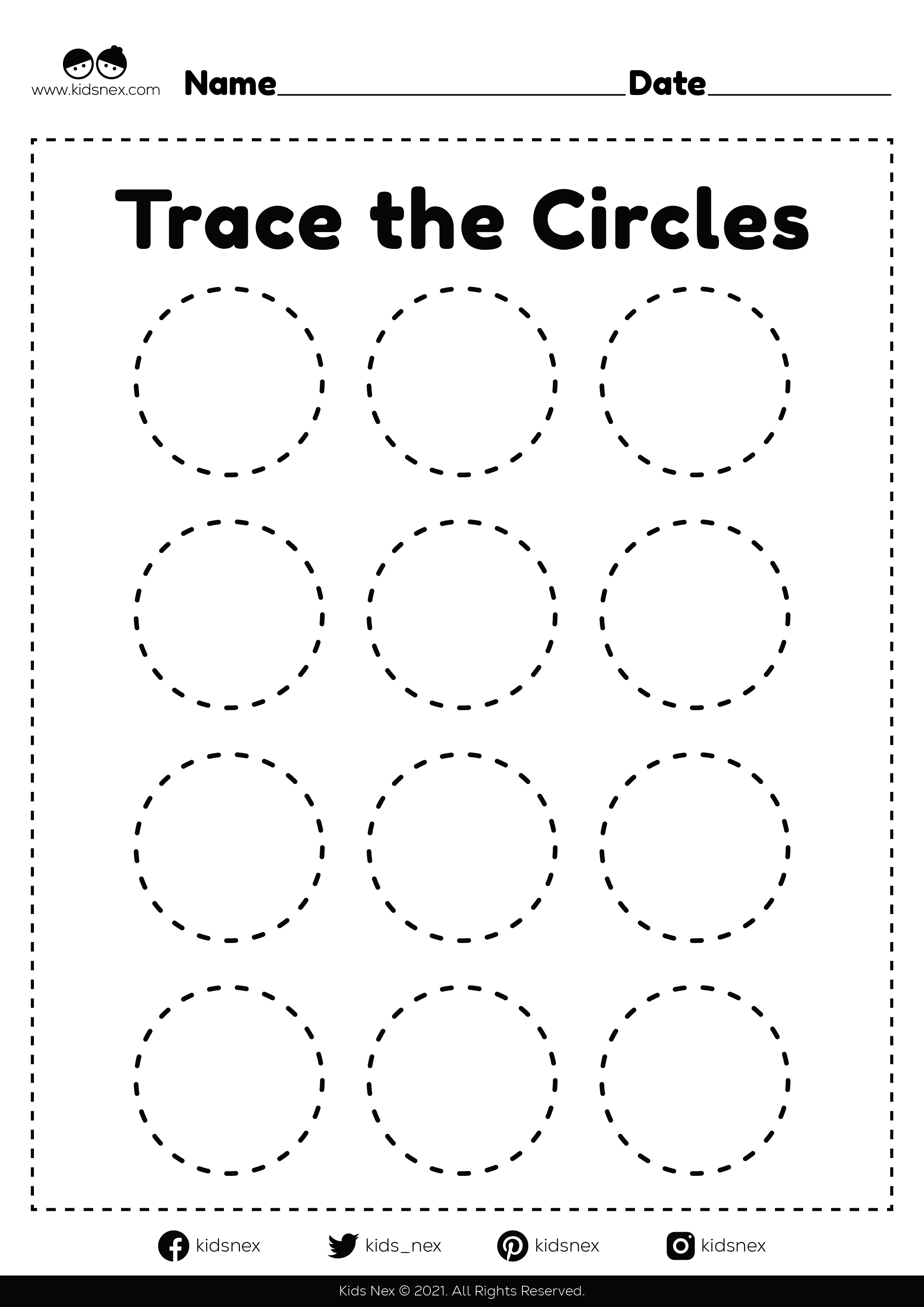
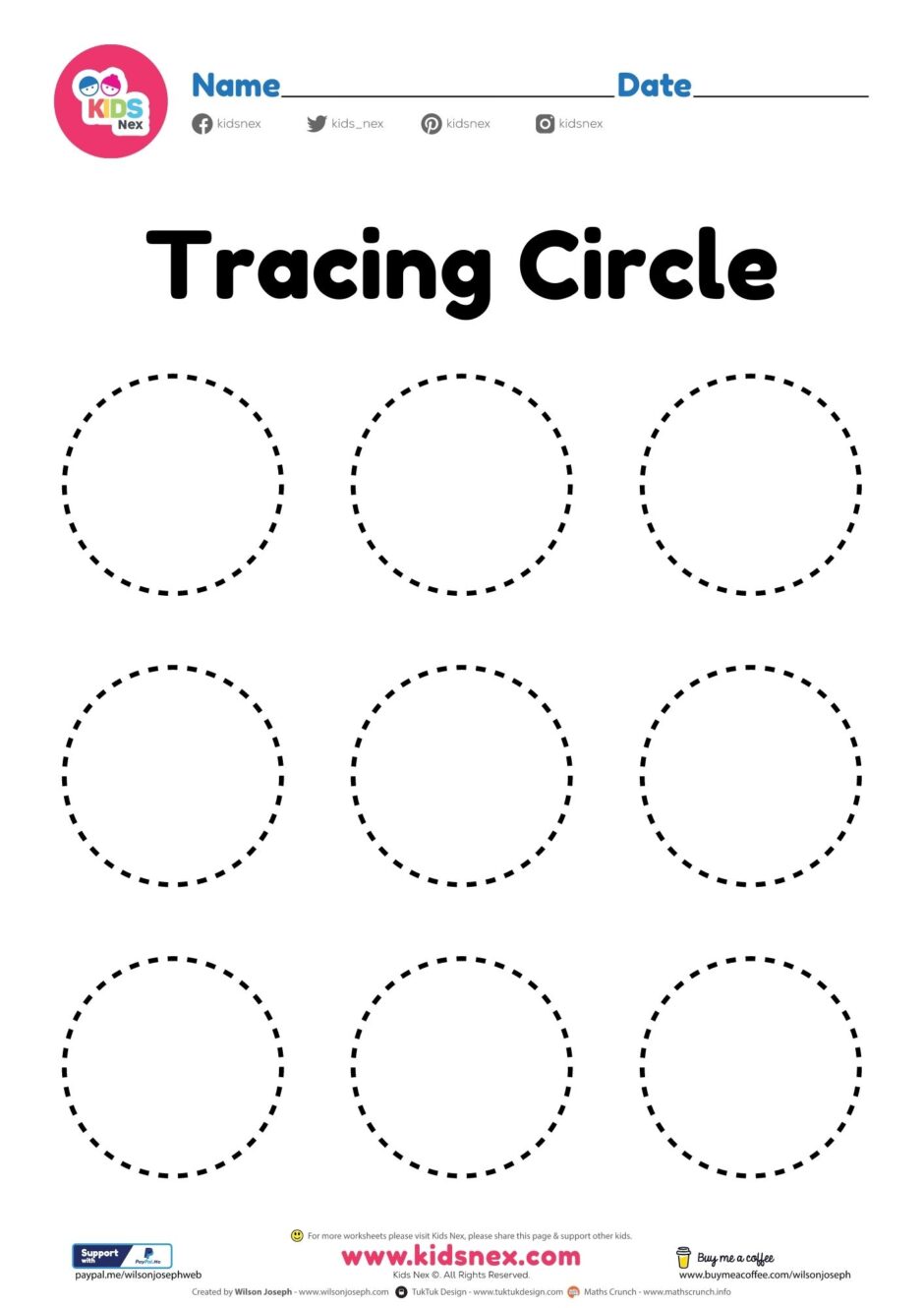
Many children recognize letters and shapes long before their fine motor skills can physically form them on paper. This common disconnect often frustrates eager learners who want to draw and write just like older peers. According to the American Occupational Therapy Association, foundational fine motor control and bilateral coordination must develop before children can master complex pencil strokes. Addressing this developmental milestone requires starting with basic geometric shapes rather than rushing straight into letters. The free printable trace circles for toddlers bridges this exact gap by offering a developmentally appropriate entry point for pencil control. It sounds simple, and that’s the point.
💡 Technical Key Takeaways:
- Core Focus: Diagnostic schematic and terminal connection layout for Trace Circles For Toddlers.
- Target Scope: Field technicians, automotive DIYers, and residential/commercial electricians.
- Safety Rule: Always disconnect the primary power source/battery terminal and verify zero voltage with a multimeter before touching wires.
What This Worksheet Covers
Circular shapes form the foundational building blocks for countless letters and numbers, including o, c, g, a, and 0. When children practice circular motions, hand muscles engage in continuous, fluid movements that differ entirely from straight lines or sharp angles. The free printable trace circles for toddlers provides structured, dotted outlines designed to guide small hands through smooth, looping motions. Worksheets in this category often feature varied circle sizes, ranging from large, sweeping loops that encourage whole-arm movement to smaller, precise circles that isolate wrist and finger control. Here’s what makes this worksheet different: it respects the natural arc of physical development by focusing strictly on continuous curved lines before demanding the stop-and-start precision required for alphabet practice. Developing fluency in these curves supports broader progress found across various Shape and Line Tracing activities, laying the groundwork for spatial awareness and visual-motor integration.
Key Learning Outcomes
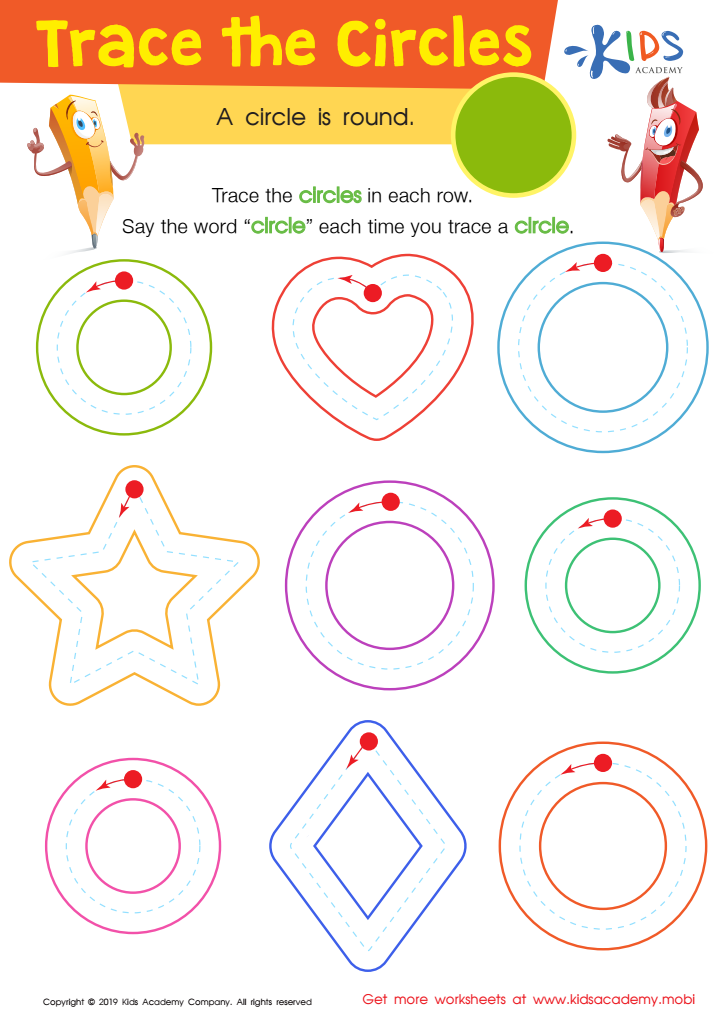
Targeted tracing exercises foster several critical developmental competencies simultaneously. First, children refine visual-motor integration as the brain learns to guide the hand along a targeted visual path. Second, repeated curving motions build intrinsic hand strength and stability within the small muscles of the palm and fingers. Third, continuous tracing strokes teach directional awareness, typically reinforcing counter-clockwise motion that later translates directly into standard handwriting formations. Finally, working through these simple geometric pages naturally extends into more complex coordination routines found throughout Fine Motor and Pre-Writing Skills resources, helping young learners gain confidence and physical endurance for longer writing sessions.
How to Use This Worksheet
Successful engagement with tracing materials relies heavily on presentation and physical setup. Introducing the printable page should feel like a playful drawing activity rather than a rigid academic test. Placing the paper on a flat, well-lit surface helps young learners maintain a comfortable posture while keeping the non-dominant hand steady on the page. According to Reading Rockets, encouraging multi-sensory approaches—such as tracing textured circular objects before touching the paper—significantly boosts comprehension and muscle memory.
Practical Tips for Parents and Teachers
Adult guidance shapes how effectively a child processes these foundational motor tasks. Modeling an efficient pencil grip matters tremendously, though a comfortable grasp should take precedence over rigid perfection for very young participants. Scaffolding the activity by first having the child trace large circles with an index finger ensures the brain understands the directional path before adding a writing utensil. Teachers and caregivers can easily extend the lesson by having children trace physical objects like plastic lids or tape rolls, bridging the gap between three-dimensional exploration and two-dimensional paper tasks. For further skill expansion beyond basic shapes, learners can explore foundational concepts available via Dotted Letters For Tracing when physical readiness permits.
Age-Appropriate Recommendations
Tailoring expectations to specific developmental windows prevents frustration and burnout. For two-year-olds and three-year-olds, alignment with the Centers for Disease Control and Prevention developmental milestones suggests focusing heavily on gross motor arm movements, large sweeping circles, and thick writing tools like crayons or jumbo pencils. By ages four through five, children naturally transition toward finer wrist movements and smaller circles using standard pencils or markers, aligning closely with the National Association for the Education of Young Children Developmentally Appropriate Practice guidelines for early childhood writing readiness.
Foundational motor skills, including continuous circular strokes and bilateral hand coordination, serve as reliable predictors of later handwriting legibility and spatial organization. — American Occupational Therapy Association
Frequently Asked Questions
Getting started with early childhood tracing resources involves understanding both the practical downloading steps and the underlying developmental benefits.
Explore More Free Printable Tracing Worksheets
Supporting a young child’s journey toward confident writing involves a rich variety of engaging, developmentally tailored exercises. Exploring beyond basic shapes opens up exciting new avenues for growth across different subjects and themes. A comprehensive collection of resources is always available to support parents, teachers, and caregivers at KidTraces.com, ensuring every child finds materials that match their unique learning pace. Discovering supplementary practice materials becomes seamless when browsing specialized categories such as Tracing Worksheets, where continuous learning meets joyful childhood exploration.
Quick Wiring Specifications & Terminal Guide
| Component / Circuit | Standard Wire Gauge | Recommended Protection |
|---|---|---|
| Control & Trigger Signals | 18 – 20 AWG | 5A – 7.5A Inline Fuse |
| Standard Auxiliary Load | 14 – 16 AWG | 15A – 20A Circuit Breaker |
| Main Power Feed / Supply | 10 – 12 AWG | 30A – 40A Heavy-Duty Relay |
Images References