Introduction
Many toddlers recognize letters and shapes long before their hands possess the structural endurance and intricate muscle coordination required to form them on paper. According to the American Occupational Therapy Association, foundational fine motor tasks like grasping writing utensils and controlling continuous lines build the essential neurological pathways for all future academic execution. Adults often rush straight into letter formation, bypassing the crucial physical preparation that hands need. Shape work serves as the vital bridge between uncontrolled scribbling and deliberate, letter-level pencil control. Utilizing a big circle to trace for toddler learners provides an expansive, forgiving canvas for early motor planning. It sounds simple, and that’s the point. Big sweeping motions activate large proximal muscle groups in the shoulder and elbow before demanding isolated movements from tiny fingers and wrists. Children learn spatial awareness, bilateral coordination, and visual-motor integration through the rhythmic repetition of a continuous curved line. Every loop drawn establishes a physical memory of movement that will eventually translate into writing letters like ‘c’, ‘o’, and ‘a’. Providing access to foundational resources found throughout the broader collection of Shape and Line Tracing printables ensures young learners build confidence without overwhelming their developing hands.
💡 Technical Key Takeaways:
- Core Focus: Diagnostic schematic and terminal connection layout for Big Circle To Trace For Toddler.
- Target Scope: Field technicians, automotive DIYers, and residential/commercial electricians.
- Safety Rule: Always disconnect the primary power source/battery terminal and verify zero voltage with a multimeter before touching wires.
What This Worksheet Covers
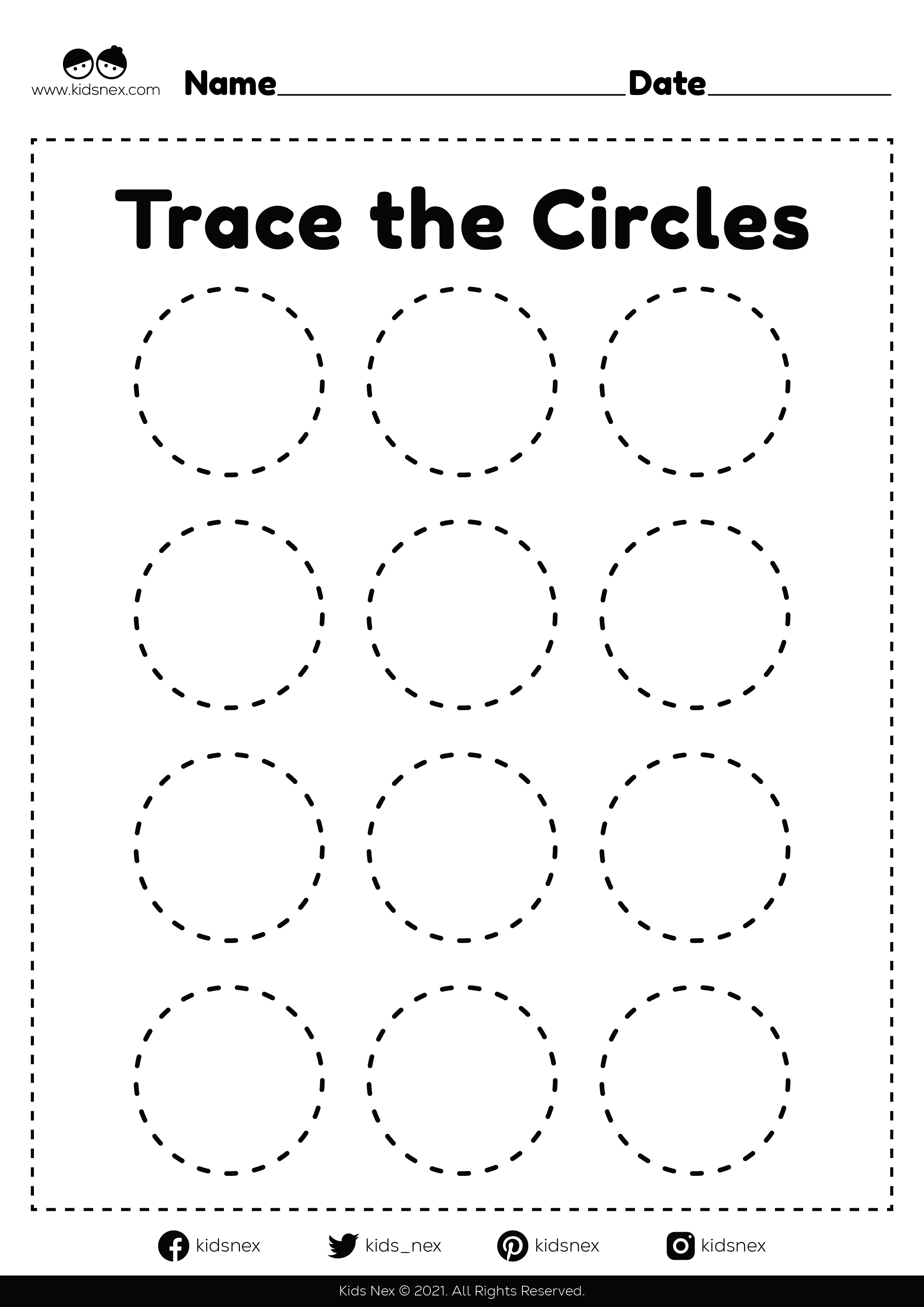
This specific printable focuses entirely on mastering the continuous curved line through an oversized geometric boundary. Pre-writing strokes progress in a predictable developmental sequence, moving from vertical and horizontal lines to intersecting crosses, and finally to slanting lines and circles. A large-format circle requires sustained visual attention and continuous motor output without the frustrating stop-and-start demands of complex letter structures. Classroom observations frequently reveal that children who struggle with small letter tracing experience immediate success when given a larger workspace that accommodates natural arm movements. This sheet introduces continuous fluid motion, encouraging the hand to flow smoothly across the page from a designated starting point all the way back to closure. Hand strength develops naturally as the child learns to regulate downward pressure to keep the writing tool on track. Exploring foundational motor patterns heavily reinforces the skills targeted within Fine Motor and Pre-Writing Skills printables, creating a seamless progression toward independent writing readiness.
Key Learning Outcomes
Working consistently with an oversized circle yields profound developmental gains that reach far beyond basic shape recognition. Visual-motor integration improves as the eyes guide the hand along a curved trajectory rather than a rigid linear path. Clockwise and counter-clockwise motor planning enhances directional awareness, preparing the brain for the specific left-to-right orientation required in reading and writing. Wrist and finger stabilization strengthens as the hand maintains a functional grasp while navigating a continuous arc across the page. Bilateral coordination emerges naturally because one hand must actively hold the paper steady while the other hand executes the fluid tracing motion. Spatial boundaries become concrete concepts as children learn to keep their pencil markings contained within the provided dotted pathways, establishing a firm visual baseline for future notebook margins.
How to Use This Worksheet
Success with early tracing printables depends heavily on environmental setup and physical posture. Positioning the paper on a vertical surface, such as an easel or a taped-to-the-wall sheet, naturally encourages wrist extension and isolates the small muscles of the hand for optimal control. Alternatively, flat table surfaces work well when chairs and desks match the child’s height, ensuring feet rest flat on the floor to provide proximal core stability. Encourage tracing with thick writing tools like broken crayons, chubby markers, or short pencils, as these naturally promote a functional tripod or quadrupod grasp. Adults should guide the child’s hand gently through the first few rotations to establish the physical rhythm before encouraging independent attempts. Integrating these large circular templates alongside resources from the Alphabet And Numbers Tracing library helps bridge the gap between abstract shapes and concrete letter symbols.
Practical Tips for Parents and Teachers
Scaffolding a toddler’s early drawing experience requires patience, positive reinforcement, and strategic physical cueing. Instead of demanding perfection, celebrate the continuous movement and the effort to stay near the dotted path. Model correct stroke patterns by tracing a large circle in the air with an outstretched arm before moving down to the paper canvas. Offer sensory-rich variations by placing the printable inside a plastic sleeve and letting children trace the circle using dry-erase markers, finger paint, or even textured yarn. When fatigue sets in—often signaled by a fading grip or a slumping posture—allow the child to stop immediately to prevent the reinforcement of poor motor habits. Connecting these tactile shape exercises with themed activities found in Seasonal and Fun Themes maintains high engagement levels throughout busy daily schedules.
Age-Appropriate Recommendations
Developmental expectations must remain flexible to accommodate the wide range of physical maturation found in early childhood. According to the National Association for the Education of Young Children guidelines on developmentally appropriate practice, children aged two to four benefit most from sensory-rich, gross-motor-infused pre-writing experiences that emphasize exploration over product perfection. At age two, toddlers typically imitate vertical and horizontal strokes, occasionally attempting circular scribbles with whole-arm movements. By age three or four, children can often copy a circular shape independently, showing greater wrist movement and refined finger positioning. For older children in the five-to-eight range who may still struggle with fluid motor control, oversized shapes act as a remedial tool to correct pencil-holding tension and improve visual tracking smoothness. These adaptive practices align closely with structured methodologies like the Handwriting Without Tears framework, which emphasizes starting points, consistent directional habits, and multisensory learning channels.
Foundational fine motor tasks like grasping writing utensils and controlling continuous lines build the essential neurological pathways for all future academic execution. — American Occupational Therapy Association
Frequently Asked Questions
How do I download and print this circle tracing worksheet?
Click the download link on the resource page to save the PDF file directly to your device, then print it using standard letter-sized paper at home or school.
How does tracing a big circle support fine motor development?
Tracing continuous curved lines strengthens hand-eye coordination, builds intrinsic hand muscles, and establishes the foundational motor planning needed for future handwriting.
What does the American Academy of Pediatrics say about toddler writing tools?
The American Academy of Pediatrics notes that providing thick, short crayons and chunky markers helps young children naturally develop a functional grasp while exploring early pre-writing strokes.
Explore More Free Printable Tracing Worksheets
Supporting a child’s journey toward confident writing requires a diverse toolkit of engaging, developmentally sound resources. Discover a vast selection of supplementary exercises designed to build pencil control, letter formation, and fine motor strength by visiting the full library at KidTraces.com. Every printable is thoughtfully crafted by educators and therapists to ensure young learners experience joy and success at every single step of their developmental progression.
Quick Wiring Specifications & Terminal Guide
| Component / Circuit | Standard Wire Gauge | Recommended Protection |
|---|---|---|
| Control & Trigger Signals | 18 – 20 AWG | 5A – 7.5A Inline Fuse |
| Standard Auxiliary Load | 14 – 16 AWG | 15A – 20A Circuit Breaker |
| Main Power Feed / Supply | 10 – 12 AWG | 30A – 40A Heavy-Duty Relay |
Images References