Introduction
Watch any group of preschoolers, and a fascinating developmental reality emerges immediately: many children recognize letters and shapes long before their fine motor control is physically ready to form them on paper. According to the American Occupational Therapy Association, foundational hand strength and visual-motor integration must develop collaboratively before fluent handwriting can occur. This gap between cognitive understanding and physical capability often frustrates young learners when traditional paper worksheets tear under heavy pencil pressure or cause hand fatigue. Preparing reusable learning materials transforms this experience entirely. Utilizing heavy-duty plastic pouches or thermal sheets creates a friction-free surface that welcomes trial, error, and effortless wiping. By introducing tracing lines for laminat, adults provide a resilient canvas where children can practice essential pre-writing strokes repeatedly without the pressure of permanent mistakes. It sounds simple, and that is the exact point. Reusability fosters a low-stakes environment that encourages persistence, building the muscle memory required for confident future writers.
💡 Educational Key Takeaways:
- Core Skill: Structured Tracing Lines For Laminat focused on developing pencil grip, stroke control, and early literacy/math confidence.
- Target Scope: Suited for homeschoolers, preschool, kindergarten, and elementary learners.
- Best Recommendation: Practice 10–15 minutes daily with ergonomic writing tools to reinforce muscle memory without hand fatigue.
What This Worksheet Covers
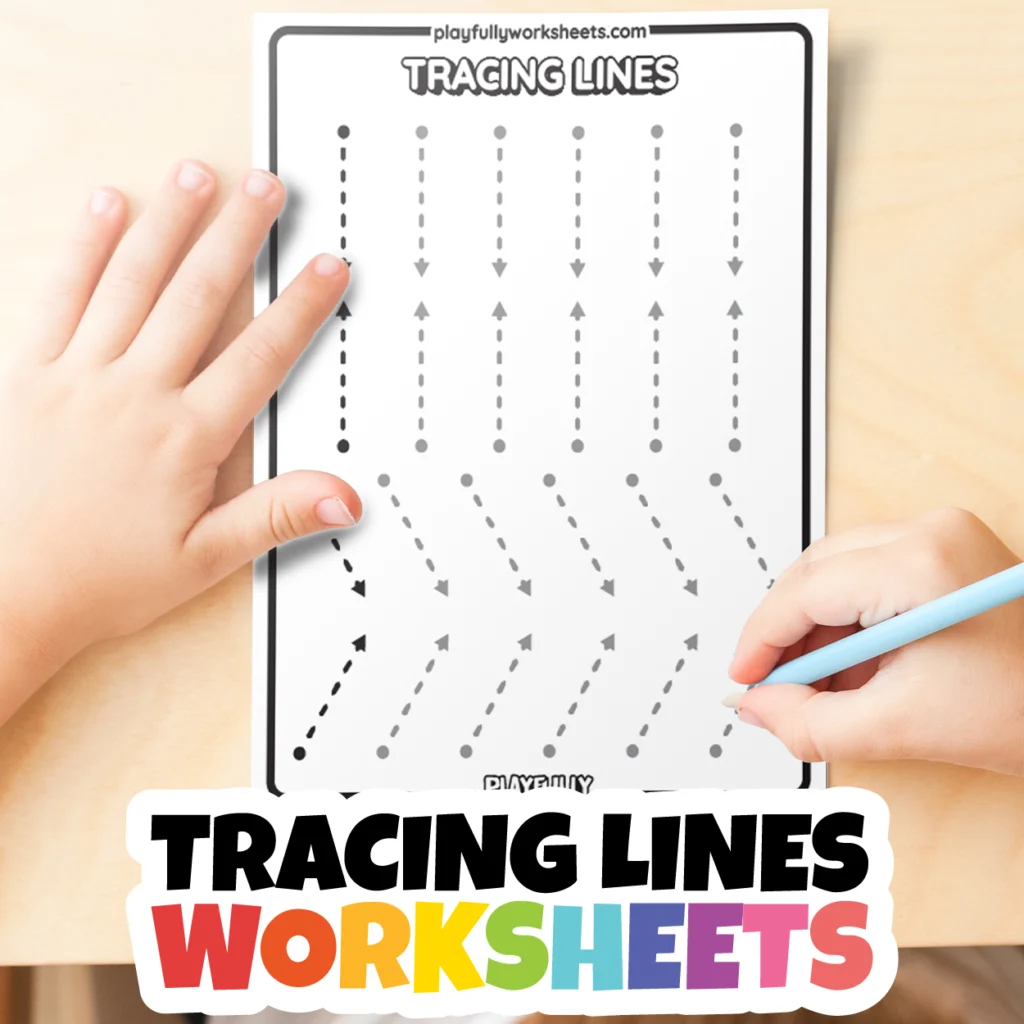
Mastering pencil control requires a deliberate progression from basic horizontal and vertical paths to complex geometric curves and intersecting diagonals. This specialized printable focuses on foundational pre-writing shapes that mimic the building blocks of both uppercase and lowercase letters. Children encounter continuous wave patterns, sharp zigzags, looping curls, and straight tracks designed to cultivate visual tracking and sustained hand-control. When these pages are sealed in protective plastic, young learners can trace the pathways using dry-erase markers, thick crayons, or even bare fingers for tactile input. Such versatility bridges the gap between gross motor arm movements and precise finger dexterity. Children learn to modulate pressure, pause at directional changes, and maintain continuous visual contact with the line ahead. Every path serves as a stepping stone toward advanced Shape and Line Tracing, ensuring comprehensive foundational development.
Key Learning Outcomes
Engaging with these durable pre-writing sheets yields measurable growth across multiple developmental domains. First, children significantly improve bilateral coordination by stabilizing the laminated sheet with one hand while manipulating the writing tool with the other. Second, continuous stroke practice enhances visual-motor integration, teaching the brain to translate visual paths into smooth hand movements. Third, repeated execution builds intrinsic hand strength and endurance within the small lumbrical and interosseous muscles of the palm. Finally, children develop a strong sense of spatial awareness and directional control, moving naturally from left to right across the page to mirror future reading and writing trajectories.
How to Use This Worksheet
Maximizing the benefits of reusable pre-writing materials involves more than simply handing over a marker and a sheet. Preparation begins by printing the resource on heavy cardstock before running it through a thermal pouch machine to ensure rigidity and durability. Adults should initially invite children to trace the grooves with an index finger, engaging tactile pathways before introducing a writing utensil. Once markers enter the equation, selecting low-odor dry-erase or wet-erase markers prevents frustrating smudges while offering just enough resistance on the glossy surface. If a marker skips, a slightly damp cloth clears the residue instantly, leaving a pristine track ready for another attempt.
Practical Tips for Parents and Teachers
Supporting healthy hand development requires careful observation of grip mechanics during every tracing session. Adults should encourage a functional grasp—such as a modified tripod or quadrupod—while gently discouraging tight fist grips that cause premature hand fatigue. Scaffolding the activity means starting with thick, short-barreled markers that naturally promote proper finger placement before transitioning to standard dry-erase markers. Extending the challenge involves turning the laminated sheet upside down or at an angle to test wrist flexibility and visual adaptation. According to the National Association for the Education of Young Children, play-based motor practice embedded in meaningful routines yields the strongest retention and enthusiasm in early childhood.
Age-Appropriate Recommendations
Developmental readiness dictates how children interact with pre-writing materials, aligning closely with the guidelines set forth in the Fine Motor and Pre-Writing Skills framework. For toddlers and young preschoolers aged two to four, the focus remains on grosser linear tracks, simple horizontal lines, and sensory-rich finger tracing that builds foundational hand awareness without demanding strict precision. Children ages five to eight transition toward complex diagonal pathways, looped zigzags, and controlled curves that mirror the demands of formal handwriting instruction. By matching the complexity of the paths to the child’s current motor maturity, educators and caregivers prevent frustration and foster genuine enthusiasm for early literacy tasks.
Handwriting readiness relies heavily on the maturation of core postural stability, visual-motor integration, and intrinsic hand strength before formal pencil-and-paper tasks are introduced. — American Occupational Therapy Association
Frequently Asked Questions
Answers to common inquiries regarding preparation, skill integration, and developmental milestones help adults maximize the educational value of these printable resources.
Explore More Free Printable Tracing Worksheets
Expanding a child’s early writing toolkit becomes effortless when exploring a diverse collection of targeted practice pages. Beyond reusable stroke paths, learners can transition smoothly into letter recognition through specialized Dotted Letters For Tracing or explore thematic creativity found within Seasonal and Fun Themes. Every structured resource on KidTraces.com is designed to support educators, parents, and therapists in nurturing capable, confident young writers step by step. Print today.
Developmental Milestone & Activity Table
| Development Stage | Recommended Daily Duration | Primary Learning Objective |
|---|---|---|
| Preschool & Pre-K | 10 – 15 Minutes | Pencil grip development & basic pre-stroke lines |
| Kindergarten | 15 – 20 Minutes | Letter/number formation & spatial line awareness |
| Early Elementary (Grade 1–2) | 20 – 30 Minutes | Fluency, sentence construction & neatness |
Images References