Introduction
Many children recognize letters, numbers, and symbols long before their fine motor skills can consistently form them on paper. According to the American Occupational Therapy Association, foundational fine motor control and bilateral hand coordination must develop first to support the physical demands of handwriting. That gap between cognitive understanding and muscular capability creates frustration during early writing instruction. Educators and occupational therapists frequently notice that young learners know what they want to draw or write, yet struggle to coordinate the hand muscles required to execute the lines. Introducing structured pre-writing tools bridges that exact gap. The triangle square circle worksheet offers a targeted way to build foundational pencil control through familiar geometric forms. It sounds simple, and that’s the point.
💡 Educational Key Takeaways:
- Core Skill: Structured Triangle Square Circle Worksheet focused on developing pencil grip, stroke control, and early literacy/math confidence.
- Target Scope: Suited for homeschoolers, preschool, kindergarten, and elementary learners.
- Best Recommendation: Practice 10–15 minutes daily with ergonomic writing tools to reinforce muscle memory without hand fatigue.
What This Worksheet Covers
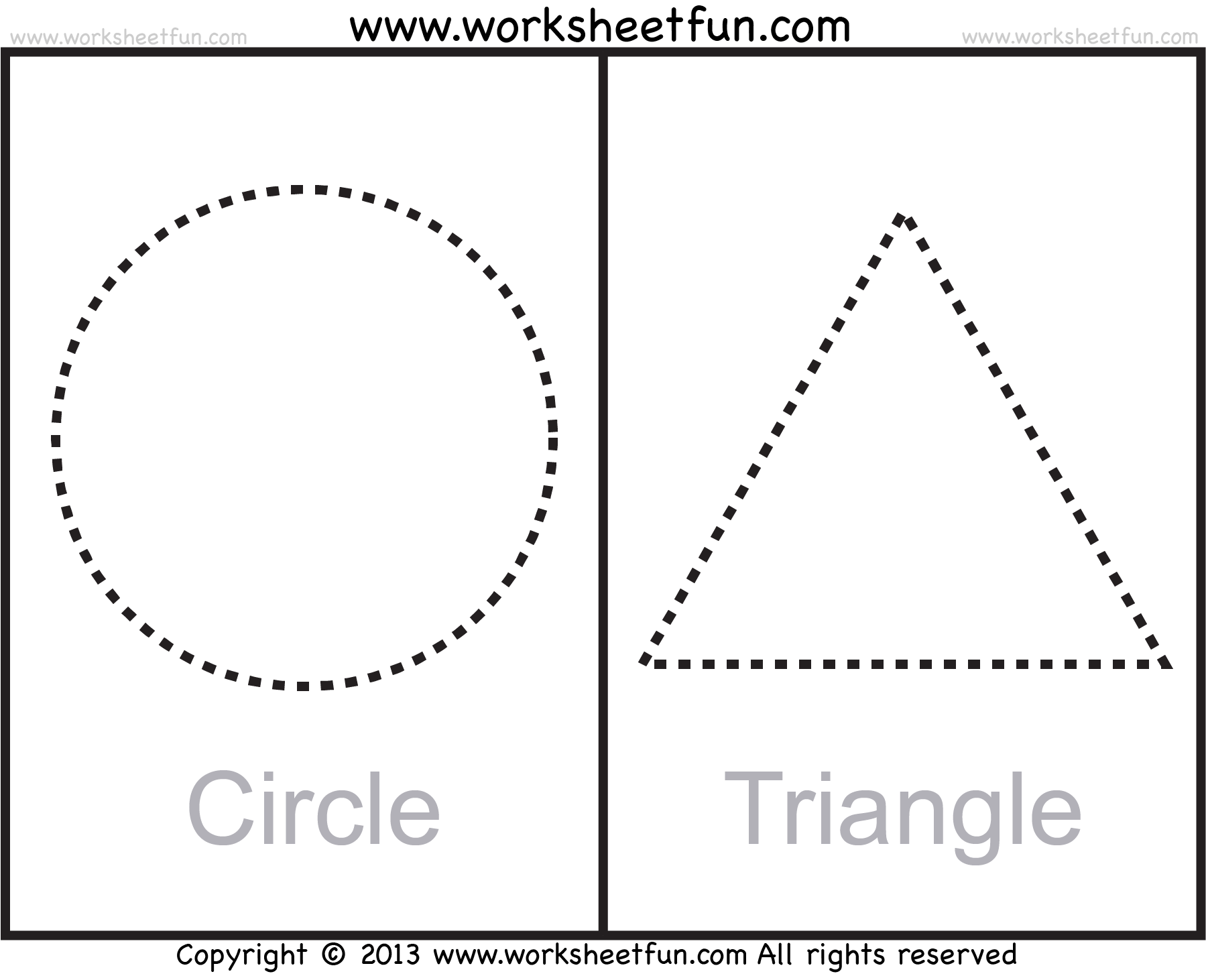
Geometric shapes serve as the foundational building blocks for all letter and number formations. Before mastering the fluid curves of a lowercase cursive letter or the sharp angles of a capital letter, hands need practice executing vertical lines, horizontal lines, intersecting strokes, and closed loops. This resource focuses directly on those essential pre-writing strokes by guiding pencils along the distinct contours of triangles, squares, and circles. Tracing these shapes trains the brain and hand to coordinate visual input with physical output, building the muscle memory necessary for future academic tasks. Every completed triangle, square, and circle reinforces directional awareness, spatial perception, and pencil pressure regulation, preparing little hands for the broader spectrum of Shape and Line Tracing activities available on {site_name}.
Key Learning Outcomes
Working through these geometric tracing exercises helps children develop precise visual-motor integration while strengthening the small intrinsic muscles of the hand. Learners gain mastery over continuous line control, which prevents sudden slips and jagged edges during drawing and writing. Repeated practice enhances wrist stability, allowing the hand to move fluidly across the page while the forearm rests comfortably on the desk. Furthermore, children build cognitive awareness of corners, intersections, and closed perimeters, which directly transfers to recognizing distinct letter shapes later on. As hand fatigue decreases, endurance for longer writing tasks naturally increases across daily classroom routines and home learning sessions.
How to Use This Worksheet
Successful implementation relies heavily on creating a low-stress environment where experimentation is encouraged alongside precision. Placing the sheet on a flat, stable surface ensures the paper does not slide while the dominant hand attempts to navigate corners and curves. Adults should observe how the child approaches each shape, noting whether the pencil starts at the top and moves in a continuous counterclockwise or clockwise direction. Encouraging children to verbalize the shape names aloud while tracing adds a multisensory layer to the exercise, reinforcing cognitive retention alongside physical execution. To expand early literacy experiences beyond simple geometry, practitioners can pair these geometric exercises with complementary resources found under Fine Motor and Pre-Writing Skills.
Practical Tips for Parents and Teachers
Guiding an optimal tripod or modified grasp makes a noticeable difference in reducing hand strain during longer tracing sessions. If a child wraps fingers tightly around the shaft or hides the thumb, utilizing short broken crayons or specialized pencil grips can naturally encourage proper finger placement. Scaffolding the activity works wonders for reluctant learners; adults can gently hand-over-hand guide the first stroke before letting the child finish the shape independently. Providing frequent verbal praise for effort rather than just perfection keeps motivation high and anxiety low. When children master basic shapes, educators can challenge them further by exploring alphabet progression through materials categorized within Alphabet And Numbers Tracing.
Age-Appropriate Recommendations
According to the National Association for the Education of Young Children Developmentally Appropriate Practice, children aged two to four benefit most from large, gross-motor tracing movements using thick crayons or finger paints to understand basic shapes. At this stage, expecting precise pencil control on small lines creates unnecessary muscle fatigue. By ages five through eight, children enter the formal writing stage where refined fine motor skills align with structured school readiness goals. During these early elementary years, the focus shifts toward maintaining consistent pencil pressure, minimizing hand lifting, and executing clean corners on complex geometric outlines.
Fine motor control and bilateral hand coordination must develop first to support the physical demands of handwriting. — American Occupational Therapy Association
Frequently Asked Questions
Navigating early childhood learning resources involves understanding both the physical tools and the developmental milestones driving each activity. Below are answers to common questions regarding printable tracing pages.
Early writing milestones and developmental guidelines for pencil grip progression are outlined extensively by the Centers for Disease Control and Prevention. — CDC Milestones
Explore More Free Printable Tracing Worksheets
Supporting a young learner through developmental milestones requires access to a wide variety of engaging, accessible practice materials. Exploring different formats keeps children excited about practicing pencil control and building essential pre-writing foundations every single day. The complete resource library at KidTraces.com offers hundreds of downloadable pages designed by educators to support every stage of early childhood development, ensuring every child finds the right tool for their unique learning journey.
Developmental Milestone & Activity Table
| Development Stage | Recommended Daily Duration | Primary Learning Objective |
|---|---|---|
| Preschool & Pre-K | 10 – 15 Minutes | Pencil grip development & basic pre-stroke lines |
| Kindergarten | 15 – 20 Minutes | Letter/number formation & spatial line awareness |
| Early Elementary (Grade 1–2) | 20 – 30 Minutes | Fluency, sentence construction & neatness |
Images References