Introduction
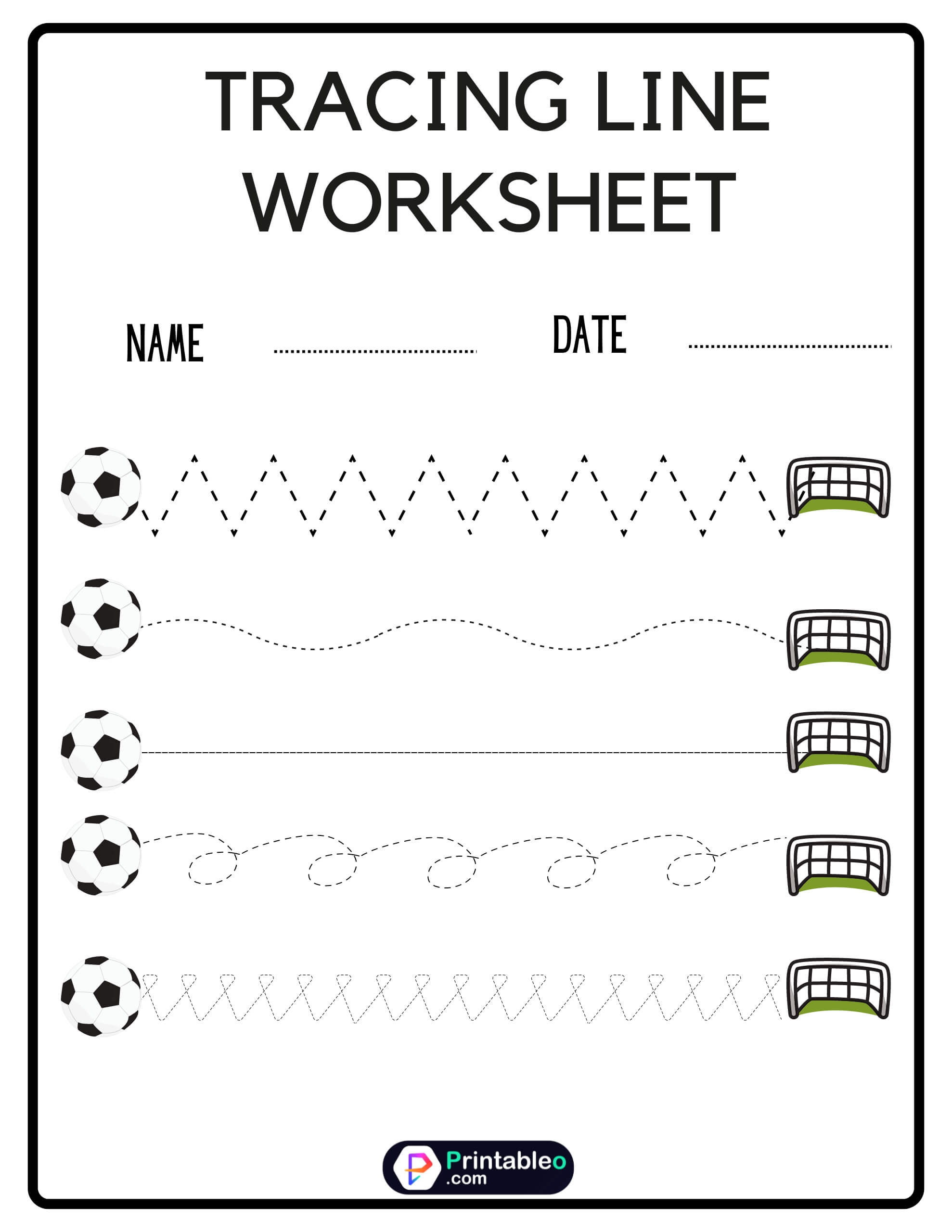
Many children recognize letters, numbers, and symbols long before their fine motor skills can actually form them on paper. According to the American Occupational Therapy Association, foundational hand strength and pencil control must develop steadily through targeted practice before complex writing tasks become comfortable. Watching a young child squeeze a pencil with white knuckles reveals an urgent need for engaging, low-pressure tools that build dexterity without frustration. Enter the tracing lines sports theme printable, a dynamic resource that transforms the mechanics of pencil control into an exciting athletic journey. Soccer balls, basketballs, and running tracks invite young learners to guide their writing utensils smoothly across the page, bridging the gap between cognitive readiness and physical execution.
💡 Educational Key Takeaways:
- Core Skill: Structured Tracing Lines Sports Theme focused on developing pencil grip, stroke control, and early literacy/math confidence.
- Target Scope: Suited for homeschoolers, preschool, kindergarten, and elementary learners.
- Best Recommendation: Practice 10–15 minutes daily with ergonomic writing tools to reinforce muscle memory without hand fatigue.
What This Worksheet Covers
This specific activity focuses heavily on foundational pre-writing strokes, directional tracking, and visual-motor integration. Children encounter a variety of paths ranging from straight vertical and horizontal lines to gentle curves, zigzags, and looping patterns. These diverse trajectories mirror the foundational strokes required for future handwriting success, including capital letters and numerical digits. By integrating familiar athletic motifs, the layout maintains high interest levels for children who might otherwise resist traditional pencil-and-paper tasks. It sounds simple, and that is the point; removing cognitive clutter allows the hand and brain to focus entirely on smooth, controlled movement.
Key Learning Outcomes
Targeted engagement with these physical pathways yields noticeable improvements in bilateral coordination and visual tracking across the page. Learners build intrinsic hand strength and master the dynamic tripod grasp as they navigate from left to right. Spatial awareness improves significantly as pencils stay within structured visual boundaries, preparing children for future exercises found within Shape and Line Tracing collections. Furthermore, sustained concentration during these tracing tasks builds the stamina required for longer writing sessions in primary classrooms.
How to Use This Worksheet
Preparation involves printing the sheets on sturdy cardstock or slipping them inside reusable dry-erase pockets for repeated practice. Initial sessions benefit from letting children trace the paths with their index fingers first, feeling the directionality of the line before picking up a writing tool. Once the physical motion feels familiar, short-barrel crayons, broken golf pencils, or gel pens encourage a natural, functional grip. Adults should encourage a relaxed posture with feet flat on the floor, ensuring optimal proximal stability for distal fine motor control.
Practical Tips for Parents and Teachers
Here is what makes this worksheet different: it adapts seamlessly to different skill levels through thoughtful scaffolding and extension. Adults can model the starting point clearly, reminding learners that writing paths always begin on the left side of the page. For children struggling with control, breaking the task into smaller segments prevents hand fatigue and frustration. When mastery of basic paths occurs, encouraging continuous motion without lifting the pencil challenges the visual-motor system further, building a solid bridge to broader activities found in Fine Motor and Pre-Writing Skills programs.
Age-Appropriate Recommendations
Toddlers and preschoolers aged two to four thrive on horizontal, vertical, and simple wavy lines that introduce fundamental stroke control. According to the National Association for the Education of Young Children guidelines on developmentally appropriate practice, early learners require play-based, low-stakes activities that honor their physical maturation stages. Children aged five to eight benefit from more complex zigzags and loops that refine precision, speed, and spatial boundaries. For additional practice supporting this age group, exploring resources within Seasonal and Fun Themes keeps motivation high throughout the entire school year.
Fine motor control and visual-motor integration are essential predictors of early academic success and writing fluency. — American Occupational Therapy Association
Frequently Asked Questions
Parents and educators frequently ask how to maximize the benefits of these printable pages during daily routines. Clear, direct answers help streamline preparation and implementation at home or in the classroom.
Regular engagement with structured tracing sheets strengthens intrinsic hand muscles, improves pencil grip, and enhances the visual-motor coordination necessary for legible handwriting. — Pediatric Occupational Therapy Practice Guidelines
Explore More Free Printable Tracing Worksheets
Supporting a young learner’s journey requires access to a diverse array of engaging, high-quality practice materials. Beyond athletic motifs, children benefit from exploring letter formation, numerical sequences, and creative themed challenges. Comprehensive collections covering everything from early alphabet mastery to advanced pencil control are readily available to support development at every single stage. Discover the full library of educational resources and printables by visiting KidTraces.com today.
Developmental Milestone & Activity Table
| Development Stage | Recommended Daily Duration | Primary Learning Objective |
|---|---|---|
| Preschool & Pre-K | 10 – 15 Minutes | Pencil grip development & basic pre-stroke lines |
| Kindergarten | 15 – 20 Minutes | Letter/number formation & spatial line awareness |
| Early Elementary (Grade 1–2) | 20 – 30 Minutes | Fluency, sentence construction & neatness |
Images References