Introduction
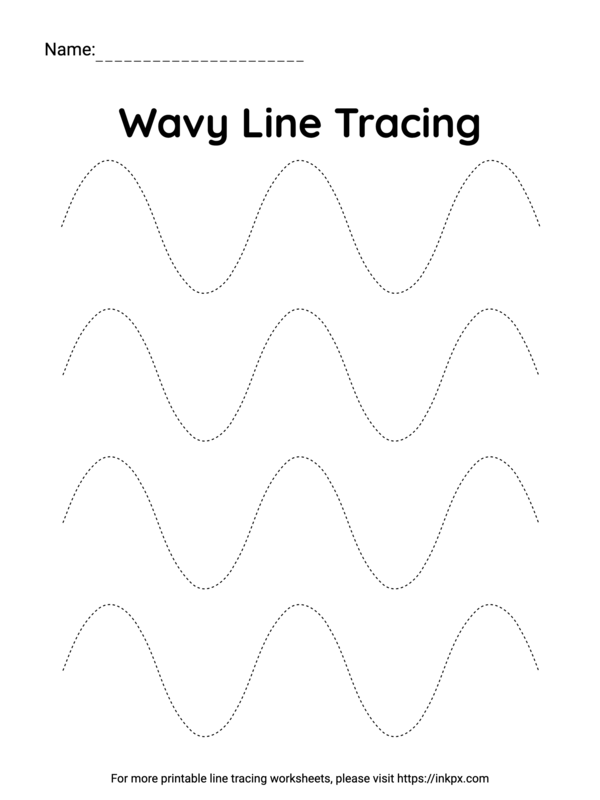
Many children recognize letters, shapes, and numbers long before their fine motor skills can actually form them on paper. According to the American Occupational Therapy Association, foundational fine motor control and visual-motor integration are essential prerequisites for functional handwriting and classroom success. Adults often notice a gap between a child’s cognitive understanding and their physical hand control. Bridging that gap requires purposeful practice that strengthens the tiny muscles of the hand while building fluid pencil movement. Enter the wavy tracing lines worksheet, a simple yet remarkably effective tool designed to build hand-eye coordination. It sounds simple, and that’s the point. Mastering undulating paths prepares tiny hands for the complex curves found in lowercase letters and cursive writing down the road.
💡 Educational Key Takeaways:
- Core Skill: Structured Wavy Tracing Lines focused on developing pencil grip, stroke control, and early literacy/math confidence.
- Target Scope: Suited for homeschoolers, preschool, kindergarten, and elementary learners.
- Best Recommendation: Practice 10–15 minutes daily with ergonomic writing tools to reinforce muscle memory without hand fatigue.
What This Worksheet Covers
The wavy tracing lines printable focuses entirely on continuous, flowing horizontal strokes that undulate across the page. Unlike rigid straight lines or sharp zig-zags, waves require the hand to continuously adjust its angle, shifting fluidly from wrist extension to flexion. This continuous motion trains the brain and hand to work in tandem, anticipating upcoming curves rather than stopping abruptly at every corner. Practicing these undulating paths targets the intrinsic hand muscles, which are responsible for stability and dexterity during prolonged writing tasks. Children explore rhythm and pacing as they navigate the gentle crests and valleys, transforming a static pencil grip into a dynamic, adaptable tool for future academic tasks.
Key Learning Outcomes
Working through these gentle curves yields measurable improvements in pen control and spatial awareness. Hand strength increases naturally as fingers learn to maintain steady downward pressure while moving laterally across the page. Visual tracking skills improve significantly because the eyes must scan ahead of the pencil tip to anticipate the curve’s trajectory. Furthermore, children develop bilateral coordination by using a non-dominant hand to stabilize the paper while the dominant hand executes the tracing path. These combined outcomes lay a rock-solid foundation for exploring more advanced concepts found within Shape and Line Tracing collections.
How to Use This Worksheet
Success with pre-writing sheets depends heavily on the setup and environment rather than endless repetition. Placing the paper on a slightly inclined surface naturally encourages a functional wrist position, preventing the frustrating ‘hooked’ grip that many children adopt on flat tables. Begin by having the child trace the wavy lines using a finger first, feeling the rhythm of the curve kinesthetically before introducing a writing utensil. Once a pencil, crayon, or marker is introduced, monitor posture and finger placement closely. Keep sessions short and engaging, celebrating smooth continuous strokes rather than rigid perfection.
Practical Tips for Parents and Teachers
Dynamic tripod grips take time to develop, so patience and gentle redirection are far more effective than forced corrections. If hand fatigue sets in quickly, try switching to shorter, thicker writing tools like broken crayons or golf pencils, which naturally encourage optimal finger placement. According to the National Association for the Education of Young Children, active exploration and play-based skill building support healthy physical development far better than rote drill worksheets. Scaffolding the activity is simple: if a child struggles with the continuous wave, start with shorter segments or provide tactile cues by gluing yarn along the lines for sensory guidance. Children ready for broader challenges can eventually transition to activities found in Fine Motor and Pre-Writing Skills resources.
Age-Appropriate Recommendations
Developmental expectations shift dramatically between toddlerhood and the early elementary years. Aligned with CDC developmental milestones, children aged two to four benefit immensely from large-scale wavy lines drawn on vertical surfaces like easels, using thick markers to encourage whole-arm movement from the shoulder. For children aged five to eight, the focus shifts to standard paper sizes, refining pencil control, and reducing the size of the waves to match standard writing line spacing. As children master these fluid motions, they unlock the foundational control needed to successfully tackle exercises in Tracing Worksheets.
Visual-motor integration and fine motor precision are core predictors of early academic and writing proficiency. — American Occupational Therapy Association (AOTA)
Frequently Asked Questions
Answers to common questions regarding printing, skill progression, and developmental milestones can help adults maximize the benefits of this resource.
Explore More Free Printable Tracing Worksheets
Supporting a developing writer is a wonderful journey that requires a diverse toolkit of engaging, developmentally appropriate activities. The complete library at KidTraces.com offers hundreds of printables designed to scaffold learning from initial pre-writing strokes all the way to independent handwriting. Whether expanding into alphabet mastery through Alphabet And Numbers Tracing or celebrating changing seasons with Seasonal and Fun Themes, every family and classroom can find fresh ways to make practice joyful and effective.
Developmental Milestone & Activity Table
| Development Stage | Recommended Daily Duration | Primary Learning Objective |
|---|---|---|
| Preschool & Pre-K | 10 – 15 Minutes | Pencil grip development & basic pre-stroke lines |
| Kindergarten | 15 – 20 Minutes | Letter/number formation & spatial line awareness |
| Early Elementary (Grade 1–2) | 20 – 30 Minutes | Fluency, sentence construction & neatness |
Images References