Introduction
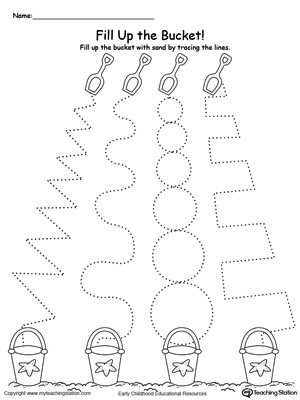
Many children recognize letters, numbers, and geometric shapes long before their fine motor control allows them to form those same symbols on paper. According to the American Occupational Therapy Association, foundational sensory-motor experiences are vital for developing the hand strength and coordination required for functional school-aged writing tasks. Translating visual recognition into physical output requires a bridge of multisensory practice. The free printable tracing in sand circles worksheet acts as this vital bridge, engaging young learners through tactile exploration before traditional pencil-and-paper demands take over. Sand patterns provide natural resistance, tactile feedback, and endless opportunities to correct mistakes without the pressure of erasing holes into fragile paper.
💡 Educational Key Takeaways:
- Core Skill: Structured Tracing In Sand Circles focused on developing pencil grip, stroke control, and early literacy/math confidence.
- Target Scope: Suited for homeschoolers, preschool, kindergarten, and elementary learners.
- Best Recommendation: Practice 10–15 minutes daily with ergonomic writing tools to reinforce muscle memory without hand fatigue.
What This Worksheet Covers
Circular trajectories form the fundamental building blocks for numerous letters, numbers, and curved geometric configurations. Children constantly encounter curves in daily visual stimuli, yet executing smooth, continuous circular strokes demands advanced bilateral coordination and visual-motor integration. This particular activity targets the foundational mechanics of pre-writing by encouraging continuous fluid motion rather than choppy, segmented line segments. Exploring circular motion prepares the hand and brain for mastering letters like ‘o’, ‘c’, ‘g’, and ‘a’, while also building core shoulder and arm stability that supports endurance during longer writing sessions. For more related activities, check out our Vertical And Horizonal Line Tracing Free.
Key Learning Outcomes
Mastering circular motions yields profound benefits for early childhood skill acquisition. Learners develop enhanced hand-eye coordination by visually tracking the trajectory of their tracing tool along curved pathways. Fluid movement control improves significantly, allowing little fingers to maintain consistent pressure and rhythm without hand cramping. According to the National Association for the Education of Young Children, process-oriented sensory art and foundational pre-writing experiences support spatial awareness and bilateral integration necessary for later academic success. Additionally, spatial orientation improves as children learn to anchor their strokes relative to a central focal point, establishing a strong mental map of top, bottom, left, and right.
How to Use This Worksheet
Bridging sensory play with structural learning requires a thoughtful, gradual approach that honors individual developmental timelines. Begin by placing the printable on a stable flat surface or slipping it inside a heavy-duty dry-erase pocket for durability. Encourage learners to first trace the paths with an index finger, experiencing the tactile cue of the printed sand circles before introducing any writing utensils. Once finger tracing feels secure, transition to short stubby crayons, golf pencils, or specialized writing tools that naturally encourage an appropriate tripod grasp rather than a fist grip.
Practical Tips for Parents and Teachers
Scaffolding these motor tasks effectively means observing closely and knowing when to step back or offer gentle physical guidance. Model correct starting points and directionality explicitly, ensuring the hand moves counter-clockwise for standard letter formations. Scaffold the experience by allowing children to use thick markers or even textured glue lines built directly over the circles if extra sensory feedback is required. Extend the learning by pairing the worksheet with real sand trays, salt boxes, or shaving cream play to reinforce the circular stroke through open-ended tactile exploration. Keep sessions short, positive, and playful to prevent hand fatigue and maintain intrinsic motivation.
Age-Appropriate Recommendations
Developmental readiness dictates how children interact with pre-writing materials across different age brackets. For toddlers and preschoolers aged two to four, the focus aligns closely with the Head Start Early Learning Outcomes Framework, emphasizing gross motor control, shoulder stability, and large whole-arm circular motions. Children in this stage benefit from exploring the printable with thick finger paints or by placing real sand over the outlines. For older children in kindergarten through second grade, ages five to eight, the expectations shift toward precision, pencil grip efficiency, and controlled wrist movement. At this stage, learners refine their stroke accuracy, ensuring their continuous lines stay neatly within the defined circular tracks while supporting broader literacy goals found in resources like Shape and Line Tracing.
Multisensory tactile tracing significantly improves stroke accuracy and letter retention in early elementary learners. — American Occupational Therapy Association
Frequently Asked Questions
Explore More Free Printable Tracing Worksheets
Expanding a child’s early writing toolkit involves offering a diverse variety of engaging, developmentally appropriate challenges that spark curiosity and build confidence. Beyond circular patterns, young learners thrive when exploring vertical lines, zig-zags, and diagonal strokes found in Fine Motor and Pre-Writing Skills collections. Educators and caregivers can also target specific letter formations using Dotted Letters For Tracing or transition into number fluency with dedicated Alphabet And Numbers Tracing printables. Every child progresses at a unique pace, making a rich variety of accessible practice materials essential for long-term writing success. Explore the complete library of resources designed to support every stage of development by visiting KidTraces.com today.
Developmental Milestone & Activity Table
| Development Stage | Recommended Daily Duration | Primary Learning Objective |
|---|---|---|
| Preschool & Pre-K | 10 – 15 Minutes | Pencil grip development & basic pre-stroke lines |
| Kindergarten | 15 – 20 Minutes | Letter/number formation & spatial line awareness |
| Early Elementary (Grade 1–2) | 20 – 30 Minutes | Fluency, sentence construction & neatness |
Images References