Introduction
Watch a group of young learners attempt to hold a pencil, and the intricate neurological demands of early writing become immediately apparent. According to the American Occupational Therapy Association, foundational fine motor control and visual-perceptual processing are vital prerequisites for successful handwriting and classroom participation. Many children recognize complex symbols long before their hand muscles possess the endurance or dexterity to form them consistently on paper. Bridging this developmental gap requires targeted pencil control practice that builds confidence without causing hand fatigue. The free printable tick the things which are shapes in the star, diamond, oval and heart shape worksheets offer an engaging solution by combining visual discrimination with precise pencil movements. These pages transform abstract geometry into a tangible, motivating exercise that strengthens the hand and sharpens the mind.
💡 Educational Key Takeaways:
- Core Skill: Structured Tick The Things Which Are Shapes In The Star, Diamond, Oval And Heart Shape Worksheets focused on developing pencil grip, stroke control, and early literacy/math confidence.
- Target Scope: Suited for homeschoolers, preschool, kindergarten, and elementary learners.
- Best Recommendation: Practice 10–15 minutes daily with ergonomic writing tools to reinforce muscle memory without hand fatigue.
What This Worksheet Covers
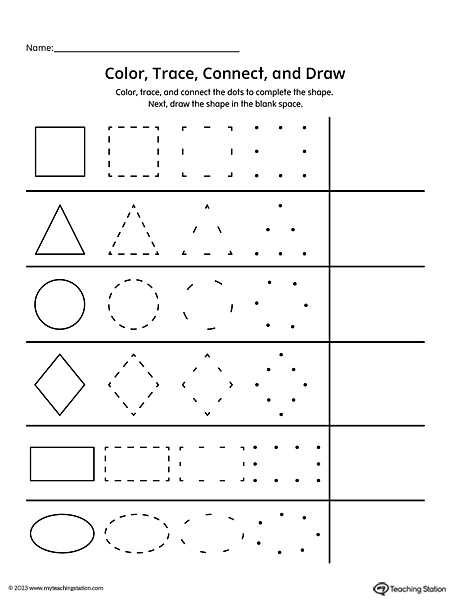
Visual-motor integration sits at the heart of early academic success. Children must coordinate what the eyes perceive with how the hand moves across the page. This specific resource focuses on identifying and interacting with advanced geometric figures, specifically stars, diamonds, ovals, and hearts. These shapes present unique challenges compared to basic circles and squares because they require diagonal lines, acute angles, and continuous curving. Practitioners frequently observe that sharp corners and intersecting lines test a child’s spatial awareness and motor planning. By prompting children to locate specific objects and place a mark inside or beside them, the activity refines both visual scanning and controlled pencil stops. This supports broader investigations found within Shape and Line Tracing practice areas.
Key Learning Outcomes
Targeted engagement with these unique forms yields multiple developmental milestones. Visual discrimination improves as learners scan a busy field of mixed objects to isolate specific geometric figures. Fine motor control advances because placing a deliberate checkmark or small tick inside a designated boundary demands precise wrist and finger modulation rather than broad, sweeping strokes. Spatial reasoning develops naturally as children analyze the distinct attributes of a five-pointed star versus a curved heart or elongated oval. Furthermore, sustained attention span increases when the task balances visual puzzle-solving with physical marking, keeping young minds actively invested from start to finish.
How to Use This Worksheet
Introducing printables effectively involves more than simply handing over a writing utensil and a sheet of paper. Preparation begins with environmental setup, ensuring the seating promotes upright posture with feet flat on the floor to provide proximal stability for distal hand movement. Begin by having the learner verbally name each target form before making a mark, reinforcing the connection between visual input and language processing. Encourage scanning from top to left-to-right, establishing healthy reading and writing directional habits early. If a child grows frustrated with the fine motor demand of creating a traditional checkmark, scaffold the task by allowing simple dots or small lines until hand strength improves, linking back to foundational Fine Motor and Pre-Writing Skills development.
Practical Tips for Parents and Teachers
Adults play a pivotal role in shaping healthy writing habits during these formative years. Model the correct pencil grasp explicitly, ensuring the thumb and index finger form an open web space while resting on the barrel. Watch for common pitfalls like a tight fist or thumb-wrap, and gently correct hand positioning before fatigue sets in. Scaffolding the activity means breaking it down into manageable chunks; let the child find all the stars first before moving on to diamonds and hearts. To extend the learning, transition from the paper to the physical world by asking learners to hunt for matching shapes around the classroom or living room, turning abstract geometry into a multi-sensory experience that reinforces everyday observation.
Age-Appropriate Recommendations
Developmental readiness spans a wide spectrum during early childhood. According to the National Association for the Education of Young Children guidelines for developmentally appropriate practice, children aged two to four benefit most from large-scale exploration, identifying shapes visually and pointing before attempting precise marks. For children aged five to eight, the expectations shift toward formal pencil control, accurate visual discrimination, and independent execution of intricate strokes. At this older stage, the worksheet serves as a refined tool for checking visual-motor precision and cognitive categorization. Educators can utilize these exercises to bridge early geometry lessons with fundamental writing readiness, supporting overall school preparation found across Tracing Worksheets collections.
Foundational fine motor control and visual-perceptual processing are vital prerequisites for successful handwriting and classroom participation. — American Occupational Therapy Association
Frequently Asked Questions
Clear guidance helps adults maximize the benefits of educational printables for every child.
Explore More Free Printable Tracing Worksheets
Supporting a growing child’s educational journey requires a diverse array of dynamic, engaging resources. Beyond geometric shape recognition and visual tracking, early learners thrive when given opportunities to practice line control, letter formation, and number sequencing in creative ways. Exploring the full collection available at KidTraces.com provides unrestricted access to hundreds of thoughtfully designed pages tailored to different developmental stages. Whether preparing a preschooler for kindergarten or helping an early elementary student refine pencil dexterity, supplementary printables ensure practice remains fresh, motivating, and directly aligned with developmental milestones.
Developmental Milestone & Activity Table
| Development Stage | Recommended Daily Duration | Primary Learning Objective |
|---|---|---|
| Preschool & Pre-K | 10 – 15 Minutes | Pencil grip development & basic pre-stroke lines |
| Kindergarten | 15 – 20 Minutes | Letter/number formation & spatial line awareness |
| Early Elementary (Grade 1–2) | 20 – 30 Minutes | Fluency, sentence construction & neatness |
Images References