Introduction
Many children recognize letters, signs, and complex symbols long before their fine motor skills can actually form them on paper. According to the American Occupational Therapy Association, foundational fine motor control and visual-motor integration are critical prerequisites for successful handwriting and classroom participation. It sounds simple, and that’s the point. Young learners often struggle to bridge the gap between cognitive understanding and physical execution. Tracing shapes with dotted lines provides the exact visual scaffolding needed to connect thought to paper. Here’s what makes this approach different: it breaks down intimidating writing strokes into manageable, predictable geometries that hands can learn to master naturally.
💡 Educational Key Takeaways:
- Core Skill: Structured Tracing Shapes With Dotted Lines focused on developing pencil grip, stroke control, and early literacy/math confidence.
- Target Scope: Suited for homeschoolers, preschool, kindergarten, and elementary learners.
- Best Recommendation: Practice 10–15 minutes daily with ergonomic writing tools to reinforce muscle memory without hand fatigue.
What This Worksheet Covers
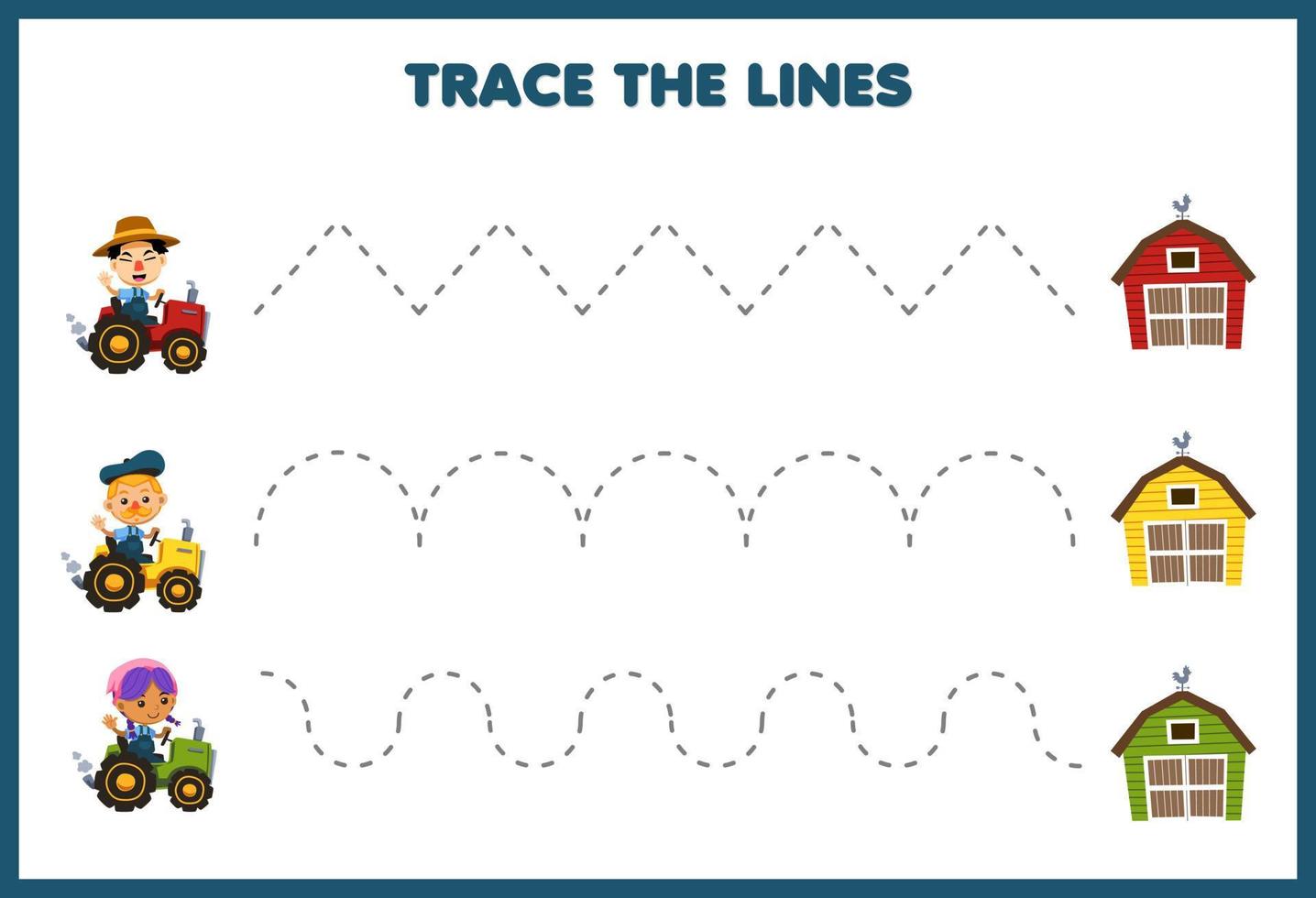
Visual-spatial planning starts long before children ever pick up a pencil to write their names or complete spelling lists. Geometric forms serve as the building blocks for every single letter in the alphabet, requiring the hand to execute continuous curves, sharp angles, diagonal slants, and closed loops. Working through structured shape pathways trains the visual and muscular systems to anticipate direction changes rather than just reacting to them. Children frequently lift their pencils mid-stroke or press far too hard because their hands lack the stabilizing endurance required for smooth lines. This resource systematically addresses these barriers by presenting circles, squares, triangles, and complex polygons in a progressive format.
Key Learning Outcomes
Deliberate practice with geometric outlines builds crucial hand-eye coordination by teaching eyes to track ahead of the pencil tip. Learners develop wrist stability and intrinsic muscle tone in the fingers, which directly translates to a more mature tripod or quadrupod pencil grasp. Directionality and spatial awareness improve significantly as students navigate top-to-bottom and left-to-right trajectories across the page. Furthermore, consistent engagement with these exercises fosters sustained attention span and task persistence when facing unfamiliar academic challenges.
How to Use This Worksheet
Preparation and environment dictate the success of any fine motor activity involving young children. Setting up a stable workspace with a child-sized chair and a flat surface ensures proper posture, allowing the shoulder and core muscles to stabilize the arm. Before putting markers to paper, guide the learner’s finger to trace the dotted paths tactilely, feeling the corners and curves before adding the variable resistance of a writing utensil. Educators and caregivers can pair these exercises with specialized options found throughout the Shape and Line Tracing archive to maintain high engagement without causing hand fatigue.
Practical Tips for Parents and Teachers
Modeling correct grip and stroke initiation sets the foundation for lifelong writing efficiency. Encourage a relaxed pinch hold rather than a tight, white-knuckled fist, gently reminding children to let their hand glide across the paper rather than hovering awkwardly. Scaffolding is essential; if a learner becomes frustrated by intricate angles, slide a clear protective sleeve over the page and let them practice with dry-erase markers first to reduce the permanence and stress of mistakes. When children need extra variety, transition them to parallel activities available in the Fine Motor and Pre-Writing Skills collection to reinforce identical neurological pathways through different themes.
Age-Appropriate Recommendations
Toddlers and preschoolers ages two through four benefit most from large, simplified circles and vertical lines that accommodate palmar or transitional grasps, aligning closely with the National Association for the Education of Young Children guidelines for developmentally appropriate practice. As children progress into kindergarten and early elementary school ages five through eight, expectations shift toward controlled geometric shapes, intersecting lines, and precision stopping points that mirror early academic standards. According to the Centers for Disease Control and Prevention developmental milestones, children in this older bracket should demonstrate increasing independence in drawing recognizable shapes and copying simple geometric designs. For broader foundational practice across these age groups, exploring resources like the Tracing Worksheets category offers seamless developmental continuity.
Foundational visual-motor integration and manual dexterity significantly predict early academic success and writing fluency — American Occupational Therapy Association
Frequently Asked Questions
Clear answers to common questions help parents and educators maximize the developmental value of printable resources.
Explore More Free Printable Tracing Worksheets
Supporting a child’s early literacy and motor journey requires a wide variety of engaging, developmentally targeted materials that adapt to changing skill levels. Every learner advances at their own unique pace, benefiting from targeted practice that targets specific pencil strokes, letter formations, and visual tracking skills. Discover an extensive library of educational resources designed by professionals to make learning fun and effective by visiting the main hub at KidTraces.com today.
Developmental Milestone & Activity Table
| Development Stage | Recommended Daily Duration | Primary Learning Objective |
|---|---|---|
| Preschool & Pre-K | 10 – 15 Minutes | Pencil grip development & basic pre-stroke lines |
| Kindergarten | 15 – 20 Minutes | Letter/number formation & spatial line awareness |
| Early Elementary (Grade 1–2) | 20 – 30 Minutes | Fluency, sentence construction & neatness |
Images References