Introduction
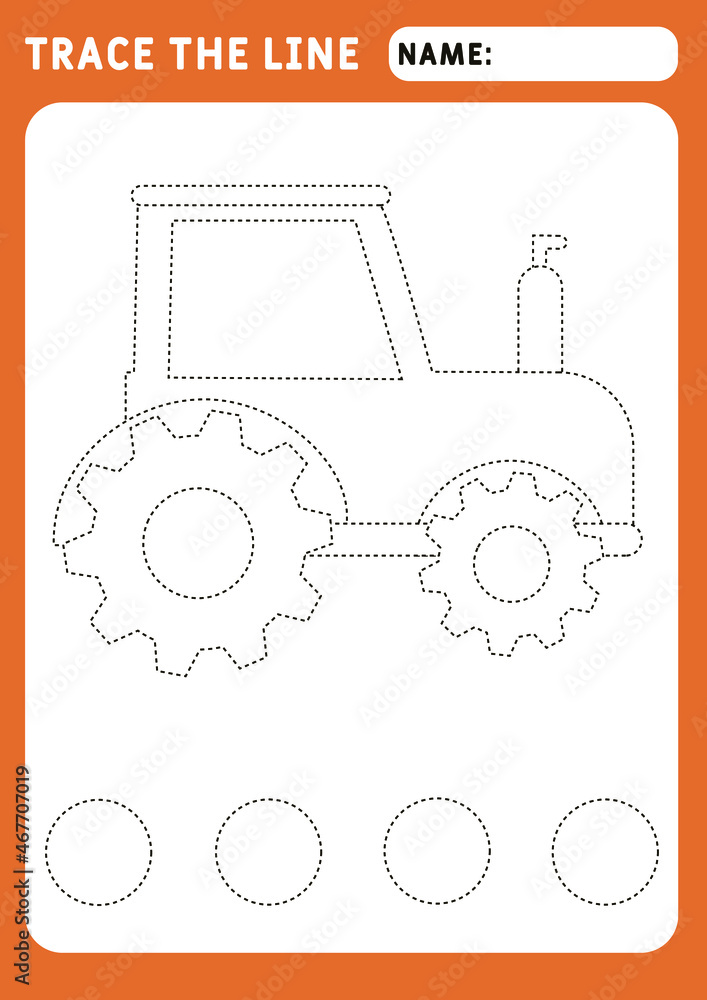
Many children recognize letters, shapes, and numbers long before their fine motor coordination is physically ready to form them on paper. This common gap between cognitive understanding and muscular execution often leads to frustration during early writing instruction. According to the American Occupational Therapy Association, foundational fine motor skills and controlled hand movements are essential precursors to functional handwriting and academic success. Bridging this gap requires engaging, low-pressure practice that builds hand strength without feeling like formal drill work. The free printable tractor and digger tracing lines resource transforms essential pre-writing strokes into an exciting construction site adventure. It sounds simple, and that’s the point. By turning mechanical pencil control into a game of driving heavy machinery along winding dirt roads, children willingly repeat crucial motor patterns. Exploring specialized materials like the Seasonal and Fun Themes collection helps sustain high levels of motivation during crucial developmental windows.
💡 Educational Key Takeaways:
- Core Skill: Structured Tractor And Digger Tracing Lines focused on developing pencil grip, stroke control, and early literacy/math confidence.
- Target Scope: Suited for homeschoolers, preschool, kindergarten, and elementary learners.
- Best Recommendation: Practice 10–15 minutes daily with ergonomic writing tools to reinforce muscle memory without hand fatigue.
What This Worksheet Covers
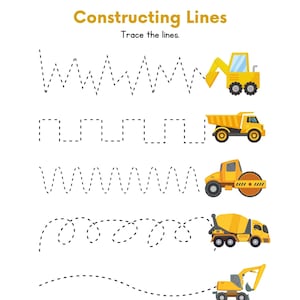
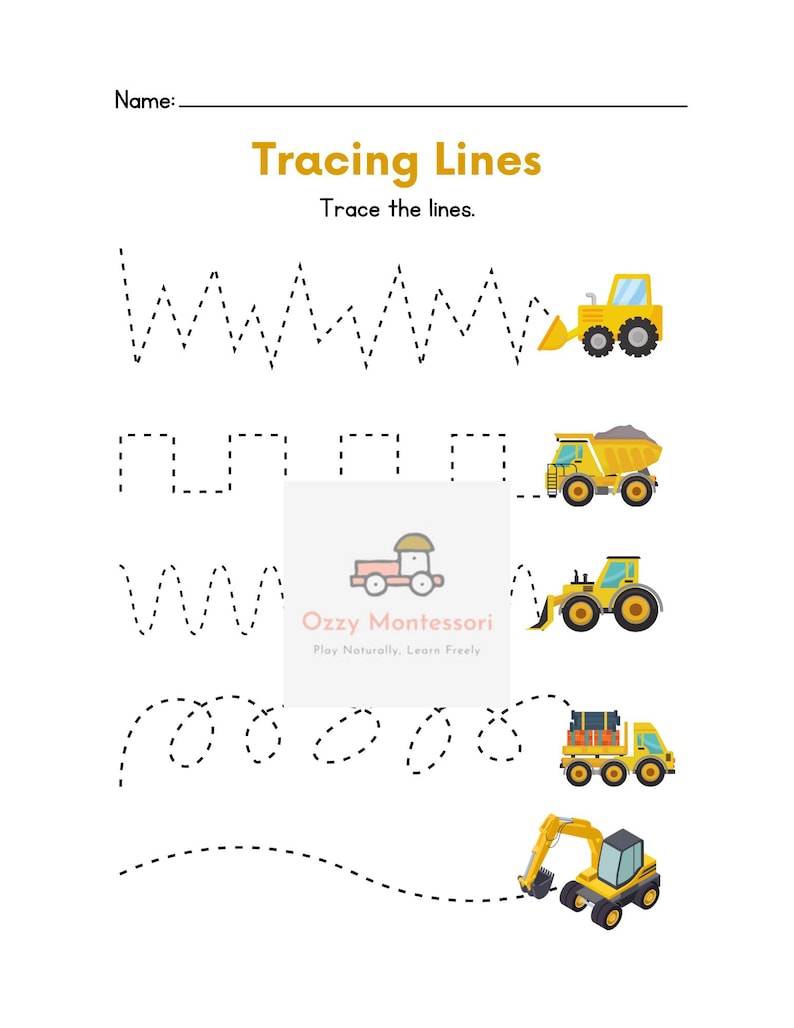
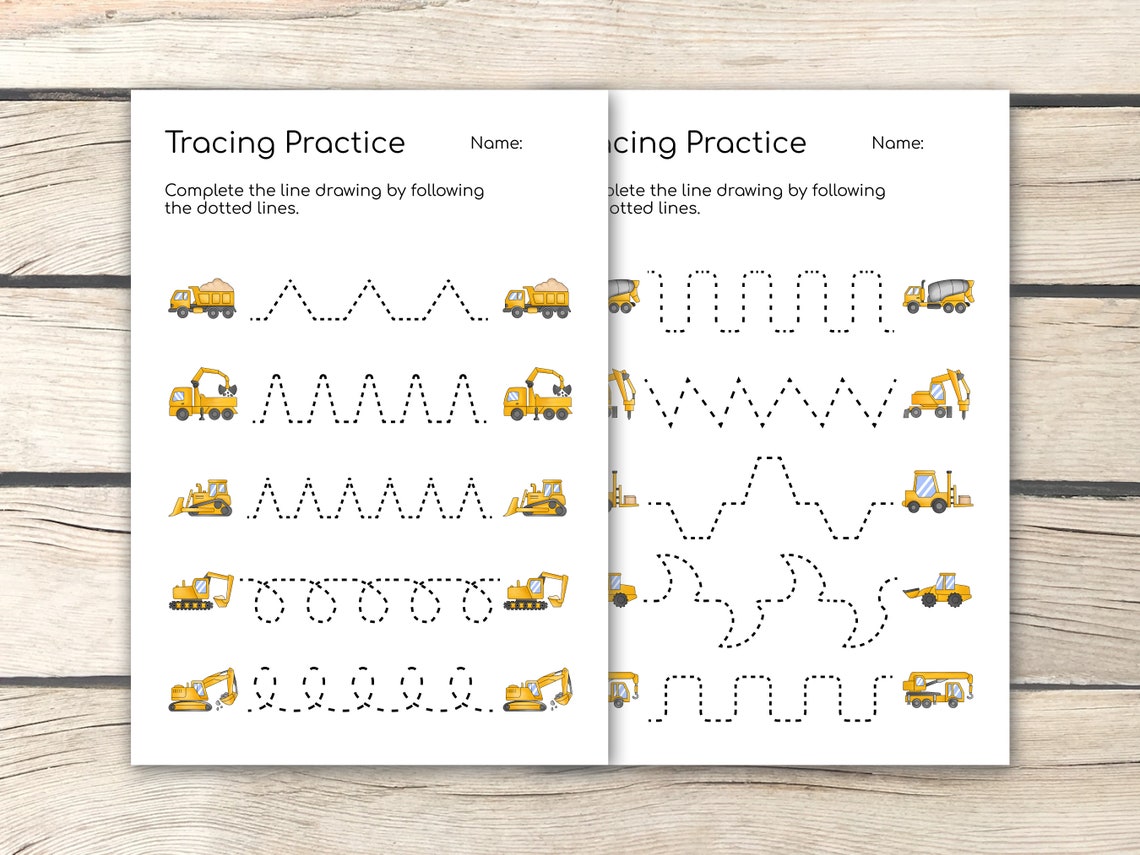
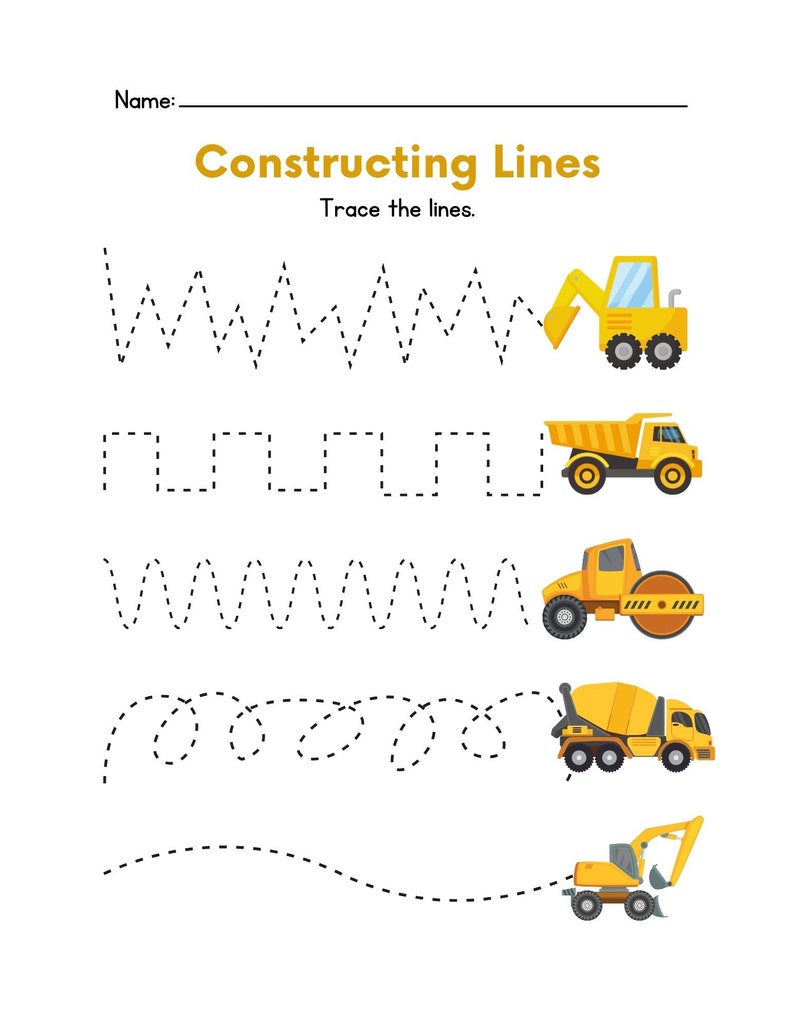
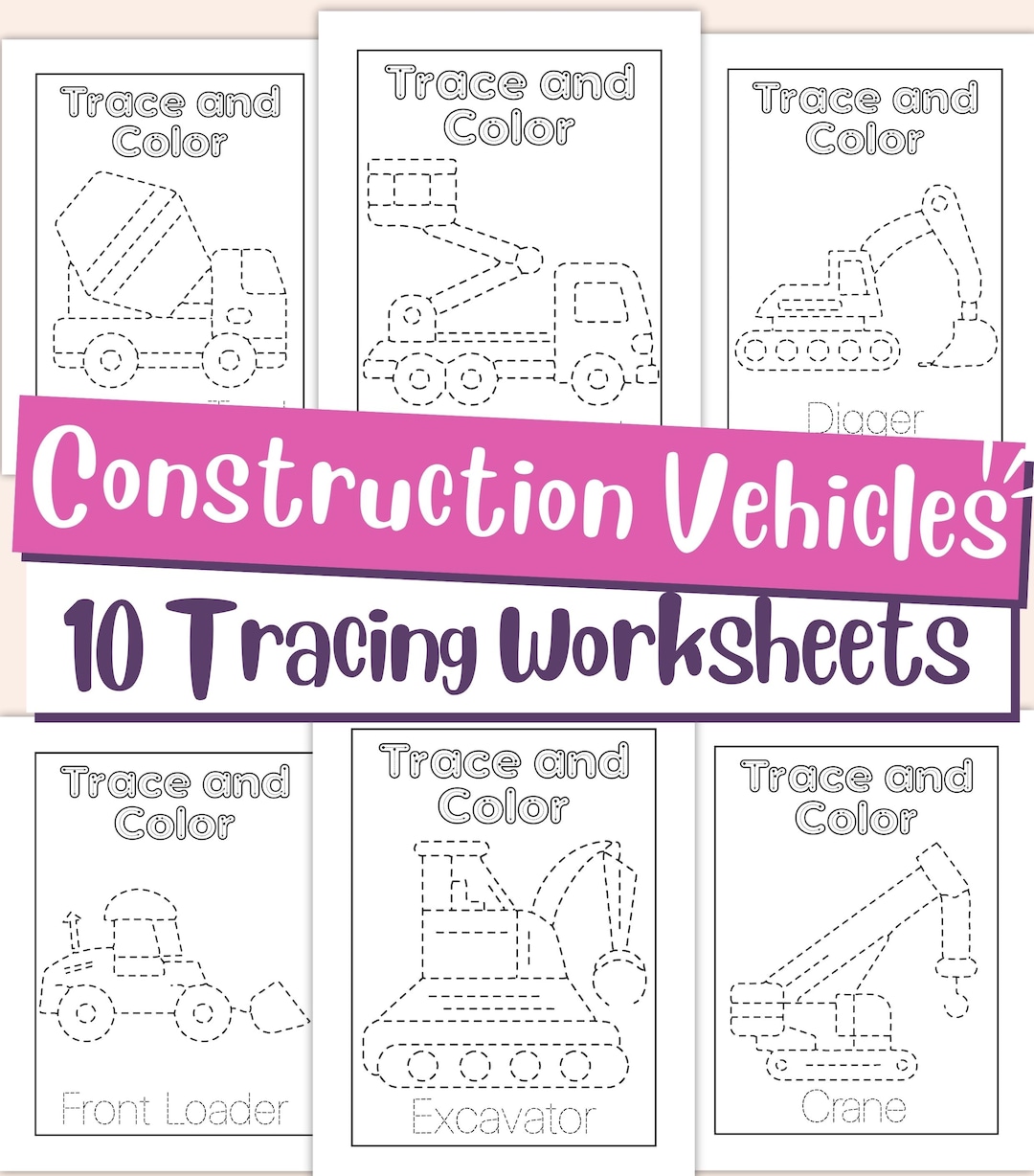
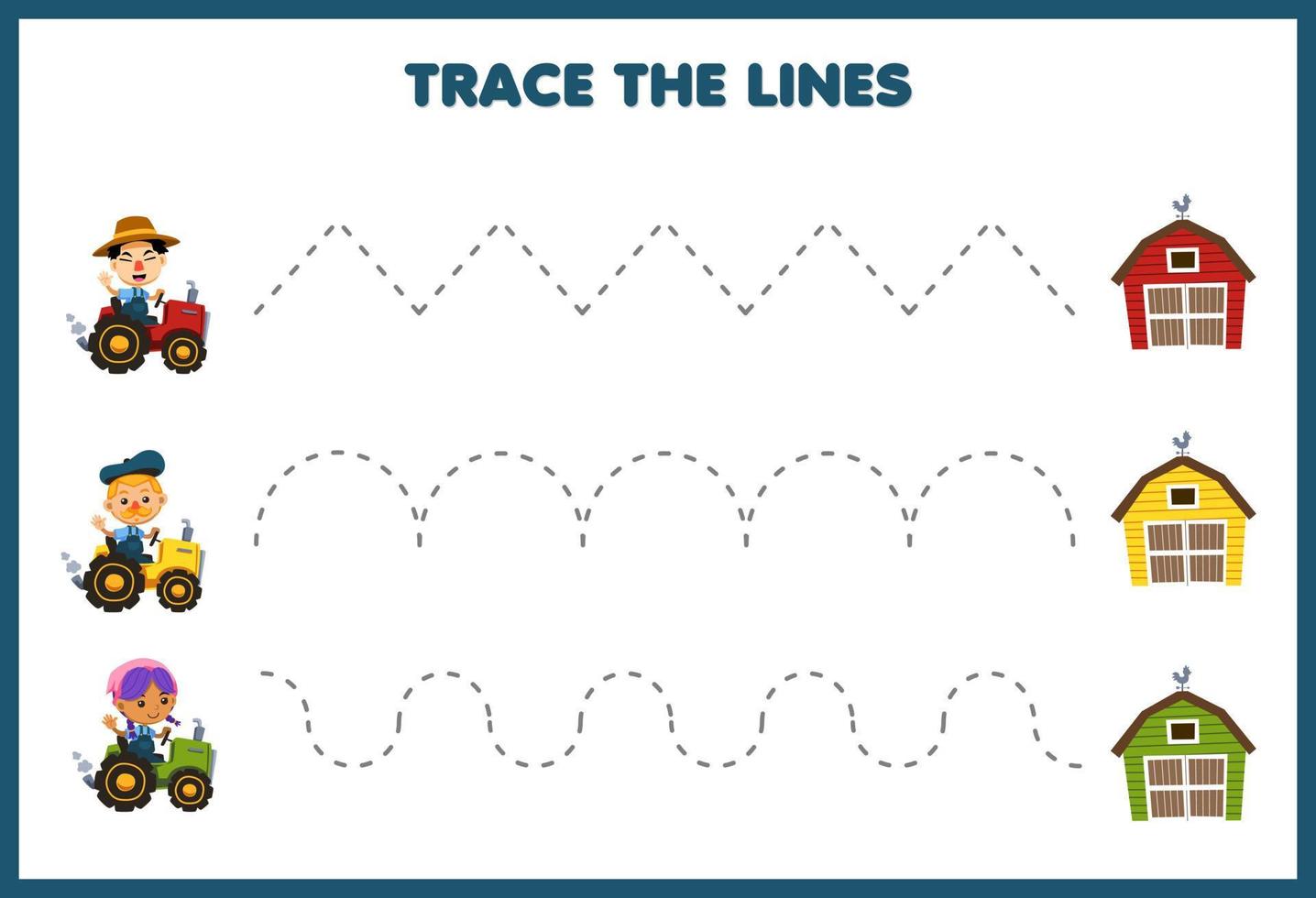
Construction-themed pages offer a structured progression of pre-writing strokes, moving from simple horizontal and vertical paths to complex diagonal, zig-zag, and looping tracks. Every path mimics the movement of a tractor hauling loads or a digger carving trenches across a worksite. According to the National Association for the Education of Young Children, active engagement with themed manipulatives and graphic materials significantly enhances spatial awareness and visual-motor integration in early childhood. Children guide dump trucks and excavators along dotted lines, which naturally reinforces directional tracking from left to right. This deliberate motion conditions the tiny intrinsic muscles of the hand to maintain a stable pincer grasp while moving smoothly across the page. Practicing these foundational shapes prepares young learners for more advanced writing challenges found throughout the Shape and Line Tracing category.
Key Learning Outcomes
Working through these construction tracks builds superior visual-motor integration, teaching the hand to follow what the eye perceives with accuracy and fluid pacing. Pencil control improves dramatically as children learn to regulate downward pressure, avoiding the heavy-handed gripping that leads to rapid hand fatigue. Crossing the midline becomes second nature as little arms sweep horizontally across the paper to guide a tractor from the left margin to a waiting barn on the right. Spatial awareness deepens organically as learners stay within narrow boundaries, respecting spatial margins just as they will later do on lined notebook paper. Finally, sustained task persistence grows stronger because the rewarding theme motivates children to complete an entire page rather than giving up halfway through a difficult curve.
How to Use This Worksheet
Setting the stage for success begins long before the pencil touches the paper. Preparing the environment involves ensuring a child-sized chair and table allow both feet to rest flat on the floor, providing the core stability required for fine motor control. Initial sessions might skip traditional pencils entirely in favor of broken crayons, short golf pencils, or even cotton swabs dipped in paint. These alternative tools naturally encourage a functional grasp by making it difficult to wrap a whole fist around the writing instrument. Lamination or slipping the sheets inside heavy-duty clear dry-erase pouches allows children to practice the same path multiple times with marker, reducing performance anxiety. When a mistake happens on a reusable surface, a quick swipe of a cloth wipes the slate clean for another try.
Practical Tips for Parents and Teachers
Adults play a vital role by scaffolding the experience rather than taking over the writing utensil. Modeling the correct grip while talking through the physical motion provides a clear blueprint, such as saying, watch the tractor make a big sweeping hill over the mountain. Scaffolding looks like offering hand-over-hand assistance only during the trickiest corners, then gradually fading support as muscle memory takes over. Extending the activity might involve bringing out toy tractors to physically trace paths built in a sandbox or shaving cream tray before returning to paper. Observing the hand reveals a great deal about fatigue levels; if the knuckles turn white or the wrist bends at an awkward angle, it is time for a movement break and hand shakes. Diversifying practice methods with resources from Fine Motor and Pre-Writing Skills ensures children develop balanced hand strength without repetitive strain.
Age-Appropriate Recommendations
Developmental readiness spans a wide spectrum between toddlerhood and the early primary grades, requiring flexible applications aligned with recognized frameworks. Younger children around ages two to four fall squarely within the NAEYC Developmentally Appropriate Practice guidelines, where success is measured by sensory exploration, palmar or digital pronate grasps, and tracing thick, simple vertical or horizontal lines. For this age group, enlarging the printable pages and using thick markers yields the best developmental results. Children ages five to eight transition into refined pencil grips, utilizing tripod grasps to conquer diagonal lines, tight zig-zags, and intricate loops as outlined in standard handwriting curricula. During these primary years, the construction theme shifts from basic line control to building the stamina required for longer writing blocks and sentence composition. Building a comprehensive practice routine is simple when incorporating materials from Tracing Worksheets to support every stage of growth.
Foundational fine motor control and visual-motor integration are robust predictors of later academic success and reading readiness in early childhood. — American Occupational Therapy Association
Frequently Asked Questions
Answers to common questions regarding implementation and developmental benefits provide immediate clarity for educators and families supporting young writers at home or in the classroom.
Explore More Free Printable Tracing Worksheets
Supporting a young writer’s journey requires a diverse selection of engaging, developmentally appropriate tools that grow alongside changing skill levels. Every child responds differently to various themes, line weights, and structural layouts, making a broad library invaluable for parents, educators, and homeschoolers alike. Exploring the full collection at KidTraces.com opens up hundreds of possibilities for targeted practice across every developmental domain. Whether a learner needs extra support with foundational strokes, letter formation, or number sequencing, additional printable resources remain readily accessible for daily learning adventures.
Developmental Milestone & Activity Table
| Development Stage | Recommended Daily Duration | Primary Learning Objective |
|---|---|---|
| Preschool & Pre-K | 10 – 15 Minutes | Pencil grip development & basic pre-stroke lines |
| Kindergarten | 15 – 20 Minutes | Letter/number formation & spatial line awareness |
| Early Elementary (Grade 1–2) | 20 – 30 Minutes | Fluency, sentence construction & neatness |
Images References