Introduction
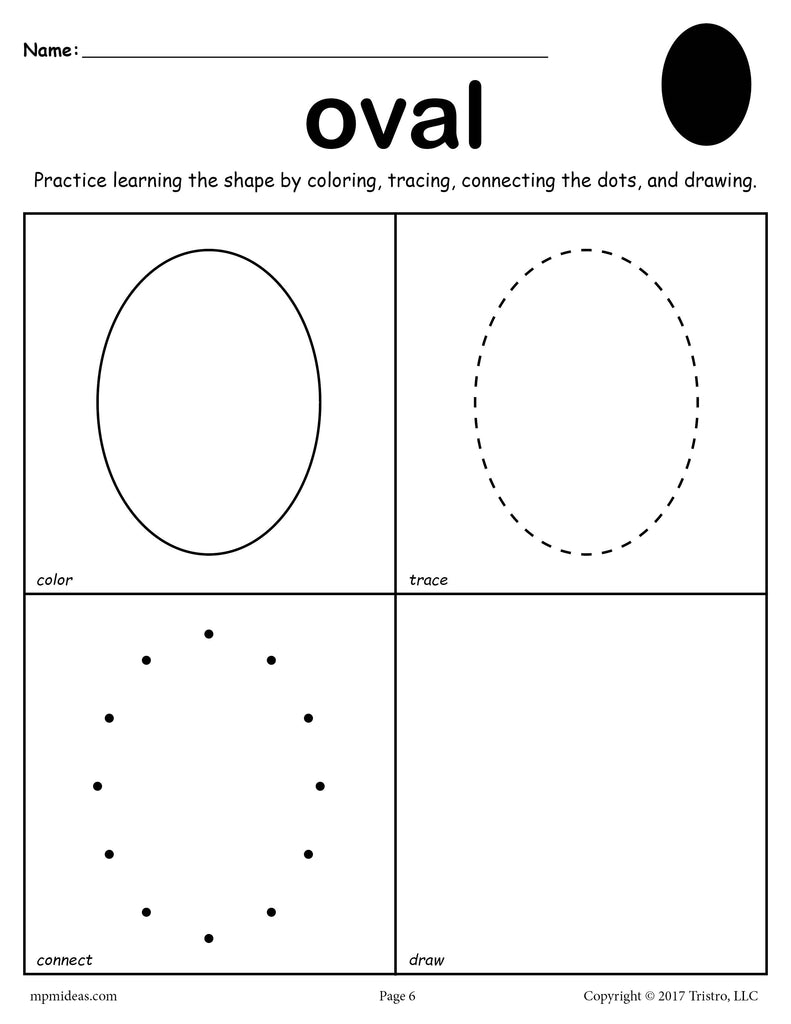
Watch any group of young children attempting to put pencil to paper, and the complexity of early writing instantly reveals itself. Many children recognize geometric shapes and letters long before their fine motor coordination and hand strength can successfully reproduce them on a blank page. According to the American Occupational Therapy Association, foundational fine motor tasks like manipulating writing tools are critical for daily functioning and academic success. Bridging that gap requires purposeful practice with visual-motor integration exercises. The form worksheet oval and diament offers targeted support for developing hands navigating curved and angled strokes. Mastering these specific shapes provides a direct physical bridge toward more complex letter formation and number writing later on.
💡 Educational Key Takeaways:
- Core Skill: Structured Form Worksheet Oval And Diament focused on developing pencil grip, stroke control, and early literacy/math confidence.
- Target Scope: Suited for homeschoolers, preschool, kindergarten, and elementary learners.
- Best Recommendation: Practice 10–15 minutes daily with ergonomic writing tools to reinforce muscle memory without hand fatigue.
WhatThisWorksheetCovers
Geometric tracing sheets provide structured opportunities for young learners to understand spatial boundaries, continuous line control, and visual-motor planning. It sounds simple, and that’s the point. Behind the humble outline of an oval and a diamond lies a complex choreography of visual attention, cognitive planning, and small muscle endurance. Ovals demand fluid, continuous curves that challenge the wrist and fingers to maintain a steady arc without collapsing into circles. Diamonds require abrupt directional changes at sharp angles, testing pencil control and kinetic pacing in ways that straight lines and squares simply cannot match. Practicing these forms helps build the exact muscle memory required for confident pencil handling across the broader Fine Motor and Pre-Writing Skills continuum. Children learn to anticipate corners, monitor pressure, and visually track their movement from starting point to completion.
Key Learning Outcomes
Engaging with this resource nurtures several interrelated developmental milestones simultaneously. Learners cultivate superior bilateral coordination as one hand stabilizes the paper while the dominant hand executes the precise tracing motion. Hand-eye coordination improves drastically as visual feedback guides the physical trajectory of the writing instrument along dotted paths. Furthermore, muscle endurance increases within the intrinsic hand muscles, reducing early hand fatigue during longer academic tasks. Children also internalize spatial awareness concepts such as inside, outside, top, bottom, and diagonal alignment, which serve as foundational building blocks for mathematics and geometry as well as literacy. Exploring these visual-motor challenges naturally complements broader practice found within Shape and Line Tracing activities, ensuring a balanced and comprehensive approach to early childhood preparation.
HowtoUseThisWorksheet
Successful implementation begins long before the pencil touches the paper. Adults should first observe how the child approaches the page, noting posture, paper angle, and grasp patterns without immediately interfering. Encouraging a functional grasp—such as a tripod or quadripod hold—ensures that fingers retain the flexibility needed to maneuver around tight corners and sweeping curves. Begin by inviting the child to trace the outline with a finger before introducing crayons, markers, or pencils. This multisensory approach activates tactile pathways in the brain, reinforcing the physical path of the shape before fine motor demands are applied.
Practical Tips for Parents and Teachers
Scaffolding instruction effectively means meeting the learner at the current developmental stage rather than forcing perfection. If a child struggles with the sharp vertex of a diamond, gently guide their hand through the corner once or twice before letting them try independently. Varying the writing medium can completely transform engagement; swap standard pencils for scented markers, colored chalk, or textured crayons to maintain high motivation. Slant the writing surface slightly upward using a binder or specialized slant board to naturally promote an upright wrist posture, which aligns with recommendations frequently shared in developmental therapy clinics. When young learners master these foundational geometries, expanding their tracing repertoire into Tracing Worksheets becomes a seamless, highly rewarding next step.
Age-Appropriate Recommendations
According to the National Association for the Education of Young Children guidelines on developmentally appropriate practice, learning experiences must align with children’s social, emotional, and physical readiness. For children ages two through four, tracing activities should focus heavily on gross motor arm movements, thick writing utensils, and large-scale shapes that encourage exploration rather than strict accuracy. At this stage, ovals are particularly accessible because continuous curves require less precise directional shifting. For children ages five through eight, expectations shift toward refined pencil control, proper line inhibition, and sharp corner execution, making the diamond shape an ideal challenge for kindergarten and early elementary grade levels. Integrating these exercises supports overall readiness standards outlined across early learning frameworks.
Proficiency in geometric pre-writing shapes like ovals and diamonds strongly correlates with future handwriting legibility and spatial organization in early elementary students. — American Occupational Therapy Association
FrequentlyAskedQuestions
Addressing common inquiries helps educators and families maximize the utility of these printables.
Tracing exercises actively reinforce motor planning, spatial awareness, and muscle memory, which form the biomechanical bedrock for all future letter and number formation. — National Association for the Education of Young Children
ExploreMoreFreePrintableTracingWorksheets
Providing children with a rich variety of engaging practice materials ensures sustained enthusiasm for early writing development. Beyond geometric forms, young learners benefit greatly from exploring diverse strokes, letters, and numbers that target distinct developmental domains. The entire curated collection available at KidTraces.com offers limitless opportunities to support confidence, motor control, and foundational literacy at home or in the classroom. Discover additional resources across General Kidtraces to build a comprehensive, joyful writing practice tailored to every unique developmental stage.
Developmental Milestone & Activity Table
| Development Stage | Recommended Daily Duration | Primary Learning Objective |
|---|---|---|
| Preschool & Pre-K | 10 – 15 Minutes | Pencil grip development & basic pre-stroke lines |
| Kindergarten | 15 – 20 Minutes | Letter/number formation & spatial line awareness |
| Early Elementary (Grade 1–2) | 20 – 30 Minutes | Fluency, sentence construction & neatness |
Images References