Introduction
Many children recognize letters, numbers, and basic geometric forms long before their fine motor control and hand muscles are mature enough to form them consistently on paper. According to the American Occupational Therapy Association, foundational fine motor manipulation and visual-motor integration skills must develop sequentially to support eventual functional handwriting and classroom success. Bridging that gap requires purposeful practice that combines visual recognition with physical control. That is precisely where pentagon shape worksheets for preschoolers enter the learning environment. Pentagons introduce unique challenges with their five straight sides and distinct angles, making them an ideal bridge between curved shapes like circles and complex alphanumeric characters. Exploring these geometric boundaries helps young learners refine pencil control while expanding early geometry and visual discrimination abilities.
💡 Educational Key Takeaways:
- Core Skill: Structured Pentagon Shape Worksheets For Preschoolers focused on developing pencil grip, stroke control, and early literacy/math confidence.
- Target Scope: Suited for homeschoolers, preschool, kindergarten, and elementary learners.
- Best Recommendation: Practice 10–15 minutes daily with ergonomic writing tools to reinforce muscle memory without hand fatigue.
What This Worksheet Covers
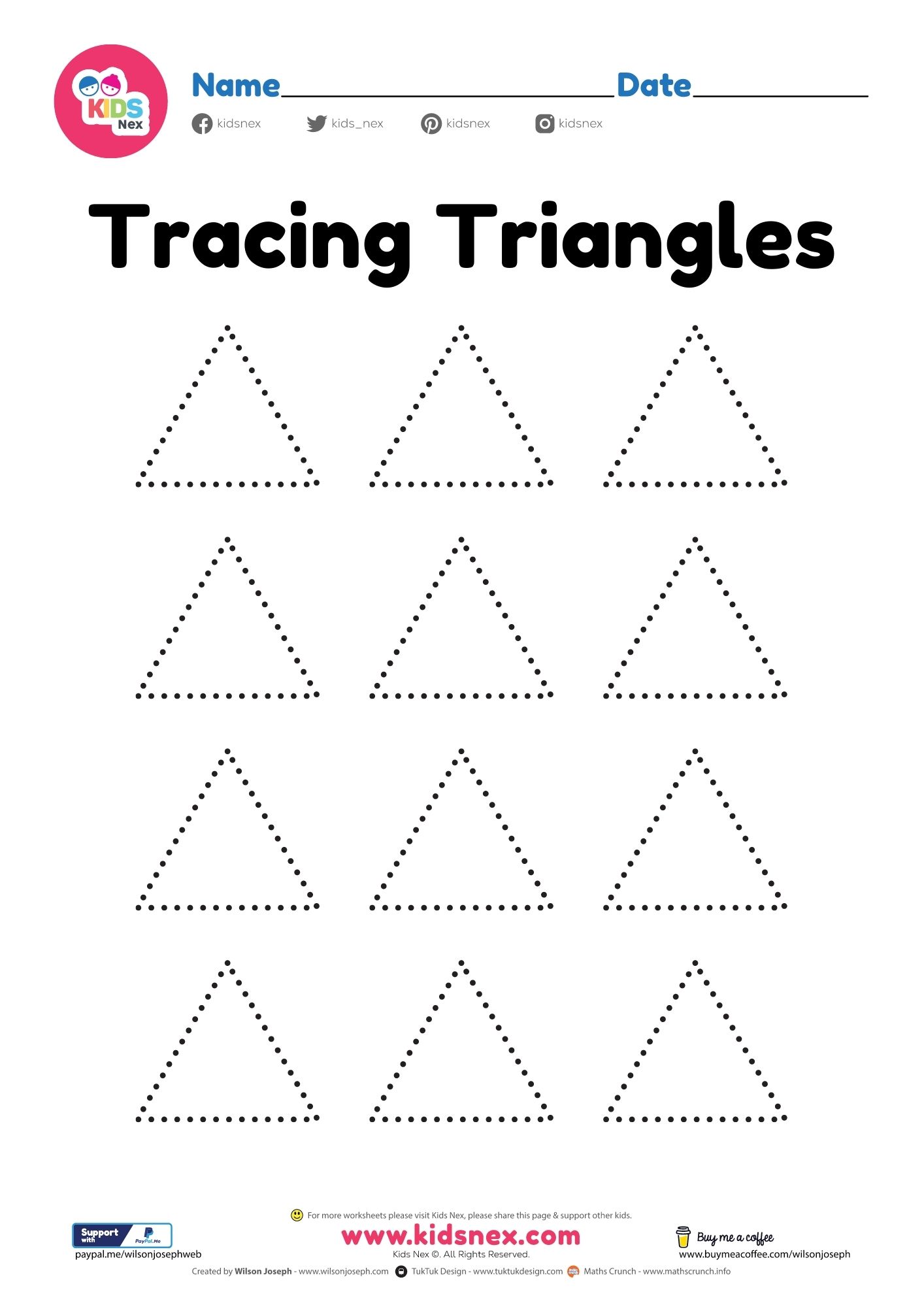
These specialized tracing pages focus on geometric shape recognition, spatial awareness, and pre-writing stroke control. Children encounter dotted outlines of standard pentagons in various sizes, alongside directional arrows that guide pencil movement from corner to corner. The layout transitions gradually from large, easy-to-manage shapes to smaller iterations that demand greater hand stability and visual-motor precision. It sounds simple, and that is the exact point. By stripping away extraneous distractions, the layout allows young learners to concentrate entirely on the physical mechanics of stopping, turning, and changing direction on a page. Educators often notice that children naturally rush through corners, rounding them off into organic curves; these structured exercises gently train the hand to pause at vertex points before executing the next straight stroke.
Key Learning Outcomes
Working through these geometry-based tracing exercises yields multiple developmental milestones. Children build essential visual-motor integration by coordinating eye movements with hand actions to track and trace five distinct lines. Hand strength and endurance improve naturally as tiny fingers maintain a functional grasp over repeated linear strokes. The worksheets also foster bilateral coordination, requiring one hand to stabilize the paper while the dominant hand executes the pencil control. Furthermore, young learners master spatial concepts such as inside, outside, top, bottom, and corner, laying crucial groundwork for future math and Shape and Line Tracing curricula. Finally, mastering angular shapes builds the cognitive and motor confidence required to eventually tackle complex letters like A, K, and M.
How to Use This Worksheet
Successful implementation begins with establishing a stable workspace where the child’s feet rest flat on the floor and the table sits at elbow height. Adults should introduce the pentagon shape by having children trace the perimeter with a finger first, feeling the five distinct corners before ever picking up a writing utensil. Once the pencil touches the paper, encourage a tripod or modified quadrapod grasp that allows finger mobility rather than a tight, locked fist. According to the National Association for the Education of Young Children, active scaffolding during playful learning experiences promotes optimal cognitive and motor growth. Adults can guide the child’s hand gently through the first few angles, gradually fading assistance until the learner can navigate all five sides independently.
Practical Tips for Parents and Teachers
Here is what makes this worksheet different: it treats angles as physical landmarks rather than abstract lines. Adults can make the tracing process multisensory by having children trace pentagons printed on textured cardstock or filled with small manipulatives like buttons or dried beans before writing. Keep sessions short—typically five to ten minutes—to prevent hand fatigue and frustration. If a child struggles with pencil grip, switch to shorter crayons or golf pencils, which naturally encourage fingers to rest closer to the tip for better control. Celebrate every successful corner turn rather than demanding perfection on the first try. Pairing these geometry exercises with broader foundational activities found in Fine Motor and Pre-Writing Skills ensures a well-rounded approach to early childhood development.
Age-Appropriate Recommendations
For younger children ages two to four, align with the CDC developmental milestones by offering oversized pentagon outlines that invite palmar grasps, finger-tracing, and thick crayon strokes. At this stage, focus purely on exposure, vocabulary, and exploring the concept of corners and straight lines without worrying about staying strictly on the dotted path. For children ages five to eight, apply standards from the Common Core ELA framework (such as kindergarten geometry standards requiring correct shape identification and drawing) by expecting precise pencil control, proper starting points, and accurate directional execution on smaller pentagons. Educators can extend the activity for older preschoolers by asking them to count the sides and vertices aloud, write the number five next to the shape, or incorporate the pages into broader thematic units found within Seasonal and Fun Themes.
Fine motor and visual-motor integration skills develop sequentially, laying the foundation for functional handwriting, spatial awareness, and geometric understanding in early childhood. — American Occupational Therapy Association
Frequently Asked Questions
Answers to common questions regarding pentagon tracing practice for young children.
Explore More Free Printable Tracing Worksheets
Supporting a young learner’s journey requires access to a wide variety of engaging, developmentally appropriate practice materials. Beyond geometric forms, children benefit greatly from exploring letter formation, numerical sequences, and thematic challenges that keep motivation high. Adults, teachers, and homeschoolers can browse the entire collection of resources, practice pages, and skill-builders by visiting the main library at KidTraces.com. Whether practicing early alphabet strokes through Alphabet And Numbers Tracing or refining letter sequencing via Word and Name Tracing, every printable is designed to build confidence, capability, and joy in early writing.
Developmental Milestone & Activity Table
| Development Stage | Recommended Daily Duration | Primary Learning Objective |
|---|---|---|
| Preschool & Pre-K | 10 – 15 Minutes | Pencil grip development & basic pre-stroke lines |
| Kindergarten | 15 – 20 Minutes | Letter/number formation & spatial line awareness |
| Early Elementary (Grade 1–2) | 20 – 30 Minutes | Fluency, sentence construction & neatness |
Images References