Introduction
Many children recognize letters, numbers, and festive symbols long before their fine motor coordination and hand strength are fully prepared to cleanly replicate them on paper. According to Reading Rockets, early literacy and writing success are deeply intertwined with the development of foundational hand control and visual-motor integration during the preschool and early elementary years. It sounds simple, and that is the point: the physical act of guiding a pencil along a designated path bridges the gap between cognitive understanding and muscular execution. This developmental gap is precisely where holiday-themed printables provide immense value. The free printable christmas elf tracing template transforms abstract pre-writing strokes into an engaging, festive challenge that captures attention while quietly building essential hand muscles. Children often sit up straighter and focus longer when a page features a cheerful holiday character rather than standard, uninspired drills. Here is what makes this worksheet different: it uses the magic of the season to sustain attention, keeping young learners motivated through every loop, zig-zag, and curve.
💡 Educational Key Takeaways:
- Core Skill: Structured Christmas Elf Tracing Template focused on developing pencil grip, stroke control, and early literacy/math confidence.
- Target Scope: Suited for homeschoolers, preschool, kindergarten, and elementary learners.
- Best Recommendation: Practice 10–15 minutes daily with ergonomic writing tools to reinforce muscle memory without hand fatigue.
What This Worksheet Covers
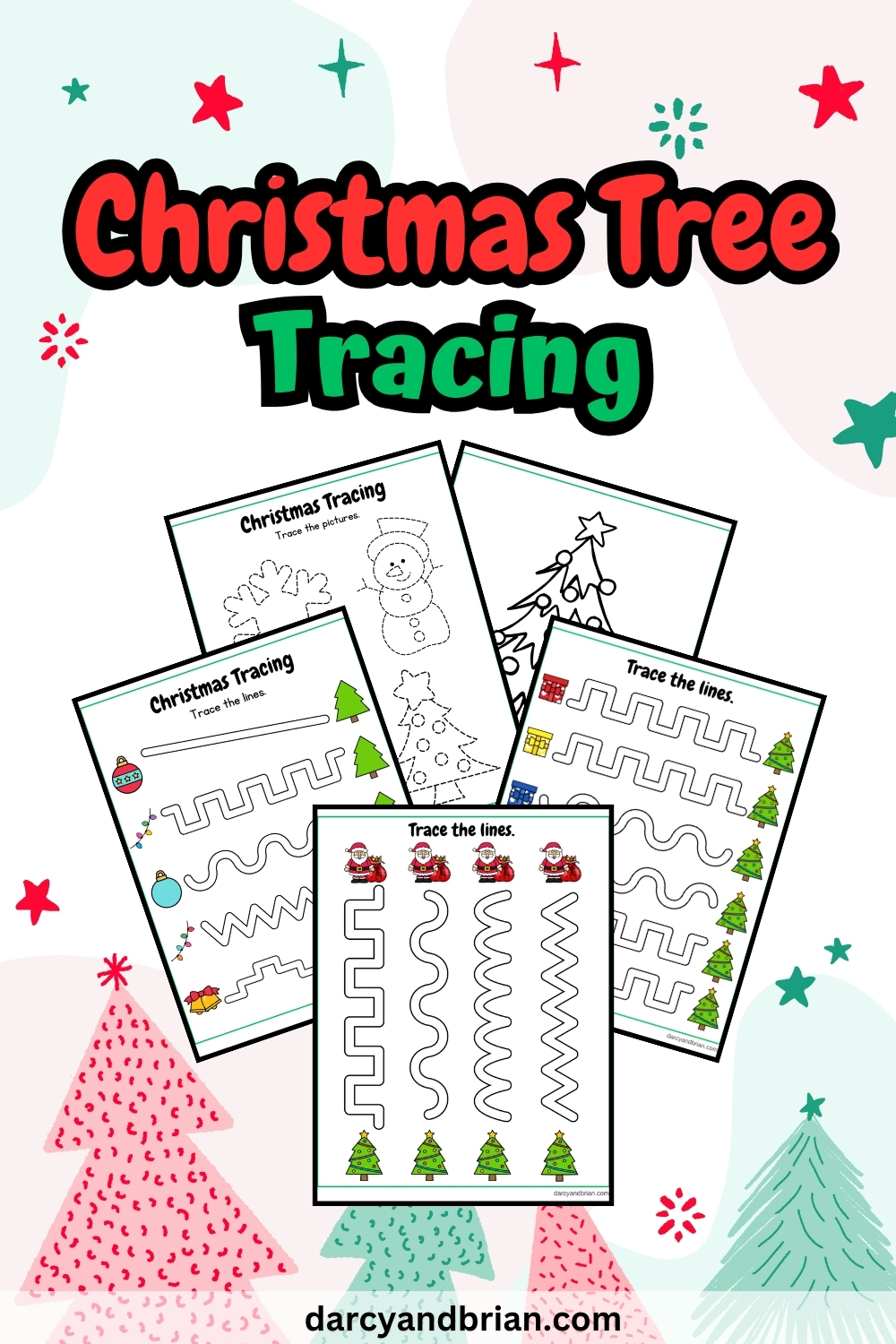
Pencil control requires a complex orchestration of visual tracking, spatial awareness, and intrinsic hand musculature that rarely develops by accident. Children need repeated, varied exposures to vertical, horizontal, diagonal, and curved lines before they can comfortably master formal letter formation. This particular festive template focuses heavily on foundational pre-writing strokes, directional tracking from left to right, and sustained fine motor control. The whimsical design guides the hand along paths that mimic elf hats, candy canes, and gift-ribbon loops, systematically preparing fingers for the precise demands of handwriting. Occupational therapy clinics frequently observe that children who struggle with spatial bounds on lined paper benefit immensely from practicing fluid stroke continuity on large-format graphic paths first. By engaging the small muscles of the hand through playful seasonal motifs, learners naturally refine their pincer grasp and bilateral coordination without the frustration often associated with traditional handwriting drills.
Key Learning Outcomes
Working through these seasonal tracing pathways builds critical foundational competencies that extend far beyond holiday crafts. First, young learners strengthen their pencil grip and finger dexterity, translating to better endurance during daily writing tasks. Second, the activity reinforces crucial visual-motor integration, teaching the brain to coordinate eye movements with precise hand positioning across a page. Third, left-to-right progression is naturally embedded into the layout, laying down the visual tracking habits essential for fluent reading. Finally, children develop increased emotional regulation and focus, learning to slow down and meticulously follow a complex line rather than rushing through the exercise.
How to Use This Worksheet
Integrating printable tracing resources into a daily routine works best when approached with flexibility and an eye toward individual developmental readiness. Print the activity on slightly heavier cardstock if young hands tend to tear standard printer paper during enthusiastic strokes, or slip the sheet inside a clear dry-erase sleeve for endless reusability with colorful markers. Placing the worksheet on a slightly slanted vertical surface, such as an adjustable easel or a sturdy binder propped up on a desk, naturally encourages an optimal wrist extension and a mature pencil grasp. According to the American Occupational Therapy Association, positioning the writing surface at a slant helps activate the stabilizing muscles of the forearm and wrist, reducing hand fatigue during extended drawing or writing sessions. Adults can sit beside the learner to observe grip adjustments, offering gentle verbal cues rather than taking over the writing utensil.
Practical Tips for Parents and Teachers
Scaffolding the experience ensures that every child feels successful regardless of their current fine motor stage. Begin by modeling the correct pencil grip, ensuring the thumb and index finger form a dynamic tripod while resting gently against the shaft. For younger children who find standard pencils fatiguing, try short crayons or golf pencils, which naturally encourage shorter finger placement closer to the tip. Guide an unsteady hand gently through the first few curves using hand-over-hand assistance, gradually fading physical support as confidence and muscle memory take over. Celebrate small victories, like staying close to the dotted line or maintaining a steady pace through a tricky corner, to keep frustration at bay.
Age-Appropriate Recommendations
Developmental expectations vary dramatically across early childhood, requiring tailored approaches for different age groups in alignment with established educational frameworks. For toddlers and preschoolers aged two to four, the focus aligns with the National Association for the Education of Young Children guidelines for developmentally appropriate practice, emphasizing large arm movements, thick writing tools, and simple curved lines that require gross motor control. For kindergarteners and early elementary students aged five to eight, the template serves as a fine-tuning tool that supports precise pencil control, stamina, and spatial awareness in accordance with Common Core standards for handwriting readiness. Older children can use colored pens or highlighters to trace the paths multiple times, challenging themselves to maintain absolute accuracy within the dotted boundaries.
According to the American Occupational Therapy Association, vertical and slanted writing surfaces naturally promote optimal wrist extension and intrinsic hand muscle activation in young learners. — AOTA Practice Guidelines
Frequently Asked Questions
Common inquiries regarding printing setup, fine motor progression, and developmental milestones are addressed below to help adults maximize the educational impact of these resources.
Explore More Free Printable Tracing Worksheets
Expanding a child’s collection of practice materials helps maintain high engagement and continuous skill progression throughout the school year. Exploring categories such as Fine Motor and Pre-Writing Skills provides targeted exercises for hand strength, while Shape and Line Tracing offers wonderful stepping stones for absolute beginners. For children mastering letter structures, Dotted Letters For Tracing and Alphabet And Numbers Tracing offer structured formatting. Discover holiday-specific practice in Seasonal and Fun Themes, spelling practice in Word and Name Tracing, and general resources at KidTraces.com.
Developmental Milestone & Activity Table
| Development Stage | Recommended Daily Duration | Primary Learning Objective |
|---|---|---|
| Preschool & Pre-K | 10 – 15 Minutes | Pencil grip development & basic pre-stroke lines |
| Kindergarten | 15 – 20 Minutes | Letter/number formation & spatial line awareness |
| Early Elementary (Grade 1–2) | 20 – 30 Minutes | Fluency, sentence construction & neatness |
Images References