Introduction
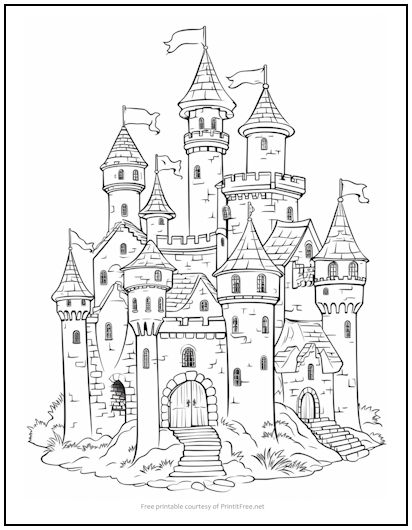
Many children recognize letters, grasp story concepts, and tell elaborate narratives long before their fine motor control allows them to physically form those letters on a page. According to the American Occupational Therapy Association, foundational fine motor skills—such as hand strength, bilateral coordination, and precise finger dexterity—are essential precursors to successful handwriting and daily functional tasks. Bridging that gap between cognitive readiness and physical execution requires engaging materials that build hand endurance without causing frustration. Children often resist traditional drills, yet they readily immerse themselves in imaginative scenarios that disguise purposeful hand exercise as play. That exact developmental sweet spot inspires the fairy castle tracing resource on {site_name}, where sweeping turrets, arched gateways, and magical pathways transform pencil control practice into an enchanting architectural adventure.
💡 Educational Key Takeaways:
- Core Skill: Structured Fairy Castle Tracing focused on developing pencil grip, stroke control, and early literacy/math confidence.
- Target Scope: Suited for homeschoolers, preschool, kindergarten, and elementary learners.
- Best Recommendation: Practice 10–15 minutes daily with ergonomic writing tools to reinforce muscle memory without hand fatigue.
What This Worksheet Covers
This printable resource focuses on foundational pre-writing strokes, spatial awareness, and directional control by inviting learners to trace intricate castle spires, winding pathways, and decorative stonework. Rather than rushing straight into dense letter formation, the layout utilizes horizontal, vertical, diagonal, and curved lines embedded within a whimsical fairy-tale setting. According to the National Association for the Education of Young Children, young learners benefit immensely from playful, hands-on experiences that develop visual-motor integration before moving to formal pen-and-paper writing tasks. Tracing these magical structures challenges small hands to execute smooth starts and stops, maintain consistent downward pressure, and navigate corners with deliberate precision. Every dotted line serves as a stepping stone toward mastering the specific motor patterns required for letters, numbers, and symbols found throughout collections like Shape and Line Tracing and Fine Motor and Pre-Writing Skills.
Key Learning Outcomes
Engaging with this printable directly strengthens visual-motor coordination as young learners visually track paths while simultaneously guiding their pencils along dotted lines. Hand strength and endurance improve naturally as fingers learn to modulate pressure to keep strokes steady along lengthy architectural curves. Spatial awareness expands as children navigate boundaries, stay within narrow pathways, and understand concepts such as top-to-bottom and left-to-right progression. Pencil grip stability is reinforced organically when the whimsical theme keeps focus high, allowing adults to gently coach finger placement without causing fatigue or disengagement. Finally, bilateral integration develops as the stabilizing hand anchors the paper securely while the dominant hand executes controlled, fluid movements across the page.
How to Use This Worksheet
Successful implementation begins with creating a comfortable physical workspace where feet rest flat on the floor and the table sits at elbow height. Printing the page on heavier cardstock or sliding it inside a clear plastic dry-erase sleeve instantly transforms the resource into a reusable center activity. Learners can trace the magical pathways using colorful dry-erase markers, thick crayons, or short pencils, which naturally encourage a functional tripod grasp by limiting fist-gripping space. It sounds simple, and that is the point: removing the permanence of ink allows children to experiment freely, erase mistakes without distress, and repeat favorite sections for extra motor practice.
Practical Tips for Parents and Teachers
Observing hand posture during tracing sessions helps adults catch fatigue early before bad habits take root. Modeling correct pencil placement directly on a separate sheet provides a visual reference, while breaking the activity into manageable chunks prevents hand cramping in younger children. Scaffolding the experience involves starting with thicker, prominent lines and gradually moving toward more delicate, intricate castle details as control improves. Extending the challenge might include asking learners to draw their own bridges or secret towers adjacent to the printed castle, bridging guided tracing with open-ended creative expression found across Seasonal and Fun Themes.
Age-Appropriate Recommendations
For toddlers and preschoolers ages two to four, alignment with the Head Start Early Learning Outcomes Framework emphasizes gross motor integration and early mark-making, meaning these children should focus primarily on larger lines, thick markers, and enjoying the sensory aspect of the fairy theme. Kindergarteners and early elementary students ages five to eight transition toward refined pencil control, matching the motor expectations outlined in Handwriting Without Tears for capital letter and number foundations. Older children can benefit from timing themselves playfully or using finer-tipped writing utensils to build precision and speed along the complex castle borders, laying groundwork that easily transitions into exercises found in Tracing Worksheets.
Foundational fine motor skills, including hand strength and visual-motor integration, are primary predictors of early academic success and functional independence. — American Occupational Therapy Association
Frequently Asked Questions
Explore More Free Printable Tracing Worksheets
Building robust writing readiness requires a diverse mix of engaging, low-stress practice materials that keep young learners motivated day after day. Beyond magical architectural themes, families and educators can explore an extensive collection of developmental resources available across KidTraces.com to support every unique stage of childhood motor growth.
Developmental Milestone & Activity Table
| Development Stage | Recommended Daily Duration | Primary Learning Objective |
|---|---|---|
| Preschool & Pre-K | 10 – 15 Minutes | Pencil grip development & basic pre-stroke lines |
| Kindergarten | 15 – 20 Minutes | Letter/number formation & spatial line awareness |
| Early Elementary (Grade 1–2) | 20 – 30 Minutes | Fluency, sentence construction & neatness |
Images References