Introduction
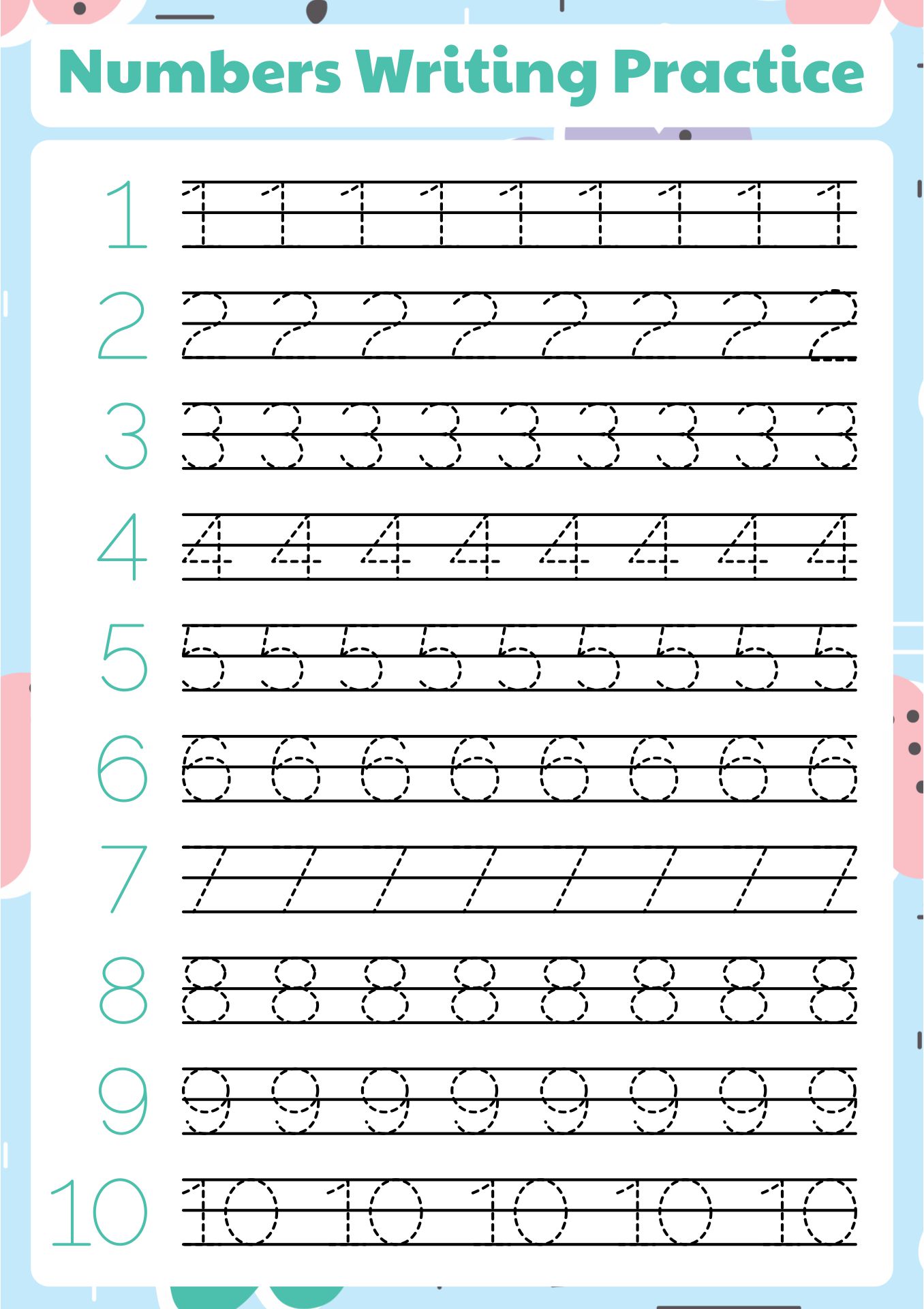
Watching a young child attempt to form their very first digits reveals a fascinating window into neurological and physical development. According to the American Occupational Therapy Association, foundational fine motor control and hand-eye coordination developed in early childhood serve as essential precursors for academic success and lifelong handwriting fluency. Many children recognize numerals long before their developing hand muscles possess the endurance or dexterity to form them accurately on paper. Bridging this gap requires structured, supportive practice that honors the natural progression of motor control. This understanding forms the backbone of the writing numbers 1-10 resource, a printable tool designed to guide young learners safely through proper numeral formation without inducing frustration or hand fatigue.
💡 Educational Key Takeaways:
- Core Skill: Structured Writing Numbers 1-10 focused on developing pencil grip, stroke control, and early literacy/math confidence.
- Target Scope: Suited for homeschoolers, preschool, kindergarten, and elementary learners.
- Best Recommendation: Practice 10–15 minutes daily with ergonomic writing tools to reinforce muscle memory without hand fatigue.
What This Worksheet Covers
Mastering numerals requires more than simply copying a shape; it demands an understanding of directional flow, starting points, and spatial awareness on a page. The writing numbers 1-10 layout provides distinct visual cues, directional arrows, and appropriately sized tracing lines to help learners transition from free scribbling to controlled, purposeful strokes. Every digit from one to ten presents unique biomechanical challenges, from the straight vertical plunge of the number one to the sweeping curves of the number three or the intersecting lines of the number four. Scaffolded tracing paths reduce cognitive overload, allowing the brain to focus entirely on guiding the writing instrument along the correct trajectory. It sounds simple, and that’s the point. By breaking down each numeral into manageable starting points and directional strokes, children build internal muscle memory that eventually turns halting, deliberate marks into automatic, confident writing.
Key Learning Outcomes
Engaging consistently with structured numeral tracing yields measurable growth across several developmental domains. Learners naturally develop proper pencil pressure, learning to distinguish between the heavy, fatiguing grip of an exhausted hand and the relaxed, dynamic tripod grasp that supports sustained writing. Spatial organization improves as children learn to anchor their numerals inside specific boundaries, respecting baseline constraints and spacing requirements between individual digits. Stroke directionality becomes second nature, reducing the common habit of drawing numbers from the bottom up or utilizing inefficient, non-standard looping patterns. Furthermore, numeral recognition solidifies alongside formation, reinforcing the crucial cognitive link between the abstract numerical symbol, its spoken name, and its physical manifestation on paper. Mastery of these early mathematical strokes supports broader curriculum goals found throughout Alphabet And Numbers Tracing collections.
How to Use This Worksheet
Implementation success relies heavily on creating a low-stress environment where experimentation is welcomed and mistakes are viewed simply as part of the learning process. Begin by placing the printable on a stable, flat surface where the child’s feet can rest flat on the floor, establishing the core stability needed for distal hand control. Encourage a functional grasp, but avoid rigid corrections that cause anxiety; instead, utilize specialized writing tools like short crayons or broken golf pencils to naturally encourage finger repositioning. Invite learners to trace the numbers with a bare index finger first, feeling the directional path before introducing a writing instrument. Working in short, five-minute bursts yields far better results than marathon sessions that tax immature hand muscles and lead to poor motor habits.
Practical Tips for Parents and Teachers
Adults play a vital scaffolding role during early writing sessions by modeling correct stroke order in real time. When demonstrating how to write a number, verbalize the physical movements aloud, using engaging cues like “start at the top, slide down, and make a flat floor” to anchor the visual path in the child’s memory. For learners who struggle with spatial boundaries, gently highlight the starting dot with a colored marker to draw immediate visual attention to the correct departure point. Extend the learning experience beyond the paper by encouraging children to form numerals in sensory trays filled with salt, sand, or shaving cream, which provides rich tactile feedback without the friction of a pencil. When children show readiness for broader pencil control tasks, integrating activities from Fine Motor and Pre-Writing Skills helps maintain high engagement and continuous skill refinement.
Age-Appropriate Recommendations
Aligning expectations with developmental frameworks ensures that practice remains joyful and appropriate for every child’s unique neurological timeline. According to the National Association for the Education of Young Children (NAEYC) guidelines on developmentally appropriate practice, children aged two to four benefit most from large-scale pre-writing experiences, vertical surface work, and gross motor tracking that prepares the shoulder and elbow joints for fine motor tasks. By ages five through eight, children enter the formal schooling years addressed by Common Core mathematics and foundational writing standards, where precision, line orientation, and automatic numeral formation become critical academic benchmarks. Tailoring the frequency and complexity of tracing tasks to these specific developmental windows prevents premature frustration and protects the child’s enthusiasm for learning. Additional practice sheets suited for varied developmental stages can be found within the broader Tracing Worksheets archive.
According to developmental motor research, explicit instruction in directional stroke patterns significantly reduces letter and number reversals in early elementary students. — American Occupational Therapy Association
Frequently Asked Questions
Clear guidance helps caregivers maximize the educational value of printable resources while resolving common printing and implementation hurdles quickly.
Explore More Free Printable Tracing Worksheets
Supporting a young learner through the exciting journey of early literacy and numeracy requires a diverse toolkit of engaging, accessible resources. Every child progresses at an individualized pace, moving fluidly between tactile exploration, shape control, and refined numeral formation. Exploring complementary categories such as Tracing Number provides endless opportunities to reinforce mathematical foundations in a playful, low-pressure format. Educators, parents, and homeschoolers seeking a comprehensive, organized library of free learning materials can discover countless printables designed to inspire confidence by visiting KidTraces.com today.
Developmental Milestone & Activity Table
| Development Stage | Recommended Daily Duration | Primary Learning Objective |
|---|---|---|
| Preschool & Pre-K | 10 – 15 Minutes | Pencil grip development & basic pre-stroke lines |
| Kindergarten | 15 – 20 Minutes | Letter/number formation & spatial line awareness |
| Early Elementary (Grade 1–2) | 20 – 30 Minutes | Fluency, sentence construction & neatness |
Images References