Introduction
Watch any group of preschoolers, and a fascinating gap quickly emerges between cognitive understanding and physical capability. Many young children recognize numerals long before their hands possess the intrinsic muscle strength and motor planning required to form them on paper. According to the National Association for the Education of Young Children, early writing development relies heavily on building hand and finger strength through playful, purposeful movement before formal pencil work begins. The free printable number tracing 1-10 resource bridges this exact gap by offering structured guidance that supports numeral formation, stroke order, and fine motor control. It sounds simple, and that is precisely the point. Through intentional practice, children transition from awkward grasping patterns to fluid, confident writing strokes that lay the foundation for lifelong academic success.
💡 Educational Key Takeaways:
- Core Skill: Structured Number Tracing 1-10 focused on developing pencil grip, stroke control, and early literacy/math confidence.
- Target Scope: Suited for homeschoolers, preschool, kindergarten, and elementary learners.
- Best Recommendation: Practice 10–15 minutes daily with ergonomic writing tools to reinforce muscle memory without hand fatigue.
What This Worksheet Covers
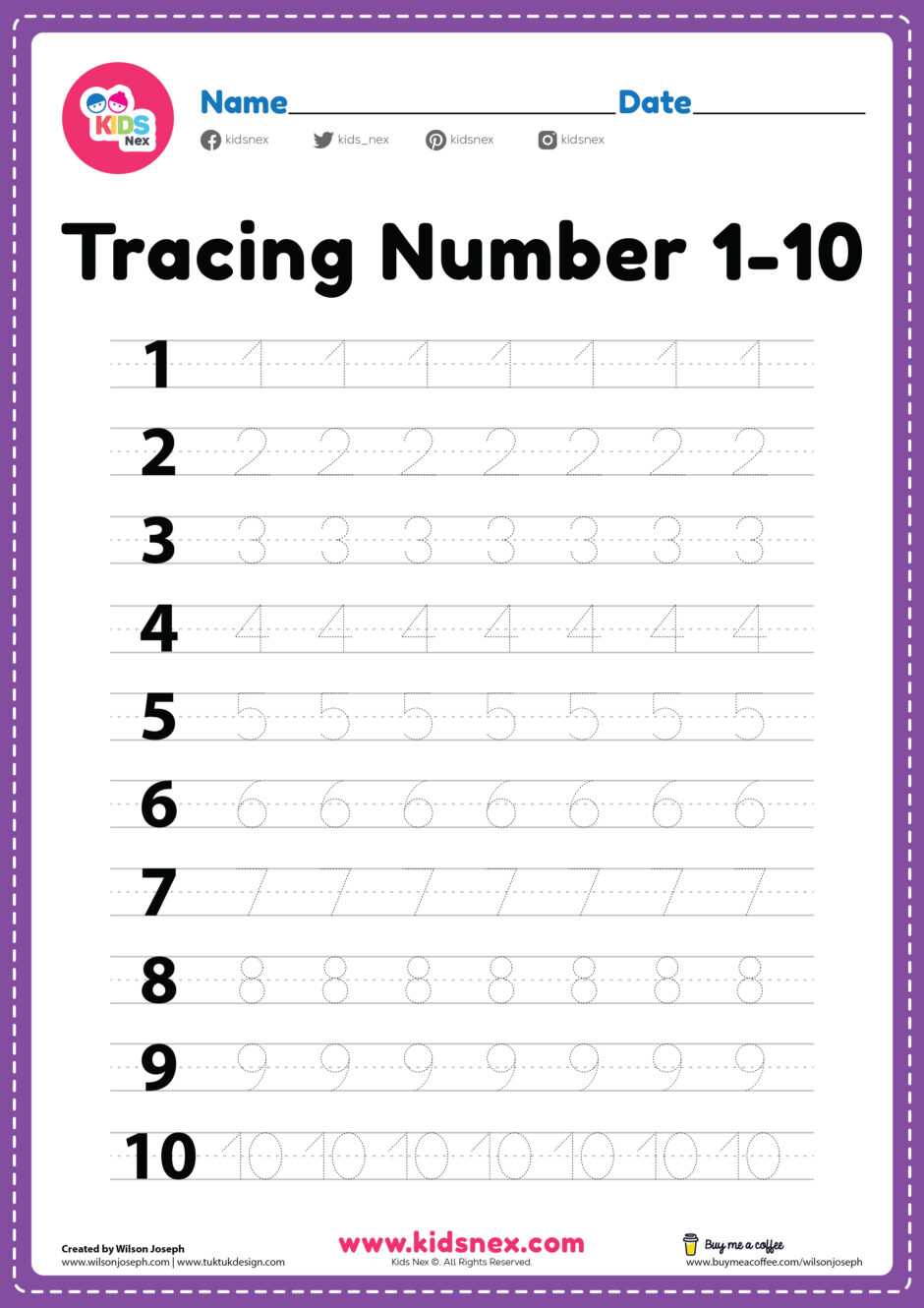
Building foundational math and writing skills simultaneously requires materials that target specific developmental milestones without overwhelming the learner. This resource focuses explicitly on the digits zero through nine, utilizing clear visual cues to guide young learners through each distinct stroke. Every numeral features clear starting points, directional arrows, and distinct paths designed to reinforce correct motor habits from the very first stroke. Many educators observe that children naturally invent their own idiosyncratic ways to draw numbers, such as starting a zero from the bottom or making a four with multiple disconnected lines. Guided numeral formation redirects these tendencies, teaching efficient movement patterns that reduce hand fatigue during longer writing tasks later in elementary school. By pairing number recognition with tactile pencil movement, these pages reinforce mathematical concepts while simultaneously developing the hand-eye coordination necessary for precise Fine Motor and Pre-Writing Skills.
Key Learning Outcomes
Working through these guided numeral paths builds several interconnected cognitive and physical competencies simultaneously. First, children master correct stroke order and directional persistence, which prevents reversals and builds automaticity in number formation. Second, tracing reinforces visual-spatial awareness as learners navigate the boundaries of the writing lines and estimate distances between digits. Third, the repetitive motion strengthens the small intrinsic muscles of the hand, specifically the lumbricals and interosseous muscles responsible for finger dexterity. Fourth, children solidify numeral recognition and sequencing, connecting the abstract visual symbol of a number with the physical movement required to produce it. These combined outcomes ensure that learners are not merely copying shapes, but are actively internalizing the foundational mechanics of early written communication.
How to Use This Worksheet
Maximizing the effectiveness of any printable resource involves meeting children at their current developmental level and providing the right amount of scaffolding. Begin by introducing the target numeral for the day using multisensory approaches, such as tracing the shape in the air, forming it with playdough, or tracing textured sandpaper cutouts. When transitioning to paper, ensure the environment promotes an upright posture with feet flat on the floor and the paper slightly slanted to match the natural angle of the child’s forearm. It sounds simple, but proper body positioning dramatically influences pencil control and endurance. Adults should encourage a functional grasp—such as a tripod or quadrupod grip—while remaining patient with children who are still transitioning from a power grasp. Consistency matters far more than volume, meaning that a few minutes of focused, high-quality tracing yield vastly superior results compared to rushing through multiple pages in frustration.
Practical Tips for Parents and Teachers
Supporting a developing writer requires careful observation and timely intervention to keep frustration low and motivation high. Model the correct starting point explicitly by pointing out the green dot or directional arrow before the child touches the pencil to the page. Scaffold the experience by starting with larger movements on thick primary lines, gradually moving toward standard Dotted Letters For Tracing and smaller numeral blocks as hand control improves. Extend the learning naturally by having children count physical objects—such as counting out five blocks to match the number five they just traced—to bridge the gap between abstract symbols and concrete quantities. According to the American Occupational Therapy Association, engaging children in vertical surface work, such as taping the worksheet to an easel or wall, naturally promotes wrist extension and postural stability, making the tracing process significantly easier for hands that fatigue quickly.
Age-Appropriate Expectations
Developmental readiness for writing follows a predictable sequence outlined in frameworks like the CDC milestones and early childhood educational standards. For younger children aged two to four, the focus centers on gross motor control, vertical line strokes, horizontal cross shapes, and imitation of simple circles. Expecting a three-year-old to neatly trace a tiny number inside narrow lines often leads to physical strain and frustration. Instead, younger learners benefit from large-format Shape and Line Tracing activities that build fundamental wrist mobility. By ages five through eight, children align with kindergarten and first-grade standards, such as Common Core ELA standard L.K.1.a, which requires printing all uppercase and lowercase letters, alongside the mathematical expectation of writing numbers from zero to twenty. At this stage, children refine their pencil pressure, decrease stroke hesitation, and achieve greater precision in size and proportion across the Tracing Number pages.
Early writing development relies heavily on building hand and finger strength through playful, purposeful movement before formal pencil work begins. — National Association for the Education of Young Children
Frequently Asked Questions
How do I download and print these number tracing sheets?
Click the download link on the resource page to save the PDF file directly to a device, then open and print using standard letter-size paper.
How does number tracing support fine motor development?
Number tracing requires precise visual-motor integration, finger isolation, and controlled pencil pressure, which strengthen the intrinsic hand muscles needed for writing.
What does the American Occupational Therapy Association recommend for pencil grip?
The American Occupational Therapy Association recommends encouraging a functional grasp like the tripod grasp while prioritizing hand comfort and endurance over rigid perfection.
Explore More Free Printable Tracing Worksheets
Expanding a child’s early learning journey involves providing diverse, engaging materials that cater to changing interests and developing skill sets. Beyond numeral formation, learners thrive when exploring related concepts that reinforce pencil control and cognitive flexibility. Discover a vast collection of free educational resources designed for young learners, including seasonal activities, letter formation practice, and creative pre-writing exercises. Explore the full library of resources available to support every stage of development at KidTraces.com today.
Developmental Milestone & Activity Table
| Development Stage | Recommended Daily Duration | Primary Learning Objective |
|---|---|---|
| Preschool & Pre-K | 10 – 15 Minutes | Pencil grip development & basic pre-stroke lines |
| Kindergarten | 15 – 20 Minutes | Letter/number formation & spatial line awareness |
| Early Elementary (Grade 1–2) | 20 – 30 Minutes | Fluency, sentence construction & neatness |
Images References