Introduction
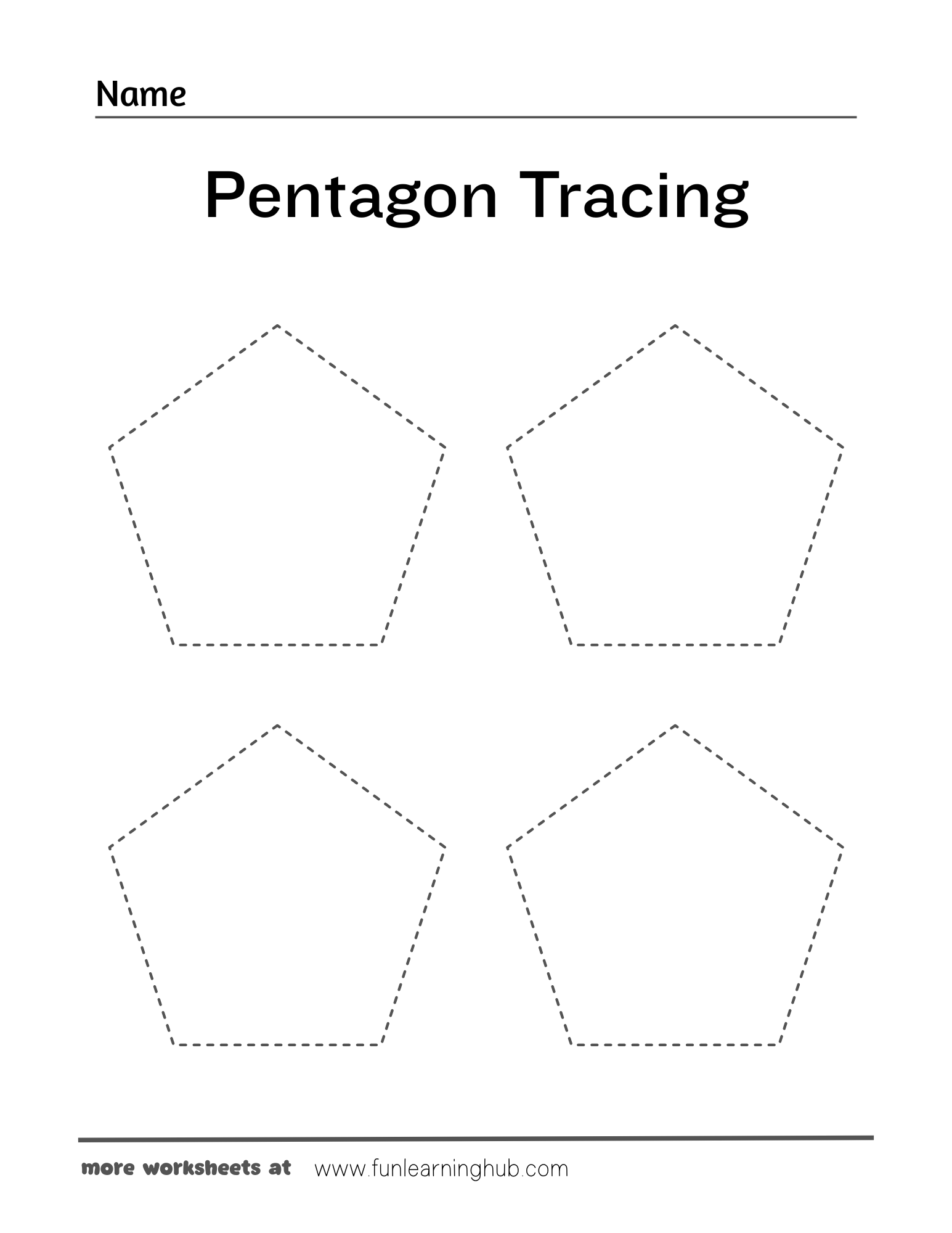
Many children recognize letters and geometric forms long before their intrinsic hand strength and fine motor dexterity can comfortably replicate them on paper. According to the American Occupational Therapy Association, foundational fine motor control and visual-motor integration are critical prerequisites for successful handwriting and academic success. Young learners often possess a clear cognitive grasp of shapes like triangles, squares, and pentagons, yet struggle to execute the continuous, controlled pencil movements required to draw them. It sounds simple, and that is the exact point: mastering the geometry of a shape requires bridging the gap between brain intention and hand execution. This is where targeted tracing practice transforms clumsy finger movements into confident strokes. The free printable tracing pentagon shapes worksheet offers children a structured, engaging pathway to conquer multi-sided figures, building the exact muscle memory needed for advanced pre-writing.
💡 Educational Key Takeaways:
- Core Skill: Structured Tracing Pentagon Shapes focused on developing pencil grip, stroke control, and early literacy/math confidence.
- Target Scope: Suited for homeschoolers, preschool, kindergarten, and elementary learners.
- Best Recommendation: Practice 10–15 minutes daily with ergonomic writing tools to reinforce muscle memory without hand fatigue.
What This Worksheet Covers
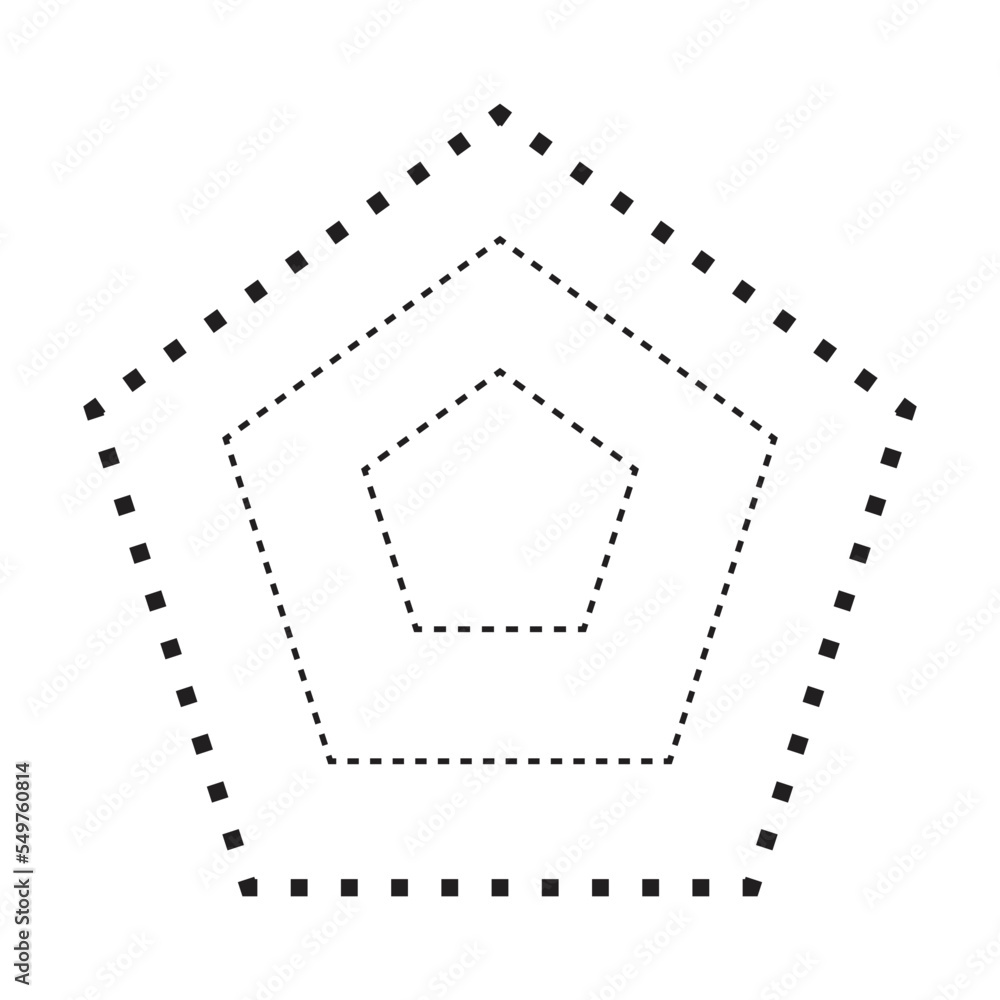
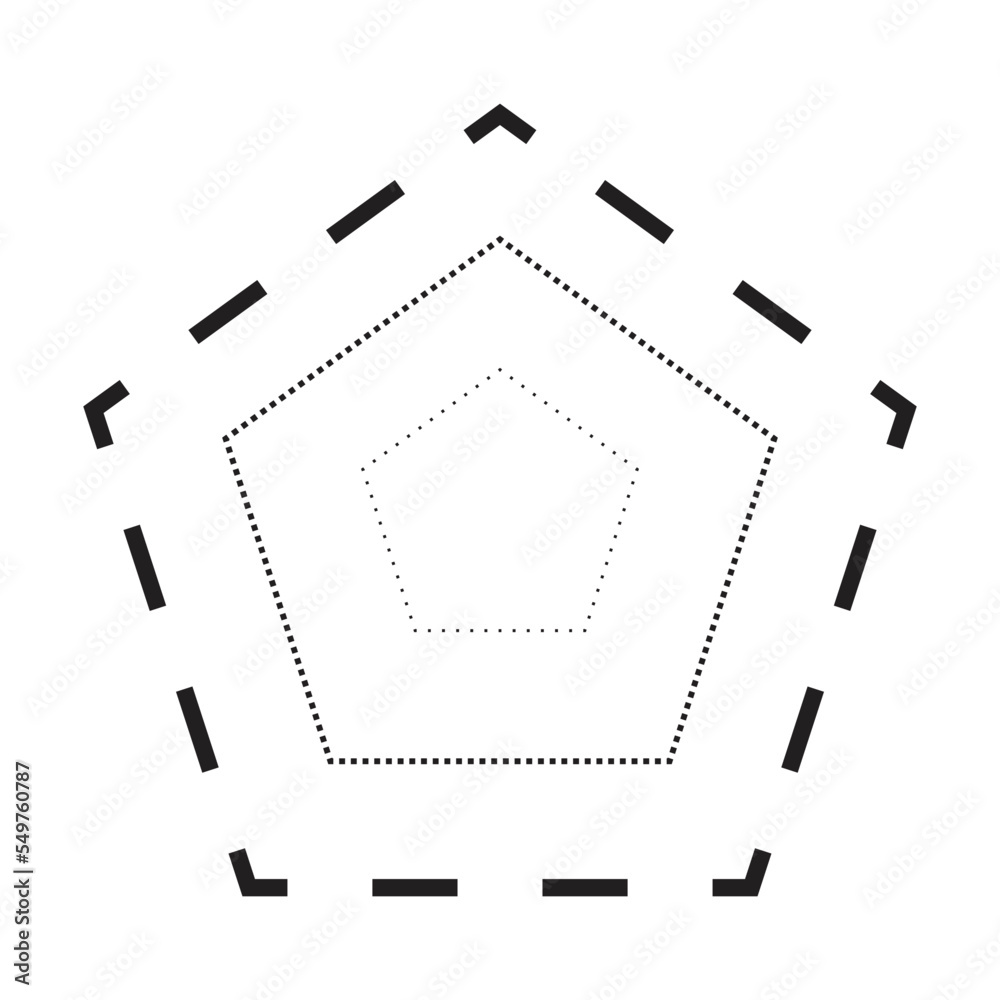
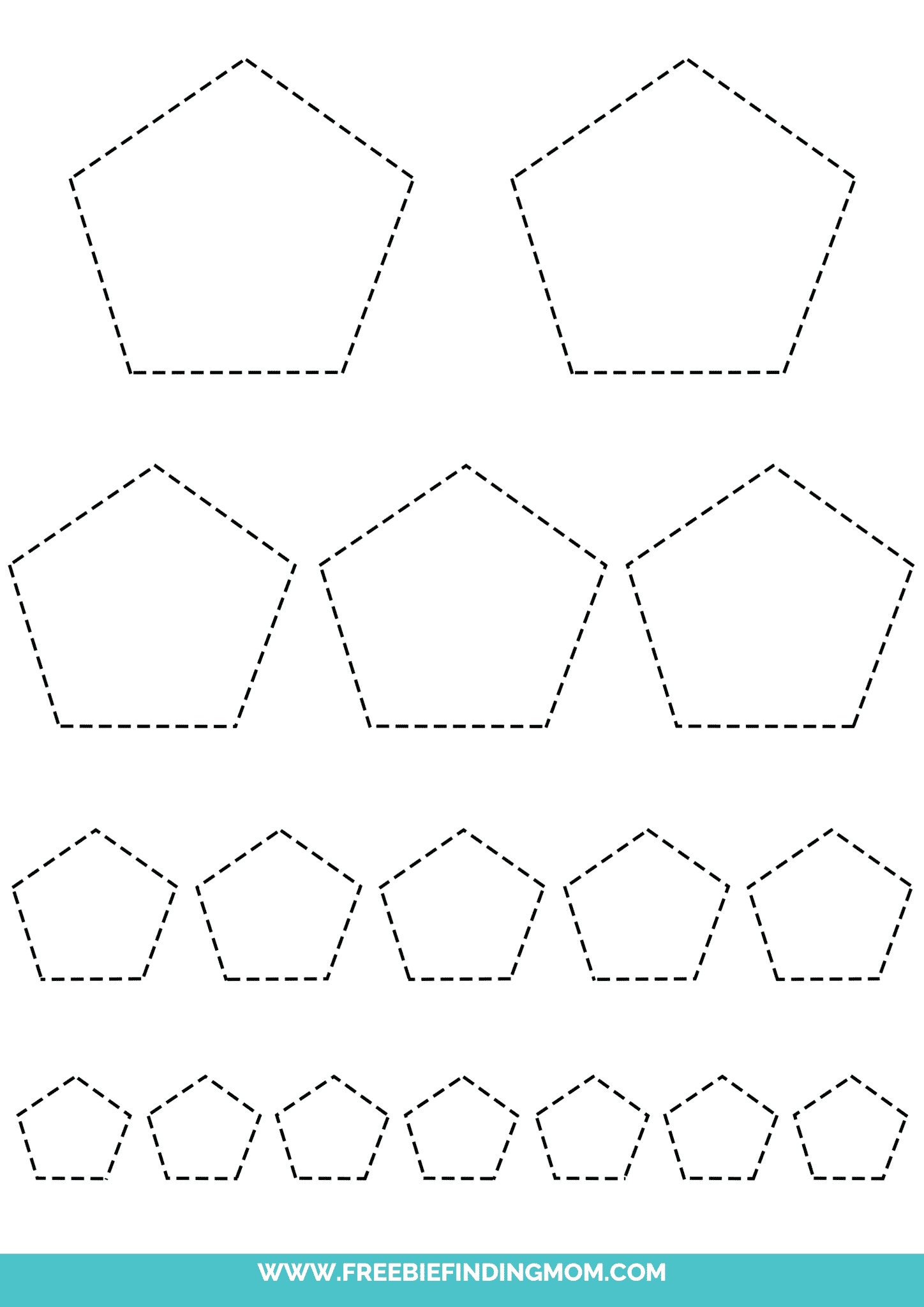
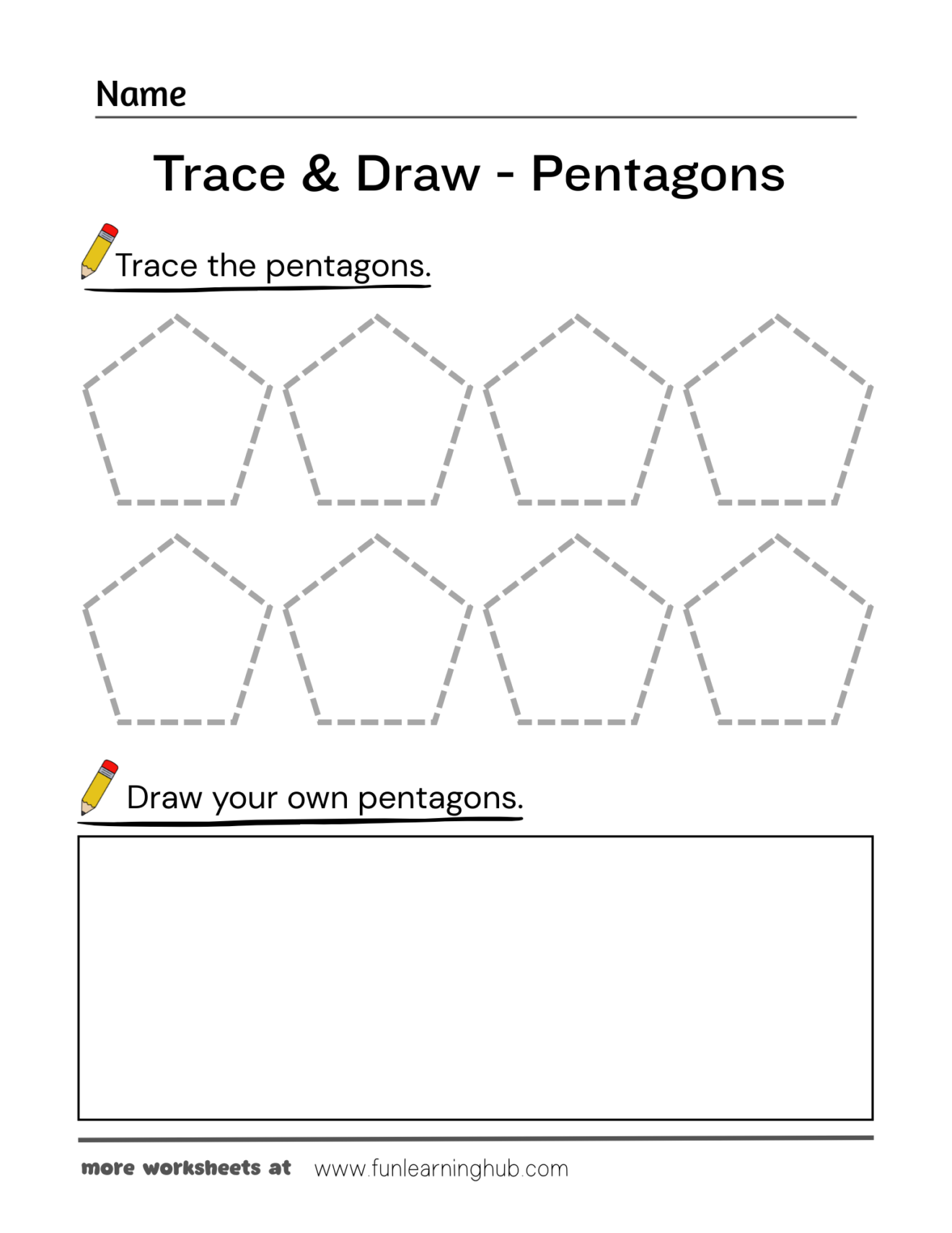
The free printable tracing pentagon shapes worksheet focuses heavily on directional line control, sharp angle execution, and spatial awareness. Unlike simple circles or curved lines, a pentagon introduces five distinct straight lines and five clear directional changes, forcing the hand to pause, pivot, and redirect. This provides essential practice within the broader spectrum of Shape and Line Tracing activities, ensuring young hands learn to navigate corners without losing pencil contact. As children guide their writing instruments along the dotted lines, they simultaneously refine bilateral coordination, stabilizing the paper with one hand while the dominant hand executes the drawing task. Educators often observe that children who struggle with open-ended drawing thrive when given structured, dotted outlines because the visual boundary reduces cognitive overload and allows total focus on motor control.
Key Learning Outcomes
Working through these geometric tracing sheets helps children achieve several critical developmental milestones in rapid succession. First, learners build enhanced visual-motor integration by translating visual cues on the page into precise hand and wrist movements. Second, the activity strengthens intrinsic hand muscles and promotes a mature tripod or quadripod pencil grasp, which is essential for reducing writing fatigue. Third, children develop directional awareness and spatial planning as they learn to start at the top vertex and navigate downward and outward to complete the five-sided figure. Finally, mastering these multi-angled shapes directly supports the foundational pre-writing strokes required for complex alphabet and number formation found throughout Alphabet And Numbers Tracing curricula.
How to Use This Worksheet
Successful implementation of this printable relies heavily on setting up an environment that supports optimal posture and hand positioning. Begin by securing the paper to the table using low-tack painter tape to prevent frustrating sliding movements that disrupt concentration. Encourage children to sit with feet flat on the floor and hips at a ninety-degree angle, as core stability directly impacts fine motor output. It sounds simple, but a proper chair height changes everything about how a child presses down on the page. Introduce the pentagon by asking the child to trace the outline with a finger first, feeling the five distinct corners before ever picking up a pencil. This multisensory approach activates tactile pathways in the brain, reinforcing the shape’s geometry before fine motor execution begins.
Practical Tips for Parents and Teachers
Adults play a vital role in scaffolding this learning process without taking over the physical task. Model the correct pencil grip explicitly, demonstrating how the thumb, index, and middle fingers work together while the ring and pinky fingers rest comfortably against the palm. When a child begins to tire, pause the session rather than forcing completion, as fatigued hands quickly default to awkward, compensatory grips. For younger learners who find standard pencils difficult to control, try shortening crayons or using broken chalk to naturally encourage a proper grasp. For children who easily master the basic dotted outlines, extend the challenge by asking them to freehand draw a pentagon inside the provided blank space, building autonomy and self-correction skills. Such scaffolding bridges the gap between guided practice and independent mastery, keeping frustration low and engagement high.
Age-Appropriate Recommendations
According to the National Association for the Education of Young Children (NAEYC) Developmentally Appropriate Practice guidelines, instructional tasks must match the physical and cognitive maturity of the child. For toddlers and young preschoolers aged two to four, tracing pentagons serves primarily as a gross-to-fine motor bridge, where chunky writing tools and large-scale dotted lines encourage basic wrist engagement. At this stage, perfection is secondary to engagement and positive exposure to multi-sided forms. For older preschoolers and kindergarteners aged five to six, the focus shifts toward precision, corner control, and starting-point awareness. By ages seven to eight, children use these complex geometric tracing exercises to refine their speed and fluidity, preparing them for the rigorous demands found in broader Fine Motor and Pre-Writing Skills programs. Matching the worksheet complexity to the developmental bracket ensures steady, frustration-free progress.
Visual-motor integration and fine motor control are critical foundational pillars that directly predict future academic success in writing and geometry. — American Occupational Therapy Association (AOTA)
Frequently Asked Questions
Navigating fine motor resources can bring up many questions for educators and families alike. The following answers address common inquiries regarding printing, motor skill development, and expert recommendations for geometric tracing.
Explore More Free Printable Tracing Worksheets
Supporting a young learner through every stage of fine motor and pre-writing development requires a diverse array of engaging, high-quality resources. Beyond geometric figures, children benefit immensely from exploring varied stroke patterns, curved lines, and directional controls. A comprehensive collection of practice materials is always available to help children build confidence, strength, and precision. Discover the full library of educational resources to support early childhood growth at KidTraces.com.
Developmental Milestone & Activity Table
| Development Stage | Recommended Daily Duration | Primary Learning Objective |
|---|---|---|
| Preschool & Pre-K | 10 – 15 Minutes | Pencil grip development & basic pre-stroke lines |
| Kindergarten | 15 – 20 Minutes | Letter/number formation & spatial line awareness |
| Early Elementary (Grade 1–2) | 20 – 30 Minutes | Fluency, sentence construction & neatness |
Images References