Introduction
Many young children recognize numerals and recite counting sequences long before their small hand muscles possess the endurance to form those digits on paper. According to the American Occupational Therapy Association, foundational fine motor control and postural stability must develop in tandem with cognitive understanding for successful handwriting. Bridging this gap requires structured, repetitive practice that respects physical development. Enter the tracing number 1 to 100 worksheet, a comprehensive resource designed to guide young learners from basic stroke awareness to confident, independent numeral generation. Observing a child transition from shaky, uncoordinated lines to purposeful number formation remains one of the most rewarding milestones in early education. Thoughtfully designed practice sheets provide the scaffolding needed to make this transition smooth, engaging, and frustration-free.
💡 Educational Key Takeaways:
- Core Skill: Structured Tracing Number 1 To 100 focused on developing pencil grip, stroke control, and early literacy/math confidence.
- Target Scope: Suited for homeschoolers, preschool, kindergarten, and elementary learners.
- Best Recommendation: Practice 10–15 minutes daily with ergonomic writing tools to reinforce muscle memory without hand fatigue.
What This Worksheet Covers
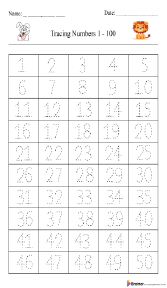
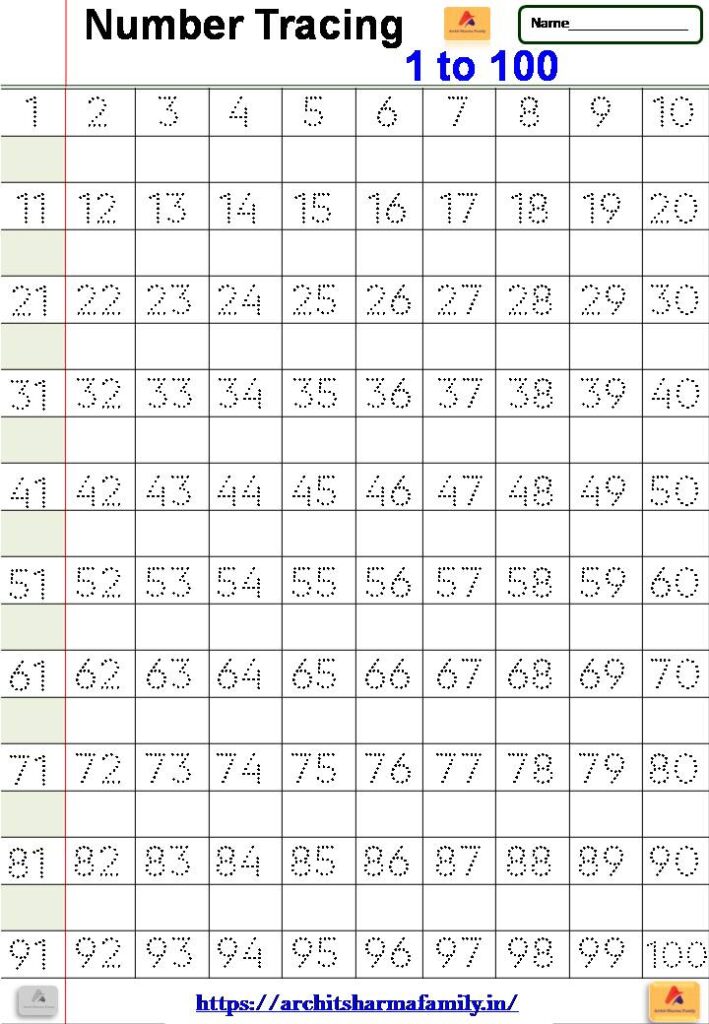
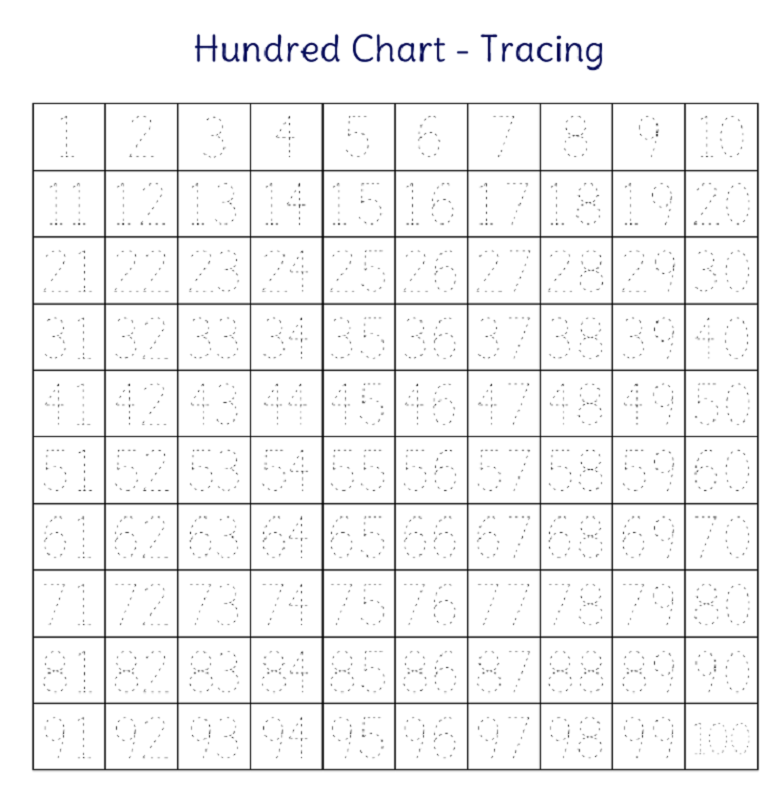
This extensive printable guides learners through the complete sequence of standard Arabic numerals, breaking down complex visual patterns into manageable strokes. Each row introduces dotted formations that emphasize correct stroke order, starting points, and directional arrows. Children encounter numbers sequentially, allowing them to recognize patterns within the base-ten system while simultaneously building muscle memory. The layout avoids visual clutter, ensuring that the focus remains entirely on pencil control and spatial orientation. As learners progress from single digits to the double and triple digits of the upper nineties, the spacing adapts to accommodate growing confidence and refined control. This progression mirrors broader mathematical readiness while deeply reinforcing essential pre-writing foundations found within specialized Tracing Number collections.
Key Learning Outcomes
Mastering this sequential layout fosters multiple interconnected developmental milestones. First, children internalize correct numeral formation and stroke order, which prevents awkward pencil habits from becoming permanent. Second, the repetitive tracing action strengthens the intrinsic muscles of the hand, improving overall grip endurance and finger dexterity. Third, visual-spatial awareness improves significantly as learners navigate grid lines and maintain consistent size proportions across a full page of numbers. Fourth, cognitive recognition merges with physical execution, cementing the mental connection between the spoken number name, its written symbol, and its quantity. Finally, completing the entire sequence instills a powerful sense of accomplishment and persistence, qualities vital for long-term academic success and explored further in broader Fine Motor and Pre-Writing Skills resources.
How to Use This Worksheet
Successful implementation goes far beyond simply handing a child a pencil and letting them work independently. Adults should introduce the sheet by modeling the correct formation of tricky digits in the air or on a textured surface before touching paper. Encouraging multi-sensory engagement—such as tracing laminated versions with dry-erase markers or finger-tracing raised tactile lines—prepares the nervous system for pencil-on-paper tasks. Breaking the 100-number journey into small, digestible chunks prevents hand fatigue and maintains enthusiasm. Working on just one row per sitting often yields far better results than demanding a marathon session. Celebrating small victories, such as mastering the loops in the number eight or the clean diagonal of the number seven, keeps motivation high and anxiety low.
Practical Tips for Parents and Teachers
Attention to physical positioning creates an optimal environment for developing fine motor control. Ensure that feet flat on the floor and hips, knees, and elbows sit at ninety-degree angles to provide the postural stability required for distal finger movements. Monitor pencil grasp closely, gently encouraging a functional tripod grasp without causing frustration if the hand naturally gravitates toward an adaptive alternative. Scaffolding the activity by lightly highlighting every tenth number can help children maintain alignment and pacing across the page. When fatigue sets in—often signaled by a clenched fist or slumped posture—pause the activity immediately. Integrating complementary practice from targeted Alphabet And Numbers Tracing galleries can also maintain variety and prevent burnout during daily skill-building routines.
Age-Appropriate Recommendations
According to the National Association for the Education of Young Children guidelines for developmentally appropriate practice, children aged two to four benefit most from large-scale pre-writing strokes, sensory tracing, and exploring numbers up to ten with ample physical movement. Pushing extended sitting or exhaustive pencil work onto toddlers can cause unnecessary aversion. Conversely, children aged five to eight possess the skeletal maturity, visual attention span, and intrinsic hand strength required to tackle structured numeral sequences like the 1 to 100 sheet. At this stage, aligning practice with Common Core standards such as CCSS.MATH.CONTENT.K.CC.A.3—writing numbers from zero to twenty and representing a number of objects with a written numeral—provides a clear academic anchor while advanced sheets bridge the gap toward larger numbers.
Foundational fine motor control and postural stability must develop in tandem with cognitive understanding for successful handwriting. — American Occupational Therapy Association
Frequently Asked Questions
Explore More Free Printable Tracing Worksheets
Supporting a child through early literacy and writing milestones requires a diverse toolkit of engaging, developmentally sound resources. Beyond mastering numerical sequences, young learners thrive when given opportunities to explore letter formation, creative shapes, and seasonal motifs that spark natural curiosity. Parents, teachers, and caregivers can discover a vast, thoughtfully organized library designed to support every stage of fine motor development by visiting KidTraces.com. Whether looking to reinforce pencil control through specialized Shape and Line Tracing practice or adding festive motivation with Seasonal and Fun Themes, every printable is crafted with expertise, care, and a deep understanding of how young children learn best.
Developmental Milestone & Activity Table
| Development Stage | Recommended Daily Duration | Primary Learning Objective |
|---|---|---|
| Preschool & Pre-K | 10 – 15 Minutes | Pencil grip development & basic pre-stroke lines |
| Kindergarten | 15 – 20 Minutes | Letter/number formation & spatial line awareness |
| Early Elementary (Grade 1–2) | 20 – 30 Minutes | Fluency, sentence construction & neatness |
Images References