Introduction
Many children recognize letters, shapes, and patterns long before their hands possess the tiny muscle strength required to form them cleanly on a page. According to the American Occupational Therapy Association, foundational fine motor control and tactile processing are essential precursors to functional handwriting and academic success. Early childhood environments often rush straight to traditional paper and pencil tasks without preparing the hand’s intrinsic muscles. Integrating playful, thematic elements bridges this crucial developmental gap. Using a spring flower for tracing offers a refreshing way to build pencil control while capturing interest through nature. It sounds simple, and that is precisely the point. When children engage with cheerful, seasonal motifs, hand fatigue decreases because the motivation to complete the picture overrides the physical effort.
💡 Educational Key Takeaways:
- Core Skill: Structured Spring Flower For Tracing focused on developing pencil grip, stroke control, and early literacy/math confidence.
- Target Scope: Suited for homeschoolers, preschool, kindergarten, and elementary learners.
- Best Recommendation: Practice 10–15 minutes daily with ergonomic writing tools to reinforce muscle memory without hand fatigue.
What This Worksheet Covers
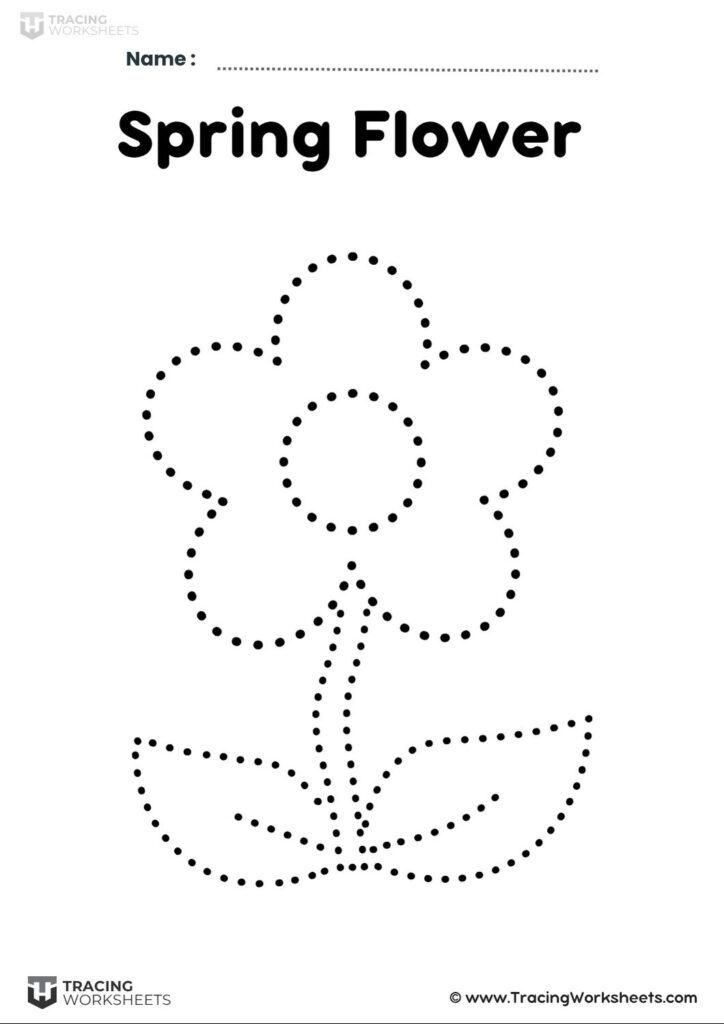
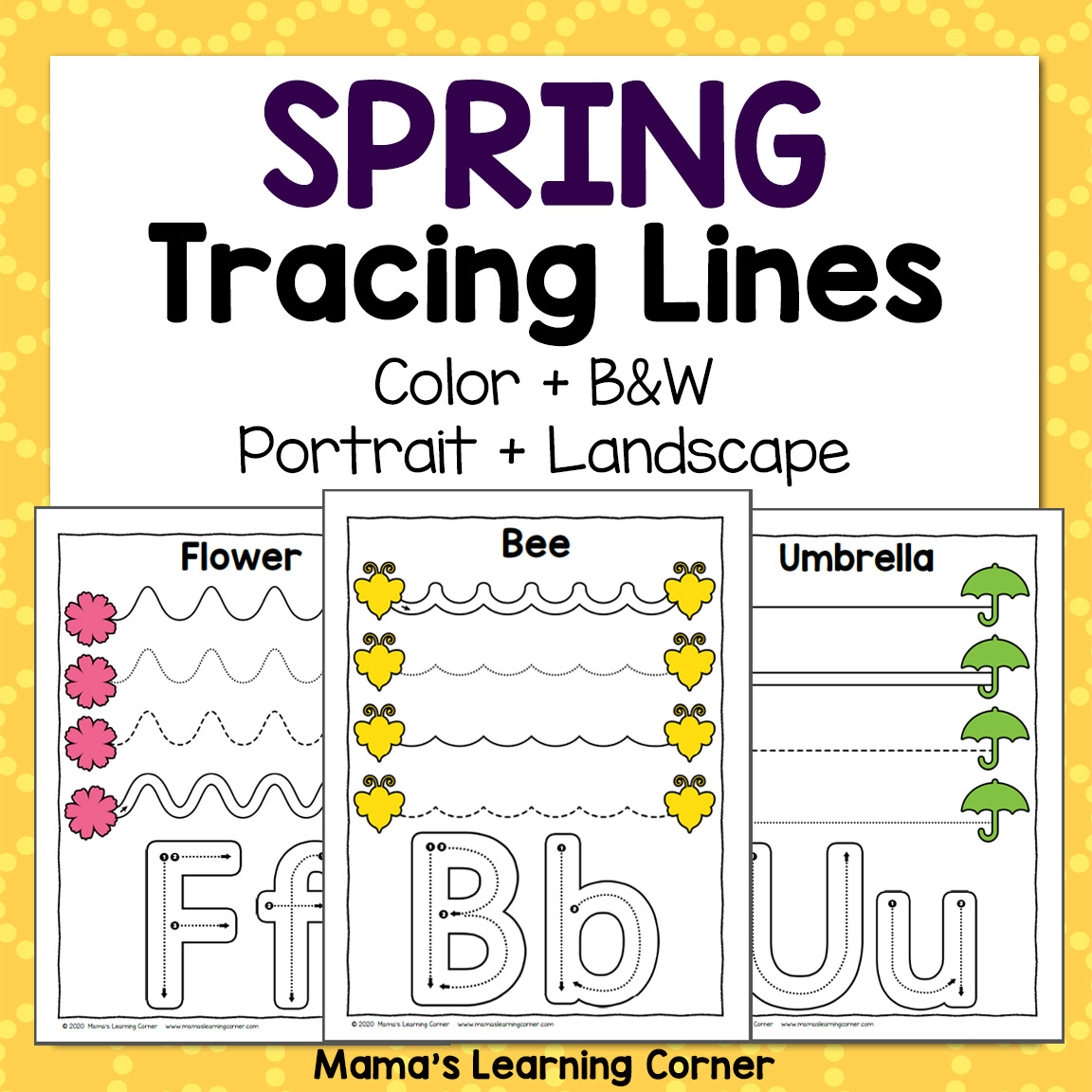
This printable resource focuses heavily on seasonal and fun themes to drive engagement during pencil practice. Children encounter a blend of curved petals, straight stems, and interlocking leaves that require continuous visual-motor integration. Instead of rigid rows of identical letters, the layout invites learners to trace concentric floral shapes, zig-zag grass lines, and looping stems. Such varied paths train the hand to transition smoothly between different stroke types. Mastering these foundational motions prepares young writers for complex letter formations found across Shape and Line Tracing activities, ensuring that hands remain relaxed and flexible during longer writing sessions.
Key Learning Outcomes
Targeted tracing exercises build precise muscle memory through repeated exposure to controlled curves and straight trajectories. Learners enhance their bilateral coordination by holding the paper steady with one hand while the dominant hand executes the pencil strokes. Visual tracking improves significantly as eyes learn to scan ahead of the pencil tip to anticipate upcoming turns and intersections. Furthermore, consistent practice strengthens the thumb, index, and middle fingers, paving the way for a mature dynamic tripod grip. These combined outcomes foster robust confidence in early learners facing more advanced writing challenges.
How to Use This Worksheet
Preparation goes a long way in setting young learners up for physical success at the table. Printing the sheet on slightly heavier cardstock prevents the paper from curling or tearing under eager, heavy-handed pencil pressure. Placing a soft foam mat underneath the paper also provides gentle resistance, which gives children rich tactile feedback as the pencil glides. Adults can introduce the exercise by tracing the outer petals with a finger first, helping the brain map the physical trajectory before the pencil touches the page. Exploring variations within Seasonal and Fun Themes keeps children eager to practice new coordination patterns week after week.
Practical Tips for Parents and Teachers
Observing hand mechanics closely helps adults catch awkward grips before they become permanent habits. Encouraging a proper pencil grasp involves using short, broken crayons or golf pencils, which naturally force the fingers into a three-point hold. Scaffolding the activity means starting with thick markers for easier visibility, then transitioning to standard pencils as control improves. Adults should praise the effort rather than the perfection of the line, keeping frustration at bay. Extending the activity can be as simple as letting children color the completed flower with watercolor paints, which builds wrist strength through sweeping brush motions.
Age-Appropriate Recommendations
For toddlers and preschoolers aged two to four, the focus rests squarely on gross motor lines, large circles, and sensory exploration in alignment with NAEYC Developmentally Appropriate Practice. At this stage, children benefit from thick, bold outlines and larger floral graphics that accommodate a palmar or transitional grasp. Children aged five to eight refine their pencil control by working on finer details, smaller loops, and steady pressure regulation. According to the National Association for the Education of Young Children, matching fine motor tasks to a child’s exact developmental stage prevents burnout and preserves enthusiasm for learning.
Foundational fine motor control and tactile processing are essential precursors to functional handwriting and academic success — American Occupational Therapy Association
Frequently Asked Questions
Find quick answers below regarding downloading materials, supporting fine motor milestones, and selecting the right tracing activities for home or classroom settings.
Explore More Free Printable Tracing Worksheets
Supporting a growing writer requires a rich variety of engaging practice materials to keep enthusiasm high every single week. Discover hundreds of targeted exercises designed by educators by exploring the full library at KidTraces.com. Whether expanding vocabulary with Word and Name Tracing or mastering individual strokes through Tracing Worksheets, every printable supports steady, joyful skill development.
Developmental Milestone & Activity Table
| Development Stage | Recommended Daily Duration | Primary Learning Objective |
|---|---|---|
| Preschool & Pre-K | 10 – 15 Minutes | Pencil grip development & basic pre-stroke lines |
| Kindergarten | 15 – 20 Minutes | Letter/number formation & spatial line awareness |
| Early Elementary (Grade 1–2) | 20 – 30 Minutes | Fluency, sentence construction & neatness |
Images References