Introduction
Many children recognize complex visual symbols long before their developing hands possess the intrinsic strength required to form them on paper. According to the American Occupational Therapy Association, foundational fine motor control and visual-motor integration are essential precursors to academic success and successful handwriting. Mastering geometric forms serves as a direct bridge between early visual perception and controlled pencil movement. It sounds simple, and that’s the point. The shapes – oval and dimond worksheet for kindergarten introduces crucial pre-writing strokes through targeted practice, giving young learners the scaffolding they need to transition from scribbles to deliberate, controlled lines.
💡 Educational Key Takeaways:
- Core Skill: Structured Shapes – Oval And Dimond Worksheet For Kindergarten focused on developing pencil grip, stroke control, and early literacy/math confidence.
- Target Scope: Suited for homeschoolers, preschool, kindergarten, and elementary learners.
- Best Recommendation: Practice 10–15 minutes daily with ergonomic writing tools to reinforce muscle memory without hand fatigue.
What This Worksheet Covers
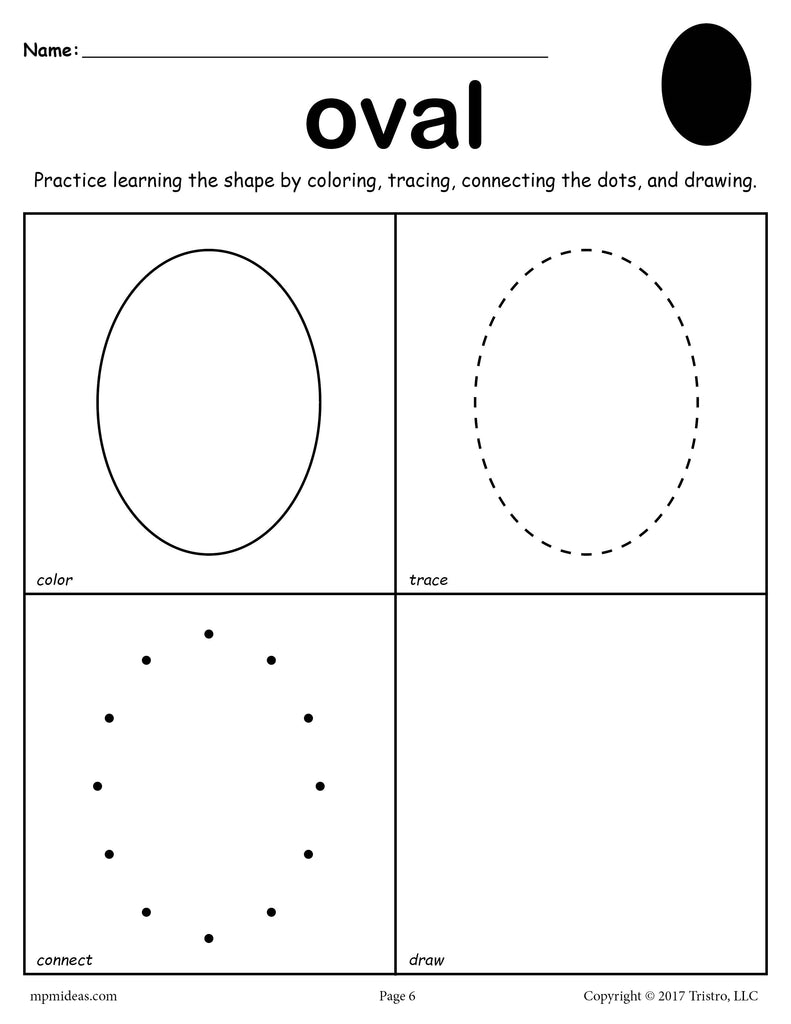
Geometric tracing sheets target the specific motor planning needed to execute continuous curves and sharp angles. Ovals demand fluid wrist movement and constant directional shifts, while diamonds require precise corner pivots that challenge even seasoned preschoolers. Navigating these forms prepares hands for the varied demands found throughout the broader collection of Shape and Line Tracing printables available online. Repetition helps build muscle memory in the small intrinsic muscles of the hand, transforming awkward grasps into fluid, confident pencil control over time. Here’s what makes this worksheet different: it pairs two contrasting geometric forms to teach hand-eye coordination through deliberate comparison.
Key Learning Outcomes
Working through these targeted geometric exercises supports several interconnected developmental domains. Children enhance bilateral coordination by stabilizing the paper with one hand while executing precise lines with the other. Visual-motor integration improves as eyes guide the hand to stay tightly anchored to the dotted pathways. Spatial awareness develops organically as learners navigate curved arcs and acute angles on a blank page. Finally, executive function and attention span grow when children complete a structured, goal-oriented visual task from start to finish.
How to Use This Worksheet
Success with early writing tools relies heavily on environmental setup and low-pressure engagement. Begin by placing the paper on a flat, stable surface at a comfortable height where feet rest flat on the floor. Encourage children to trace the shapes using varied tactile mediums before touching a pencil, such as tracing the outlines with a finger dipped in paint or tracing textured cards. When transitioning to writing instruments, short-shafted crayons or golf pencils naturally encourage an appropriate tripod or adapted grasp. Keep sessions brief, joyful, and focused on progress rather than perfection.
Practical Tips for Parents and Teachers
Adults play a pivotal role in scaffolding these early attempts without taking over the physical process. Model the correct starting points verbally, reminding children that ovals start at the top and curve gracefully around. Scaffold difficult diamond corners by pausing at the vertices to reset the hand’s direction before tackling the next downward slant. Extend the learning naturally by inviting children to hunt for ovals and diamonds in the surrounding classroom or living room. Remember to celebrate small victories, noting when a pencil line hugs a dotted path more closely than it did the day before.
Age-Appropriate Recommendations
For younger children aged two to four, the focus centers primarily on gross motor control, shoulder stability, and mastering basic curved and straight strokes. According to the National Association for the Education of Young Children guidelines on developmentally appropriate practice, preschoolers benefit most from open-ended exploration and large-format tracing before refining smaller details. Children aged five to eight are ready for deeper refinement, aligning with structured handwriting curricula that emphasize proper stroke sequencing, letter formation, and pencil pressure regulation. For more advanced motor skill practice, educators often turn to resources found within Fine Motor and Pre-Writing Skills collections.
Visual-motor integration and fine motor proficiency are directly correlated with early academic achievement and legible handwriting development. — American Occupational Therapy Association
Frequently Asked Questions
Clear answers to common questions help educators and families maximize the benefits of daily tracing practice.
Letter and shape tracing helps children build the hand strength, dexterity, and motor planning required for functional daily writing tasks. — Reading Rockets
Explore More Free Printable Tracing Worksheets
Supporting a child’s early educational journey becomes much simpler with a reliable library of engaging, no-prep resources close at hand. Beyond geometric shapes, children benefit greatly from exploring alphabet letters, numerical sequences, and themed seasonal activities that keep enthusiasm high. Every printable is carefully designed to foster independence, confidence, and foundational mastery without unnecessary frustration. Discover the full library of resources and printables by visiting KidTraces.com to support your young learner’s daily development.
Developmental Milestone & Activity Table
| Development Stage | Recommended Daily Duration | Primary Learning Objective |
|---|---|---|
| Preschool & Pre-K | 10 – 15 Minutes | Pencil grip development & basic pre-stroke lines |
| Kindergarten | 15 – 20 Minutes | Letter/number formation & spatial line awareness |
| Early Elementary (Grade 1–2) | 20 – 30 Minutes | Fluency, sentence construction & neatness |
Images References