Introduction
Many children recognize letters, numbers, and symbols long before their fine motor coordination and hand strength are fully developed enough to form them on paper. According to the American Occupational Therapy Association, foundational fine motor control and visual-motor integration are essential prerequisites for successful handwriting and classroom participation. The overlapping shapes worksheet bridges this critical gap by translating complex visual information into manageable physical movements. It sounds simple, and that is the exact point of early pre-writing interventions. Children often stare at a blank page with hesitation, unsure of where to place a writing instrument or how to regulate pressure. By engaging with structured tracing practice that features intersecting lines and geometric boundaries, young learners naturally begin to internalize spatial awareness, crossing the midline, and directional control. This free educational tool supports early childhood development without requiring frustrating drills, turning pencil control into a fun visual puzzle.
💡 Educational Key Takeaways:
- Core Skill: Structured Overlapping Shapes Worksheet focused on developing pencil grip, stroke control, and early literacy/math confidence.
- Target Scope: Suited for homeschoolers, preschool, kindergarten, and elementary learners.
- Best Recommendation: Practice 10–15 minutes daily with ergonomic writing tools to reinforce muscle memory without hand fatigue.
What This Worksheet Covers
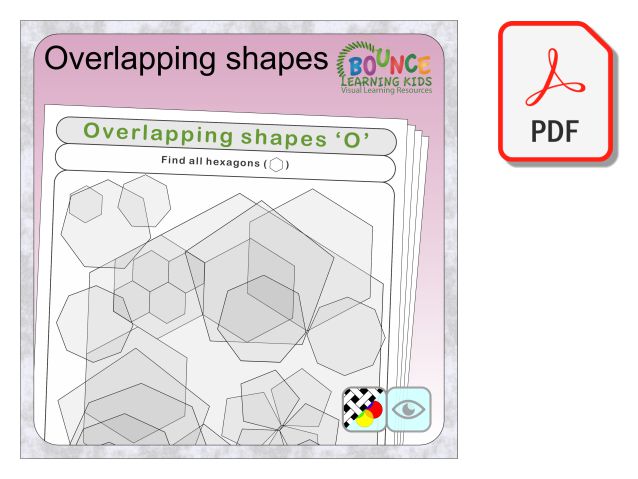
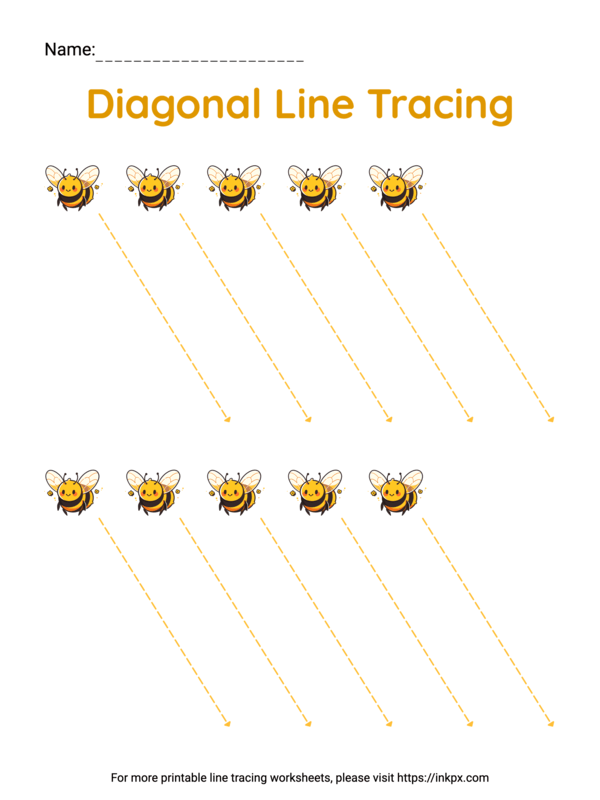
The overlapping shapes worksheet focuses heavily on the fundamental strokes required for advanced pre-writing and early geometry. Instead of standard isolated circles or squares, this printable features figures that intersect, requiring a child to visually track a shape, maintain pencil contact, and seamlessly navigate intersections without losing control. Visual tracking is a crucial component taught across various foundational materials, which can be explored further in the dedicated Shape and Line Tracing section. As a child guides a pencil along the dotted or solid outlines, the hand must pause, pivot, and shift pressure. These micro-movements build intrinsic hand muscles and refine the pincer grasp. Furthermore, encountering overlapping borders challenges the brain to inhibit unwanted impulses, teaching a young learner when to stop, lift, or continue tracing through a visual barrier. This mastery directly translates into more fluid letter and number formation later on.
Key Learning Outcomes
Engaging with these geometric intersections fosters profound improvements in spatial visualization and bilateral coordination. Children build visual-motor integration as their eyes guide the hand across intersecting paths. Hand-eye coordination strengthens significantly because the brain must constantly process the visual input of where one shape ends and another begins. Additionally, muscle memory develops through repetitive, controlled curvilinear and rectilinear strokes. According to the National Association for the Education of Young Children, active manipulation of early learning tools supports holistic cognitive and physical development in young children. Finally, children build remarkable frustration tolerance and sustained attention span as they successfully navigate complex visual mazes from start to finish.
How to Use This Worksheet
Implementation requires a balance of supportive supervision and independent exploration. Begin by placing the printable on a flat, stable surface, ensuring the child sits with feet flat on the floor and hips at a ninety-degree angle to promote optimal core stability. Encourage the use of short, broken crayons or golf pencils, which naturally encourage an efficient tripod or quadrupod grasp rather than a heavy-handed fist grip. Invite the child to trace the outermost shape first before tackling the complex intersecting interiors. For tactile learners, tracing the shapes with a finger or a textured marker before applying a pencil can provide invaluable kinesthetic feedback. If a child grows fatigued, gently pause the activity; fine motor stamina develops gradually through consistent, short sessions rather than exhausting marathon trials.
Practical Tips for Parents and Teachers
Scaffolding instruction makes a tremendous difference in how children approach complex visual layouts. Model proper pencil grip and stroke directionality on a separate page before asking for independent execution. For learners who struggle with spatial boundaries, gently guide their hand through the first few intersections to build confidence and tactile memory. Teachers and parents can extend the learning by asking children to identify colors, count the number of intersecting points, or name the individual shapes hidden within the overlapping design. To maximize usability across multiple practice sessions, slip the printable inside a heavy-duty plastic dry-erase sleeve and let children trace the lines with a dry-erase marker. Exploring broader foundational concepts can also be supported through the extensive exercises found in Fine Motor and Pre-Writing Skills.
Age-Appropriate Recommendations
For toddlers and preschoolers aged two to four, alignment with the Head Start Early Learning Outcomes Framework emphasizes gross shape recognition and palmar or digital pronate grasp development. At this early stage, children should use thick writing utensils to trace large, simplified overlapping shapes without worrying about staying strictly inside the lines. By ages five to eight, kindergarten and early elementary students align with standard visual-motor integration milestones where refined pencil control, smooth continuous strokes, and accurate intersection navigation are expected. Older children can benefit from transitioning to standard pencils or fine-tip markers to challenge their dexterity and prepare for cursive instruction, foundational letter sequences, and advanced handwriting tasks available within Alphabet And Numbers Tracing.
Visual-motor integration and fine motor control serve as foundational predictors of later academic success and writing fluency. — American Occupational Therapy Association
Frequently Asked Questions
How can this worksheet be downloaded and printed for classroom or home use?
Access the printable file directly from the resource page, save it to a local device, and print it using standard letter-sized paper at a one-hundred-percent scale.
How does tracing overlapping shapes support fine motor and pre-writing development?
Tracing intersecting lines strengthens intrinsic hand muscles, improves visual tracking, and teaches children to regulate pencil pressure when navigating complex visual boundaries.
What does the American Academy of Pediatrics recommend regarding early fine motor activities?
The American Academy of Pediatrics highlights that hands-on manipulation, drawing, and pre-writing tasks are vital for building neural pathways necessary for lifelong literacy and coordination.
Explore More Free Printable Tracing Worksheets
Building a robust foundation in pencil control requires variety, consistency, and engaging visual prompts that capture a child’s natural curiosity. Discover an extensive collection of teacher-approved resources designed to support every stage of early childhood development by browsing the complete library at KidTraces.com. Whether preparing a preschooler for kindergarten readiness or supporting an elementary student who needs extra stroke practice, the wider collection provides targeted support. Explore wonderful thematic units through Seasonal and Fun Themes, or refine foundational typing and spelling precursors with Word and Name Tracing.
Developmental Milestone & Activity Table
| Development Stage | Recommended Daily Duration | Primary Learning Objective |
|---|---|---|
| Preschool & Pre-K | 10 – 15 Minutes | Pencil grip development & basic pre-stroke lines |
| Kindergarten | 15 – 20 Minutes | Letter/number formation & spatial line awareness |
| Early Elementary (Grade 1–2) | 20 – 30 Minutes | Fluency, sentence construction & neatness |
Images References