Introduction
Many children recognize letters, shapes, and patterns long before their fine motor skills can actually form them on paper. This common disconnect often frustrates eager learners who possess the cognitive readiness for literacy but lack the intrinsic hand strength required for sustained pencil control. According to the American Occupational Therapy Association, foundational hand skills, bilateral coordination, and finger dexterity are essential precursors to academic success and effective pre-writing execution. Bridging this gap requires multisensory experiences that move beyond standard worksheets. Engaging with line tracing with scissors offers a dynamic physical outlet, combining visual-motor integration with active muscle engagement. It sounds simple, and that is the point. When children cut along structured paths, hands build the exact intrinsic strength needed for graceful pencil strokes later on.
💡 Educational Key Takeaways:
- Core Skill: Structured Line Tracing With Scissors focused on developing pencil grip, stroke control, and early literacy/math confidence.
- Target Scope: Suited for homeschoolers, preschool, kindergarten, and elementary learners.
- Best Recommendation: Practice 10–15 minutes daily with ergonomic writing tools to reinforce muscle memory without hand fatigue.
What This Worksheet Covers
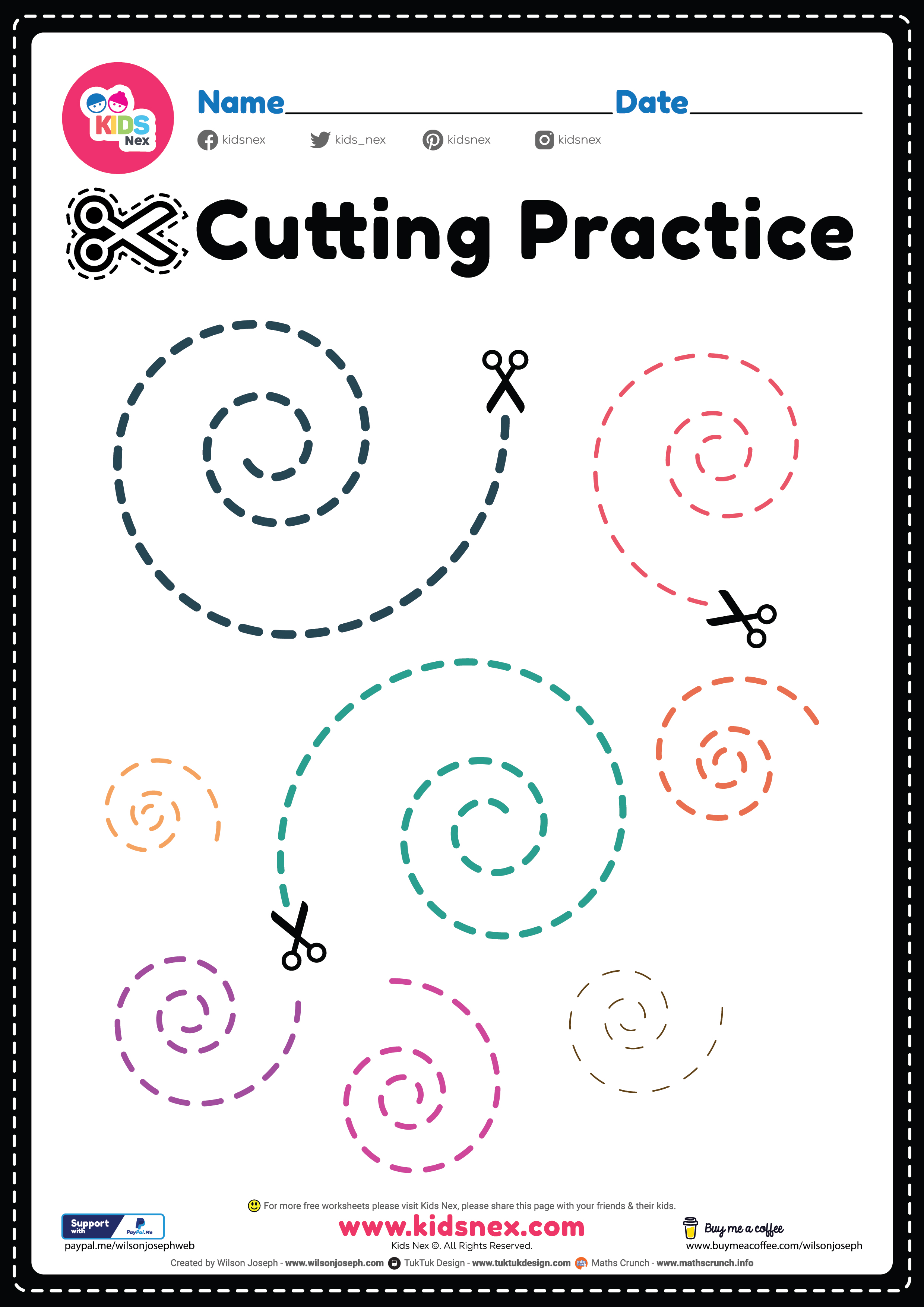
This printable resource targets the foundational muscle groups and visual tracking skills that precede formal handwriting. By combining continuous visual lines with physical scissor manipulation, the activity challenges the hands to stabilize while fingers open and close in a coordinated rhythm. Children transition from simple, straight horizontal cuts to complex zigzags, gentle curves, and undulating waves. Each stroke variation demands deliberate adjustment of the paper-holding hand, fostering bilateral integration. According to the Centers for Disease Control and Prevention developmental milestones, children gradually refine their grasp and hand-eye coordination through targeted manipulative tasks like cutting and drawing during the early childhood years. These exercises require visual attention, spatial awareness, and precise motor planning. Exploring resources within Shape and Line Tracing provides wonderful supplementary experiences for mastering these crucial foundational curves.
Key Learning Outcomes
Deliberate practice with cutting lines yields robust developmental benefits that transfer directly into pencil-and-paper tasks. Learners rapidly improve bilateral coordination by holding and rotating the paper with one hand while operating the scissors with the dominant hand. Visual-motor integration strengthens as the eyes continuously guide the cutting path, teaching the brain to synchronize visual input with physical output. Hand strength multiplies significantly because the repetitive opening and closing motion engages the small intrinsic muscles of the palm and fingers. Finally, perseverance and focus naturally expand as children concentrate on maintaining a steady path from start to finish, building the stamina required for longer writing sessions found in categories like Fine Motor and Pre-Writing Skills.
How to Use This Worksheet
Successful implementation begins with setting up an environment that supports relaxed focus and proper posture. Print the sheets on slightly heavier cardstock rather than standard printer paper, as the added weight provides just enough resistance to help scissors glide smoothly without folding or bending. Guide learners to sit upright with feet flat on the floor and elbows resting comfortably at a ninety-degree angle. Encourage the thumb-up scissor position, where the thumb rests in the smaller loop facing the ceiling while the middle and ring fingers occupy the larger bottom loop. Adults should model proper hand placement patiently, allowing plenty of time for trial and error. For those seeking broader thematic variety, browsing collections such as Seasonal and Fun Themes can keep motivation high throughout the year.
Practical Tips for Parents and Teachers
Scaffolding the experience ensures that frustration never overshadows learning. Start by trimming the full-page sheet into smaller, manageable strips containing just one single line, which reduces visual clutter and provides immediate success. It helps to draw a prominent green dot at the starting point and a red stop sign at the end of each line to give clear visual boundaries. For learners who struggle with spatial awareness, lightly highlighting the target line with a thick marker makes the path much easier to track. Always praise the effort and the steady grip rather than focusing solely on absolute precision. As confidence grows, gently extend the challenge by introducing curved paths, loops, and sharper angles.
Age_Appropriate Recommendations
Aligning activities with established developmental frameworks ensures expectations match physical maturity. According to the National Association for the Education of Young Children guidelines for developmentally appropriate practice, children aged two to four benefit most from making simple snips along the edge of paper, exploring the cause-and-effect of opening and closing tools. As learners advance into the five-to-eight age bracket, expectations shift toward purposeful cutting along distinct lines, curves, and shapes, directly supporting the physical stamina outlined in standard early childhood handwriting curricula. During these primary years, children refine their pencil grasps and scissoring control simultaneously, creating a harmonious foundation for literacy tasks found throughout Alphabet And Numbers Tracing.
Developmental progression in hand skills relies heavily on bilateral coordination and intrinsic muscle strength — American Occupational Therapy Association
Frequently Asked Questions
Explore More Free Printable Tracing Worksheets
Building robust fine motor control is a journey that benefits from a wide variety of engaging, hands-on practice materials. Exploring the entire collection available at KidTraces.com offers endless opportunities to support early learners through every developmental milestone. Whether preparing tiny hands for kindergarten readiness or reinforcing letter formation, having access to diverse resources makes all the difference. Discover supplementary printouts across Dotted Letters For Tracing to provide a well-rounded, joyful path toward writing fluency.
Developmental Milestone & Activity Table
| Development Stage | Recommended Daily Duration | Primary Learning Objective |
|---|---|---|
| Preschool & Pre-K | 10 – 15 Minutes | Pencil grip development & basic pre-stroke lines |
| Kindergarten | 15 – 20 Minutes | Letter/number formation & spatial line awareness |
| Early Elementary (Grade 1–2) | 20 – 30 Minutes | Fluency, sentence construction & neatness |
Images References