Introduction
Many children recognize letters, numbers, and complex geometric concepts long before their fine motor control and hand strength can successfully form them on paper. According to the National Association for the Education of Young Children, early childhood curriculum should build upon children’s natural developmental progressions through meaningful, hands-on experiences. Bridging that gap between visual understanding and physical execution requires targeted pre-writing practice that moves beyond simple horizontal lines. The free printable draw the octagon and the pentagon worksheet directly supports this crucial transitional phase. Shape tracing acts as a foundational stepping stone for letter and number formation by teaching the hand how to navigate corners, angles, and directional changes.
💡 Technical Key Takeaways:
- Core Focus: Diagnostic schematic and terminal connection layout for Draw The Octagon And The Pentagon..
- Target Scope: Field technicians, automotive DIYers, and residential/commercial electricians.
- Safety Rule: Always disconnect the primary power source/battery terminal and verify zero voltage with a multimeter before touching wires.
What This Worksheet Covers
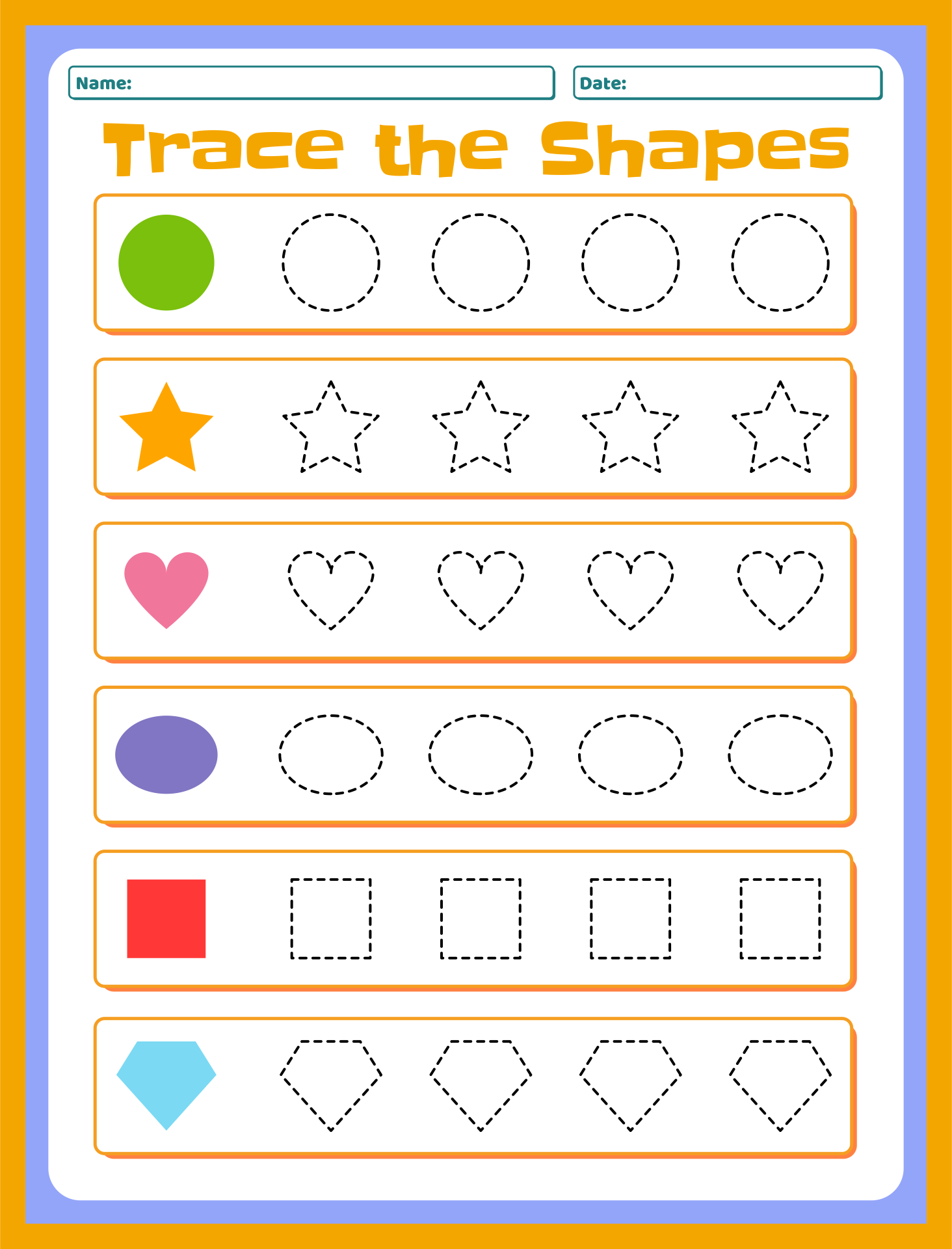
This printable resource focuses specifically on the multi-sided geometry of pentagons and octagons, moving children past basic circles and squares into more advanced closed-shape construction. Mastering these shapes demands sustained bilateral coordination, visual-spatial awareness, and precise pencil control. As tiny fingers trace the dotted paths of the five-sided pentagon and the eight-sided octagon, intrinsic hand muscles engage to stabilize the wrist and regulate pencil pressure. According to the American Occupational Therapy Association, foundational visual-motor integration skills developed through structured drawing and tracing tasks directly correlate with future academic success in handwriting and geometry. Every angle traced on this page trains the brain to translate visual cues into coordinated motor plans. For more related activities, check out our Reindeer Tracing Lines Worksheet.
Key Learning Outcomes
Working through these geometric tracing exercises reinforces several critical developmental milestones simultaneously. Children build spatial awareness by learning to judge distance, angles, and the proportional relationships between connected straight lines. Pencil control improves dramatically as hands must pause, pivot, and change direction multiple times to complete a single shape rather than relying on continuous fluid curves. Motor memory strengthens as repetitive stroke patterns teach the hand how to execute sharp turns cleanly. Additionally, visual closure skills improve, helping young learners recognize when a shape is fully closed or where gaps remain, which translates directly to accurate letter closure in the alphabet.
How to Use This Worksheet
Successful implementation begins with establishing a stable workspace where feet rest flat on the floor and the paper rests at a slight upward angle. Adults can encourage starting points by placing a small green sticker at the top vertex of each shape to signal where the pencil should rest before starting. It sounds simple, and that is the point—clear visual markers eliminate hesitation and build independence. Encouraging children to verbalize the steps as they draw, such as “straight down, slant out, and stop,” adds an auditory layer that reinforces motor planning and spatial vocabulary.
Practical Tips for Parents and Teachers
Adults play a vital role in scaffolding this fine motor work by modeling an efficient tripod grasp rather than enforcing a rigid, uncomfortable grip too early. Teachers and parents should watch for fatigue, swapping standard pencils for broken crayons or golf pencils if hands tire quickly, as smaller writing tools naturally encourage better finger positioning. Scaffolding the activity means letting children trace bold, thick dotted lines first before moving to finer guidelines or attempting freehand reproduction on blank paper. Extending the lesson outdoors by drawing giant pentagons and octagons with sidewalk chalk turns fine motor practice into full-body proprioceptive play, engaging larger shoulder and core muscles.
Age-Appropriate Recommendations
For children aged two to four, this worksheet serves as an introductory exploratory tool where tracing might look more like spontaneous scribbling across the geometric outlines, perfectly aligning with early developmental stages outlined in the CDC milestones for visual-motor integration. Educators should prioritize enjoyment, hand-strength games, and gross-motor drawing over precision at this stage. For older children aged five to eight, the expectations shift toward precision, correct stroke directionality, and pencil control. This aligns directly with standard expectations found in kindergarten and early elementary curricula where children must produce recognizable geometric shapes independently and demonstrate controlled pencil strokes.
According to the American Occupational Therapy Association, structured visual-motor and fine motor interventions significantly enhance a child’s pencil control and readiness for academic writing tasks. — AOTA Practice Guidelines
Frequently Asked Questions
Common questions regarding the printable draw the octagon and the pentagon worksheet focus on printing, fine motor benefits, and developmental readiness standards established by educational experts.
Explore More Free Printable Tracing Worksheets
Supporting a young learner’s journey from early pre-writing lines to fluent handwriting requires a diverse collection of engaging resources that grow alongside developing hands. Exploring related categories can provide fresh ways to target specific pencil control goals, whether through structured Shape and Line Tracing activities or foundational strokes found within Fine Motor and Pre-Writing Skills practice sheets. Educators and caregivers can also discover targeted alphabet practice at Alphabet And Numbers Tracing. Every child benefits from varied practice materials that keep engagement high while building essential muscle memory. To browse the complete library of free educational printables, visit KidTraces.com today and find the perfect tools for the learning environment.
Quick Wiring Specifications & Terminal Guide
| Component / Circuit | Standard Wire Gauge | Recommended Protection |
|---|---|---|
| Control & Trigger Signals | 18 – 20 AWG | 5A – 7.5A Inline Fuse |
| Standard Auxiliary Load | 14 – 16 AWG | 15A – 20A Circuit Breaker |
| Main Power Feed / Supply | 10 – 12 AWG | 30A – 40A Heavy-Duty Relay |
Images References