Introduction
Many children recognize geometric shapes and letters long before their fine motor control allows them to successfully replicate those forms on paper. According to the American Occupational Therapy Association, foundational pencil control and hand strength are essential prerequisites for effective academic performance and self-esteem in early childhood. Mastering complex geometric shapes like diamonds requires precise visual-motor integration, blending spatial awareness with steady hand movements. It sounds simple, and that’s the point: purposeful tracing bridges the gap between seeing a shape and drawing it independently. The free printable diamond worksheet for kindergarten provides a structured, low-stress canvas where young learners can build vital hand-eye coordination. Exploring tools like a dedicated shape and line tracing resource helps children build confidence before tackling standard letter formation. Early educators notice that children often struggle with diagonal lines because vertical and horizontal strokes feel much more natural during early development. Intentional practice with angled geometric forms refines muscle memory and prepares small hands for the complex demands of kindergarten writing standards.
💡 Educational Key Takeaways:
- Core Skill: Structured Diamond Worksheet For Kindergarten focused on developing pencil grip, stroke control, and early literacy/math confidence.
- Target Scope: Suited for homeschoolers, preschool, kindergarten, and elementary learners.
- Best Recommendation: Practice 10–15 minutes daily with ergonomic writing tools to reinforce muscle memory without hand fatigue.
What This Worksheet Covers
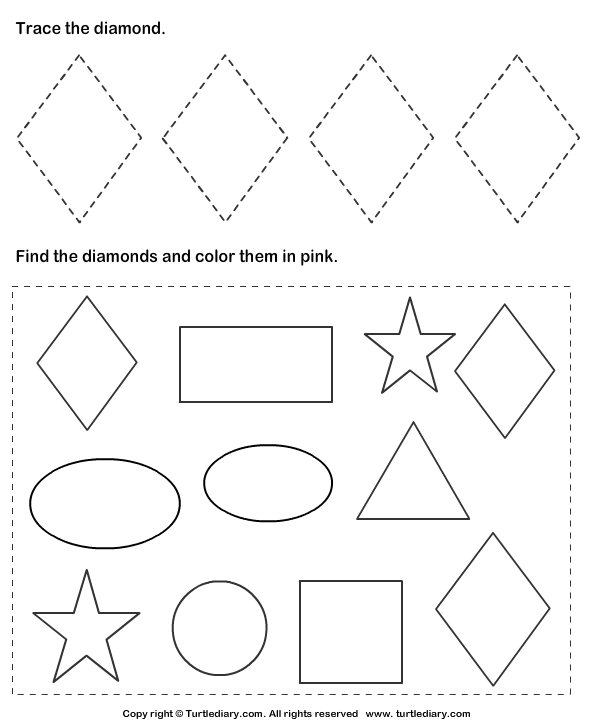
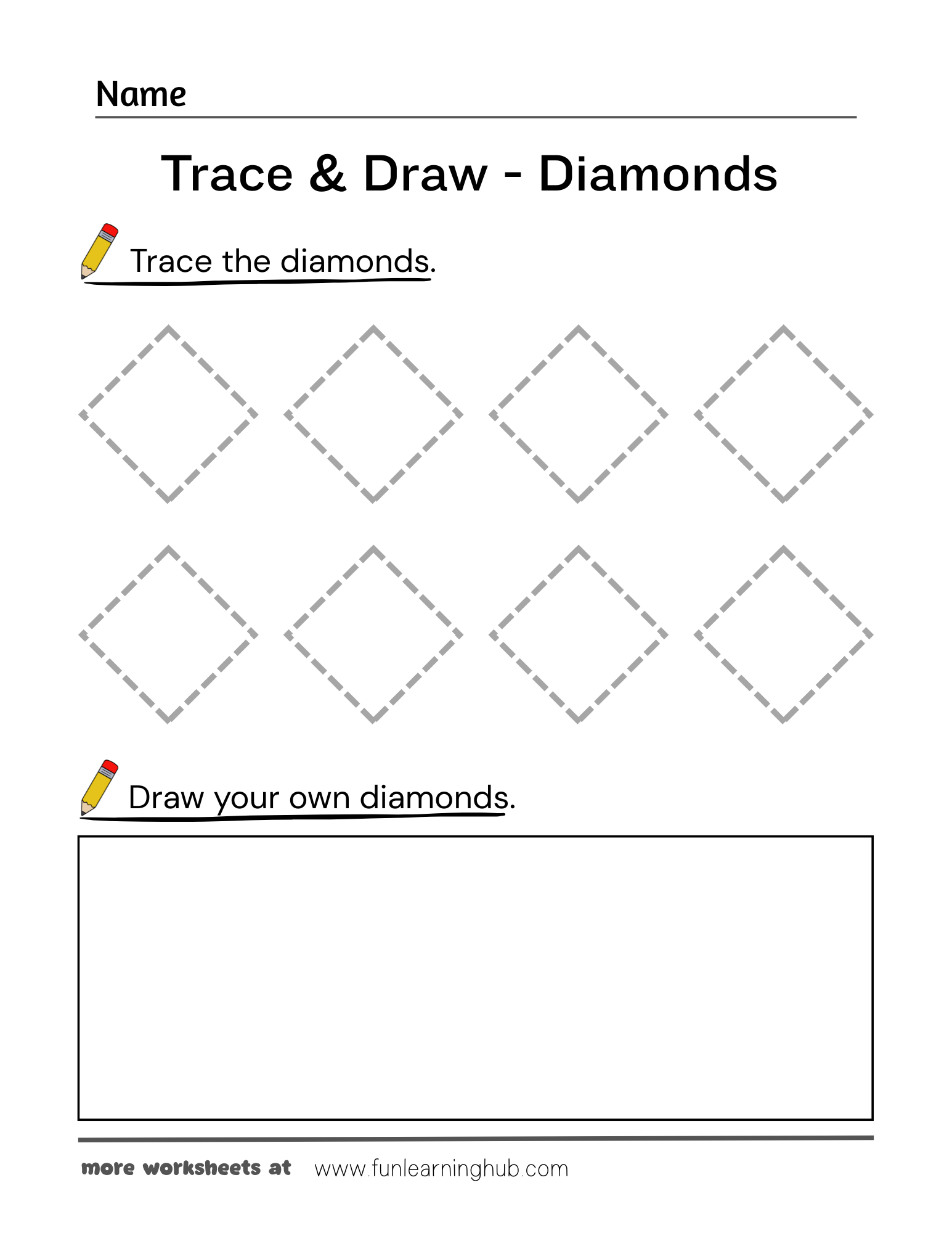
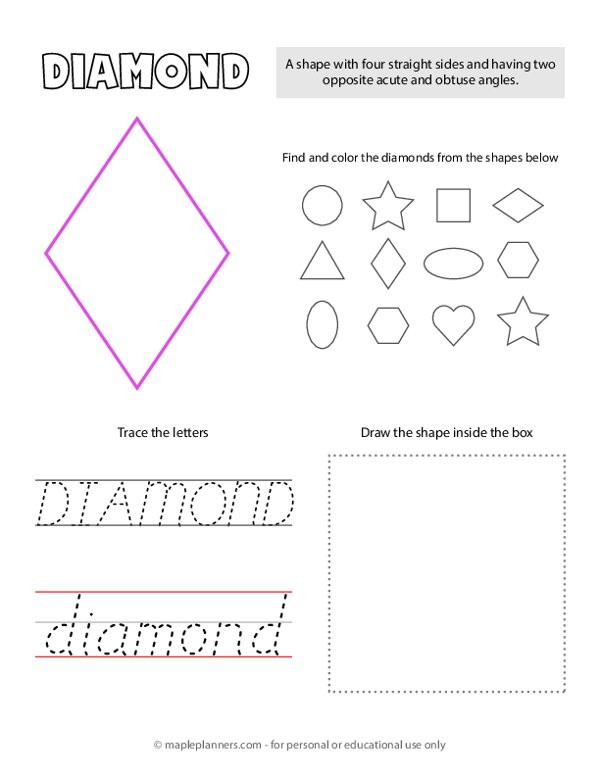
This specific printable focuses on the precise strokes needed to construct a complete diamond shape, utilizing dotted lines, directional arrows, and varied line weights. Slanted lines challenge the developing wrist and fingers to move fluidly across the page without losing contact or control. According to the National Association for the Education of Young Children, active engagement with fine motor activities supports overall cognitive development by strengthening neural pathways in the brain. Here’s what makes this worksheet different: it breaks down a notoriously difficult diagonal shape into manageable, guided visual steps that respect child development. Children encounter large outline diamonds for gross motor tracing, progressing down the page to smaller figures that require refined pencil grips. Additional practice across different tracing worksheets ensures learners do not get fatigued by repetition, keeping engagement high through varied formats.
Key Learning Outcomes
Engaging with this printable directly nurtures several foundational developmental milestones for young learners. First, children drastically improve their pencil control by sustaining pressure and following continuous diagonal pathways without lifting the writing utensil. Second, visual-motor integration is strengthened as the eyes track the angled lines ahead of the hand, anticipating sharp directional changes at each corner. Third, spatial awareness expands as learners understand symmetry, angles, and closure within a defined two-dimensional space. Finally, bilateral coordination benefits from stabilizing the paper with one hand while the dominant hand executes the controlled tracing motion. These integrated outcomes lay the groundwork for advanced academic tasks found throughout broader general kidtraces collections.
How to Use This Worksheet
Successful implementation relies on creating a calm, supportive environment where the child feels comfortable making mistakes and trying again. Begin by presenting the sheet on a flat, stable surface with adequate lighting to reduce visual strain. Encourage the child to trace the shape first with an index finger, building a sensory memory of the directional flow before introducing a writing tool. Once the finger tracing feels comfortable, provide a short-shafted crayon or a primary pencil to encourage a functional tripod or modified grasp. It helps to cue the child verbally through the motions, such as sliding down to the left, sliding down to the right, and meeting neatly at the bottom point. Adults should monitor hand fatigue closely, stopping the activity before the child begins slumping or demonstrating an uncomfortable white-knuckle grip.
Practical Tips for Parents and Teachers
Scaffolding the experience properly ensures the child remains motivated rather than frustrated by challenging diagonal strokes. For younger learners, sliding the worksheet inside a heavy-duty plastic dry-erase sleeve allows them to use thick markers and wipe away errors instantly. Teachers can extend the activity by having children cut out their completed diamond shapes with safety scissors, adding valuable bilateral cutting practice to the session. Modeling the correct starting point with a bright green dot or a small star sticker directly on the page guides independent use. Celebrating small victories, like smoother corners or staying closer to the dotted path, reinforces positive habits and intrinsic motivation for future writing tasks.
Age-Appropriate Expectations
Developmental readiness for diagonal shapes varies significantly between younger toddlers and older kindergarteners. According to the CDC developmental milestones, children around age four typically begin copying basic shapes like crosses and simple squares, while true diagonal mastery often solidifies closer to age five or six. Aligned with the National Association for the Education of Young Children Developmentally Appropriate Practice, tasks must match the current muscle tone and neurological maturity of the child. Two-year-olds and young three-year-olds benefit immensely from gross motor arm movements and finger tracing, while kindergarteners aged five to six are ready to refine pencil pressure and corner execution. Pushing children beyond their current physical capability often leads to frustration and compensatory grips, making patience and gradual progression essential for long-term success.
Foundational pencil control and hand strength are essential prerequisites for effective academic performance and self-esteem in early childhood. — American Occupational Therapy Association
Frequently Asked Questions
Explore More Free Printable Tracing Worksheets
Supporting a young learner’s journey requires a diverse selection of engaging, developmentally appropriate resources tailored to every stage of growth. Exploring the full library at KidTraces.com connects caregivers and educators with countless materials designed to build strength, confidence, and readiness. Additional practice can seamlessly continue with specialized options found within Fine Motor and Pre-Writing Skills, ensuring a well-rounded foundation for school success. Every printable is crafted with care to make learning enjoyable, accessible, and deeply effective for every child.
Developmental Milestone & Activity Table
| Development Stage | Recommended Daily Duration | Primary Learning Objective |
|---|---|---|
| Preschool & Pre-K | 10 – 15 Minutes | Pencil grip development & basic pre-stroke lines |
| Kindergarten | 15 – 20 Minutes | Letter/number formation & spatial line awareness |
| Early Elementary (Grade 1–2) | 20 – 30 Minutes | Fluency, sentence construction & neatness |
Images References