Introduction
Many children recognize letters, numbers, and geometric forms long before their small hand muscles possess the endurance and dexterity required to form them on paper. According to the American Occupational Therapy Association, foundational fine motor control and bilateral integration must develop through hands-on manipulation before a child can master tool use like writing. It sounds simple, and that is the exact point of early geometric exploration. When adults introduce the free 2 dimensional shape tracing worksheets pdf, children bridge the gap between visual recognition and physical execution. Geometric shapes serve as the foundational building blocks for all pre-writing strokes, requiring coordinated movements that prepare tiny fingers for complex literacy tasks. Tracing squares, circles, and triangles offers a predictable path for pencil control, allowing young learners to build confidence without the immediate pressure of letter formation. Practitioners in classrooms and clinics frequently observe that children who struggle with abstract letter curves find immense success when translating continuous lines into closed 2D shapes.
💡 Educational Key Takeaways:
- Core Skill: Structured 2 Dimensional Shape Tracing Worksheets Pdf focused on developing pencil grip, stroke control, and early literacy/math confidence.
- Target Scope: Suited for homeschoolers, preschool, kindergarten, and elementary learners.
- Best Recommendation: Practice 10–15 minutes daily with ergonomic writing tools to reinforce muscle memory without hand fatigue.
What This Worksheet Covers
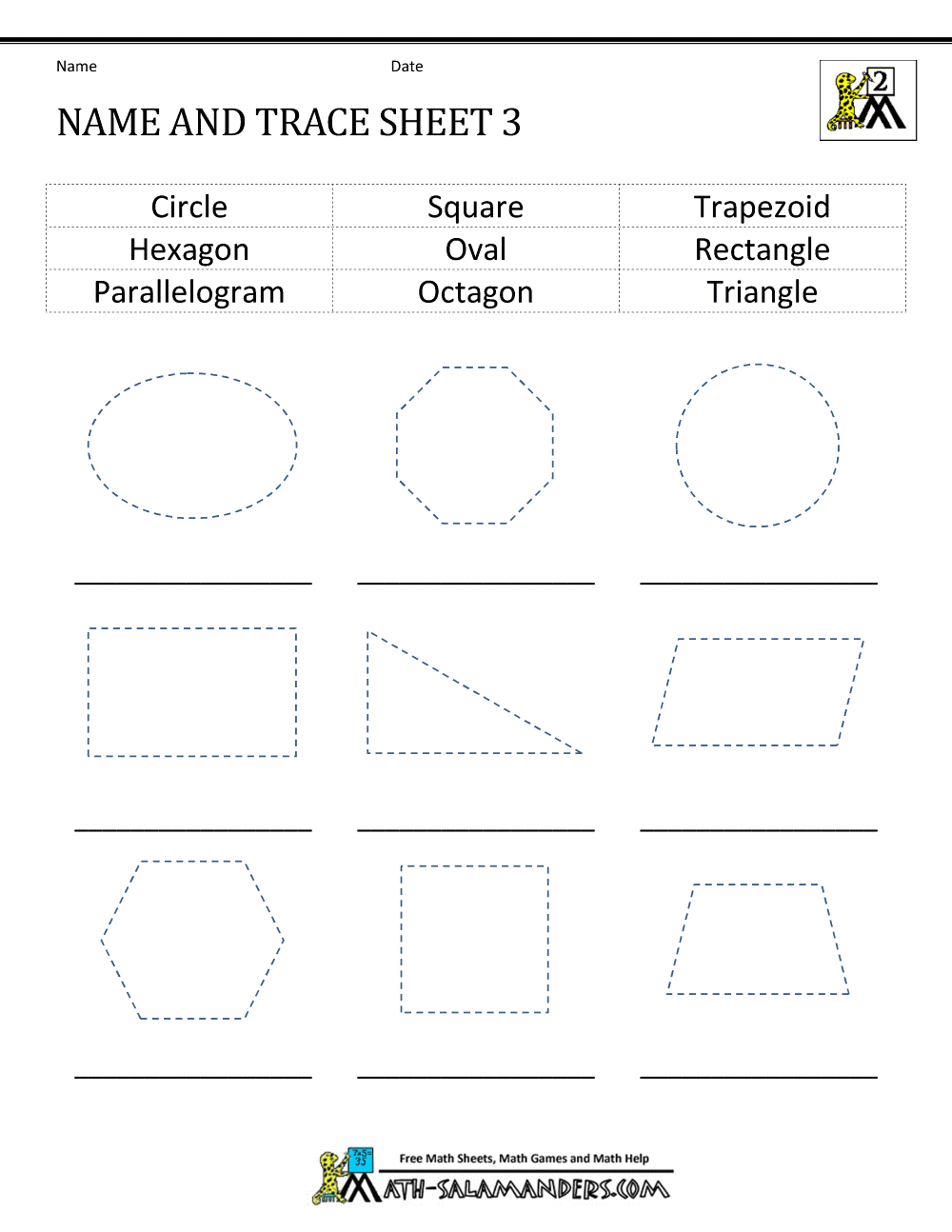
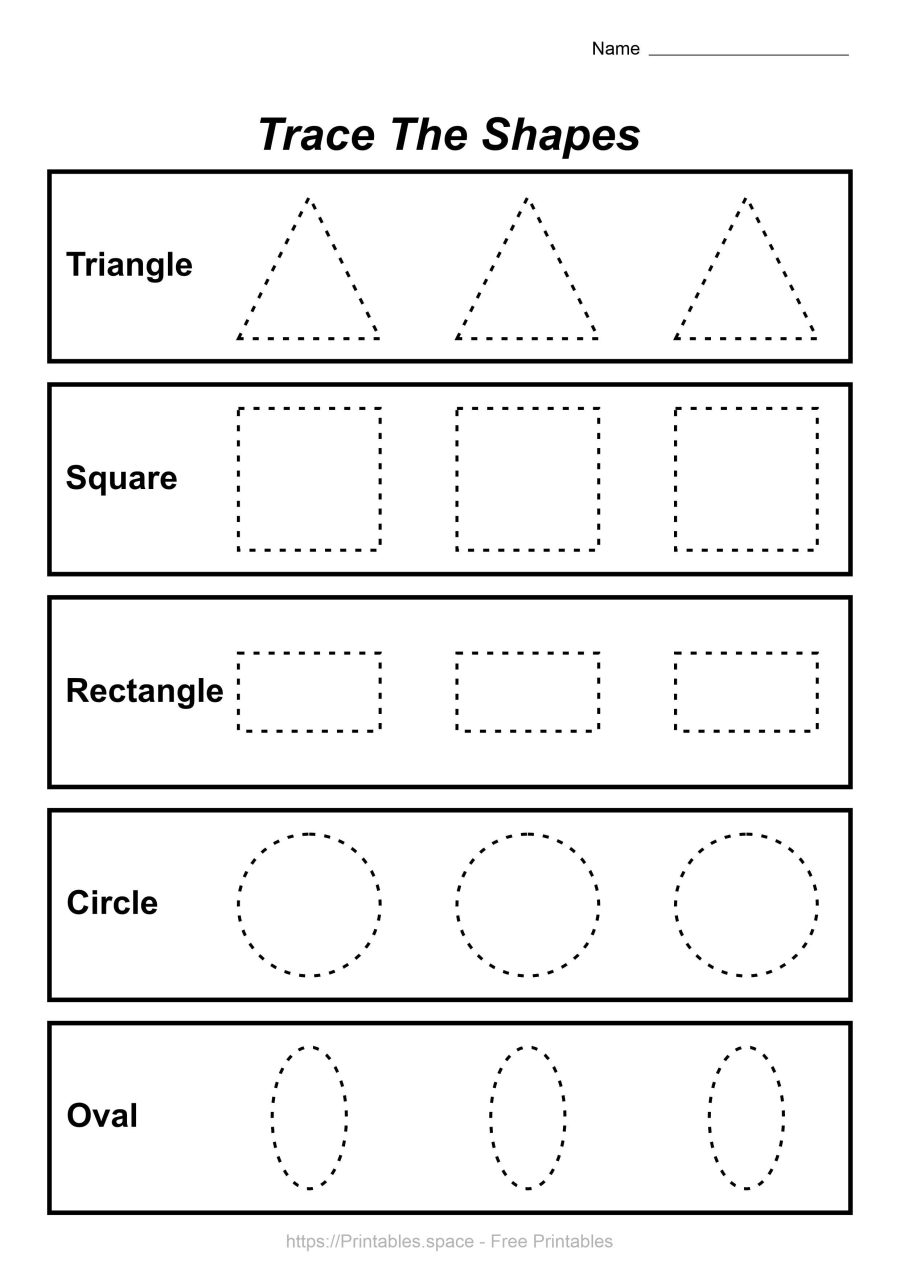
This resource focuses exclusively on mastering two-dimensional geometric forms through structured pencil paths. Children encounter a variety of closed shapes ranging from basic circles and squares to more challenging diamonds and hexagons, each presented with clear starting points and directional arrows. The layout prioritizes visual clarity, reducing sensory overload so that learners can direct all attention toward hand-eye coordination and stroke continuity. Within occupational therapy sessions, utilizing specialized Shape and Line Tracing materials allows educators to target specific visual-motor integration skills that standard handwriting paper simply cannot address. Each page encourages children to maintain consistent pencil pressure while navigating corners, curves, and intersections.
Key Learning Outcomes
Working consistently with these geometric printables yields multiple developmental milestones. Children rapidly improve bilateral coordination, learning to hold the paper steady with the non-dominant hand while the dominant hand guides the writing utensil. Visual-motor integration deepens as the brain translates visual boundaries into precise physical hand movements. Spatial awareness naturally expands as learners encounter concepts of inside, outside, corners, and straight lines. Furthermore, wrist stability and intrinsic hand muscle endurance strengthen significantly through repetitive, controlled motion, directly supporting broader Fine Motor and Pre-Writing Skills across the early childhood curriculum.
How to Use This Worksheet
Success with geometric tracing relies heavily on environment and preparation rather than rigid instruction. Begin by placing the printable on a flat, stable surface at a height where the child’s feet rest flat on the floor, promoting core stability. Encourage a functional grasp, but avoid micromanaging every finger placement if the hand is still maturing and building natural arches. For children who become easily frustrated by pencil resistance, sliding the printed page inside a heavy-duty plastic dry-erase sleeve transforms the activity into a smooth, low-friction sensory experience. According to the National Association for the Education of Young Children, open-ended exploration and play-based practice remain vital for solidifying early cognitive and physical foundations.
Practical Tips for Parents and Teachers
Scaffolding the experience makes all the difference for reluctant or fatigued learners. Adults can model the motion first in the air or over a textured surface, emphasizing the verbal cues for corners and curves, such as “down, turn, and stop.” For younger toddlers, hand-over-hand assistance can help imprint the sensory memory of the shape before independent attempts begin. Educators can easily extend the learning by having children trace physical plastic shapes first or build the outlines using playdough before ever touching a pencil to paper. When interest begins to wane, switching to alternative tools like scented markers or glowing light tables can instantly rekindle enthusiasm for the task.
Age-Appropriate Recommendations
Developmental readiness dictates how children interact with geometric tracing activities. For toddlers ages two to four, aligned with early developmental milestones, the focus should remain on large, continuous curves like circles and simple squares using thick crayons or markers. By ages five through eight, aligned with the Common Core ELA standards for foundational writing readiness (CCSS.ELA-LITERACY.L.K.1.A), children refine their precision, tackling multi-sided polygons with regular pencils while demonstrating proper pencil grip and stroke directionality. Meeting children at their current developmental tier ensures that tracing remains an empowering, confidence-building exercise rather than a frustrating chore.
Foundational fine motor control and bilateral integration must develop through hands-on manipulation before a child can master tool use like writing. — American Occupational Therapy Association
Frequently Asked Questions
Getting started with printable resources is straightforward, and understanding the mechanics behind them helps adults maximize their educational value for young learners.
Tracing shapes improves visual-motor integration, strengthens intrinsic hand muscles, and builds the spatial awareness required for letter formation. — KidTraces Educational Team
Explore More Free Printable Tracing Worksheets
Supporting a developing writer involves exploring a wide variety of engaging themes and foundational strokes. Beyond geometric forms, educators and families can discover hundreds of additional resources by exploring the complete library at KidTraces.com. Whether transitioning into early letter mastery through Alphabet And Numbers Tracing, focusing on guided stroke mechanics with Dotted Letters For Tracing, or boosting seasonal engagement using Seasonal and Fun Themes, every printable is thoughtfully designed to make learning joyful and developmentally appropriate.
Developmental Milestone & Activity Table
| Development Stage | Recommended Daily Duration | Primary Learning Objective |
|---|---|---|
| Preschool & Pre-K | 10 – 15 Minutes | Pencil grip development & basic pre-stroke lines |
| Kindergarten | 15 – 20 Minutes | Letter/number formation & spatial line awareness |
| Early Elementary (Grade 1–2) | 20 – 30 Minutes | Fluency, sentence construction & neatness |
Images References