Introduction
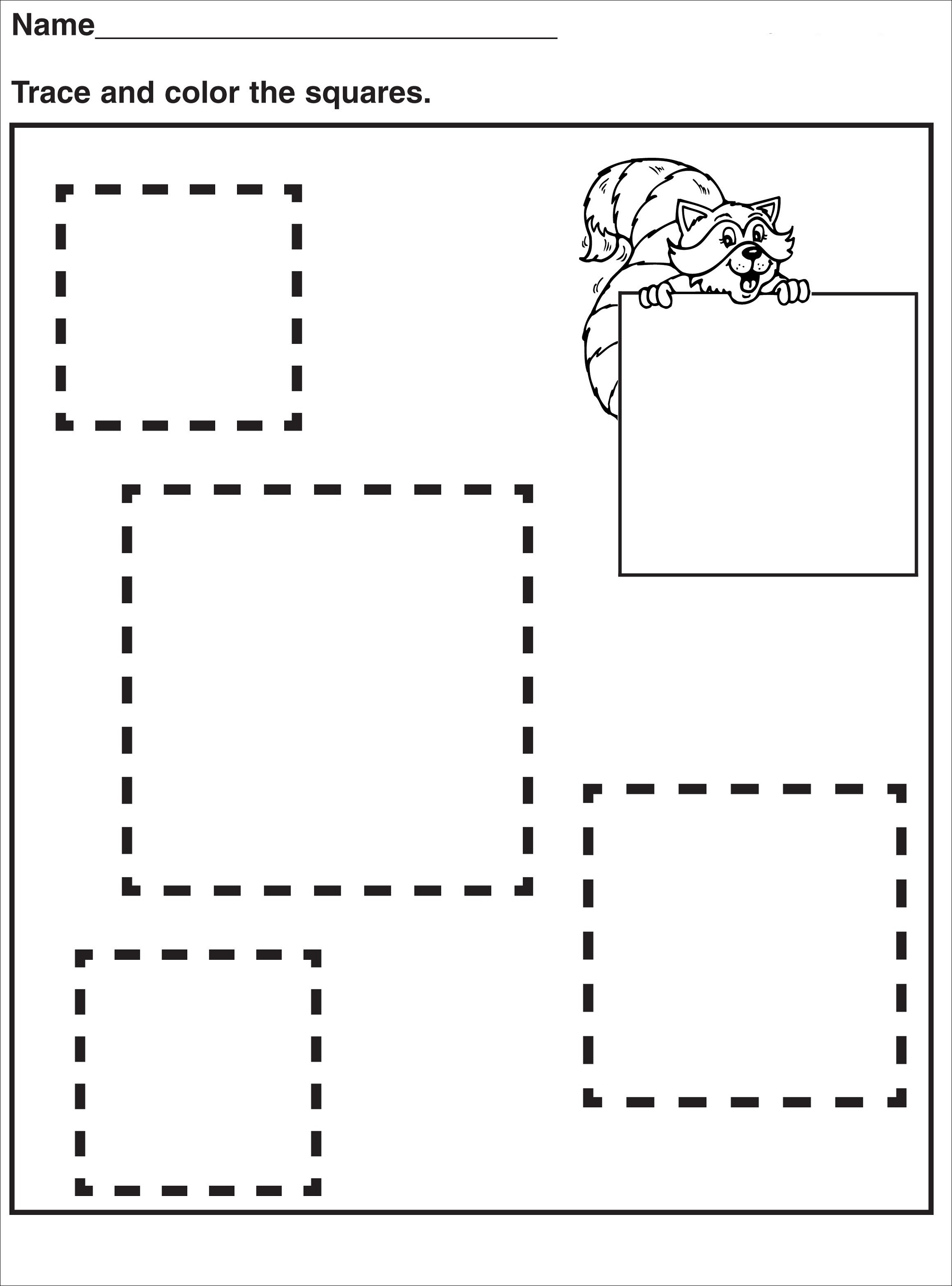
Every day in early childhood classrooms and occupational therapy clinics, adults witness a fascinating developmental gap: many children recognize letters and shapes long before their fine motor skills can actually form them. According to the American Occupational Therapy Association, foundational fine motor control and visual-motor integration are essential precursors for functional academic performance, including handwriting. Transforming abstract geometric concepts into controlled physical movements requires targeted practice that bridges cognitive understanding with hand-eye coordination. It sounds simple, and that’s the point. The dots tracing square worksheet provides a structured yet approachable canvas for mastering foundational geometric shapes. By connecting distinct dots to form a uniform square, children build the precise motor control needed for lifelong writing success, establishing proper stroke habits before moving on to more complex Shape and Line Tracing activities found across early learning curricula.
💡 Educational Key Takeaways:
- Core Skill: Structured Dots Tracing Square focused on developing pencil grip, stroke control, and early literacy/math confidence.
- Target Scope: Suited for homeschoolers, preschool, kindergarten, and elementary learners.
- Best Recommendation: Practice 10–15 minutes daily with ergonomic writing tools to reinforce muscle memory without hand fatigue.
What This Worksheet Covers
Geometric shapes serve as the building blocks for both mathematics and early literacy, making shape generation a critical developmental milestone. The dots tracing square printable focuses specifically on corner awareness, directional changes, and continuous line maintenance. When a child approaches a square, the task requires four distinct strokes—or one continuous, controlled movement—that demand sudden shifts in direction at ninety-degree angles. This execution challenges young learners to slow down at the corners rather than letting momentum pull the pencil off course. Developing this spatial discipline supports broader curriculum goals, aligning naturally with broader foundational explorations found within Fine Motor and Pre-Writing Skills programs. Mastering closed shapes prevents future letter reversals and spatial disorganization by teaching the brain where a stroke begins, where it travels, and precisely where it stops.
Key Learning Outcomes
Working through this dots tracing square worksheet yields multiple developmental benefits that stretch far beyond simple pencil navigation. First, children refine their visual-motor integration as the eyes guide the hand across defined spatial pathways. Second, learners strengthen intrinsic hand muscles through sustained, controlled pressure required to keep the pencil tip anchored on the paper. Third, the exercise builds bilateral coordination, teaching the non-dominant stabilizing hand to hold the paper steady while the dominant hand executes the tracing task. Finally, completing a closed geometric figure fosters a strong sense of spatial awareness, helping young learners understand boundaries, corners, and symmetry which directly translates to letter formation later on.
How to Use This Worksheet
Successful implementation begins long before the pencil touches the page. Adults should first ensure the child is seated comfortably at a table with feet flat on the floor and hips, knees, and elbows bent at ninety-degree angles. Encourage starting at the top-left corner dot, reinforcing top-to-bottom and left-to-right directional habits that mirror reading and writing patterns. It is often helpful to let children trace the dots first using an index finger to build kinesthetic memory before introducing a writing utensil. Once the pencil is introduced, observe how the hand moves across the page, ensuring the wrist remains flat and flexible rather than locked or arched.
Practical Tips for Parents and Teachers
Scaffolding the experience ensures every child experiences success regardless of their current skill level. For learners struggling with grip or line control, thicker writing tools such as triangular crayons or short golf pencils naturally encourage an appropriate grasp while reducing hand fatigue. Teachers and caregivers can physically guide a hand through the first corner to help the child feel the abrupt change in direction, gradually fading assistance as confidence grows. To extend the activity, invite children to decorate the inside of their completed squares or cut along the traced lines with safety scissors to integrate cutting practice. For additional structured practice connecting points, look toward resources like Tracing Worksheets to build further confidence.
Age-Appropriate Recommendations
Developmental readiness dictates how children interact with geometric tracing tasks. According to the National Association for the Education of Young Children, developmentally appropriate practice involves matching learning expectations to a child’s current motor and cognitive capabilities. For toddlers and preschoolers ages two to four, the focus rests on sensory exploration, finger isolation, and tracing larger dotted paths with thick markers. In this stage, perfection is secondary to engagement and exploring the sensation of creating a closed shape. For older children ages five to eight, expectations shift toward precision, pencil control, corner accuracy, and independent execution without adult prompting. This older group utilizes these foundational shapes to anchor more complex tasks found within General Kidtraces collections, ensuring a smooth transition into formal school readiness.
Visual-motor integration and fine motor control are foundational predictors of academic success and functional handwriting. — American Occupational Therapy Association
Frequently Asked Questions
Navigating early writing tools is straightforward with the right guidance. Common questions center around printing methods, physical development milestones, and effective skill-building strategies designed to support young learners at home or inside the classroom.
Explore More Free Printable Tracing Worksheets
Supporting a young writer involves offering a wide variety of engaging, developmentally appropriate practice materials that keep hands moving and minds curious. Beyond geometric shapes, children benefit from exploring letter formation, numerical sequences, and thematic challenges that make skill-building feel like play. Exploring the full library of resources available at KidTraces.com provides parents, teachers, and caregivers with endless opportunities to support fine motor milestones every step of the way.
Developmental Milestone & Activity Table
| Development Stage | Recommended Daily Duration | Primary Learning Objective |
|---|---|---|
| Preschool & Pre-K | 10 – 15 Minutes | Pencil grip development & basic pre-stroke lines |
| Kindergarten | 15 – 20 Minutes | Letter/number formation & spatial line awareness |
| Early Elementary (Grade 1–2) | 20 – 30 Minutes | Fluency, sentence construction & neatness |
Images References