Introduction
Many young children recognize letters and shapes long before their fine motor control allows them to form them on paper. According to the American Occupational Therapy Association, foundational fine motor skills—such as proper pencil grasp, hand strength, and bilateral coordination—are critical precursors to successful handwriting and academic performance. Bridging this gap requires targeted tools that guide the hand without overwhelming the developing mind. The free printable diamond tracing start dot serves this exact purpose, offering a structured approach to mastering oblique lines and acute angles. It sounds simple, and that is precisely the point. By focusing attention on a single, clear starting point, young learners build the spatial awareness and muscle memory needed for complex geometric shapes and early writing strokes.
💡 Educational Key Takeaways:
- Core Skill: Structured Diamond Tracing Start Dot focused on developing pencil grip, stroke control, and early literacy/math confidence.
- Target Scope: Suited for homeschoolers, preschool, kindergarten, and elementary learners.
- Best Recommendation: Practice 10–15 minutes daily with ergonomic writing tools to reinforce muscle memory without hand fatigue.
WhatThis Worksheet Covers
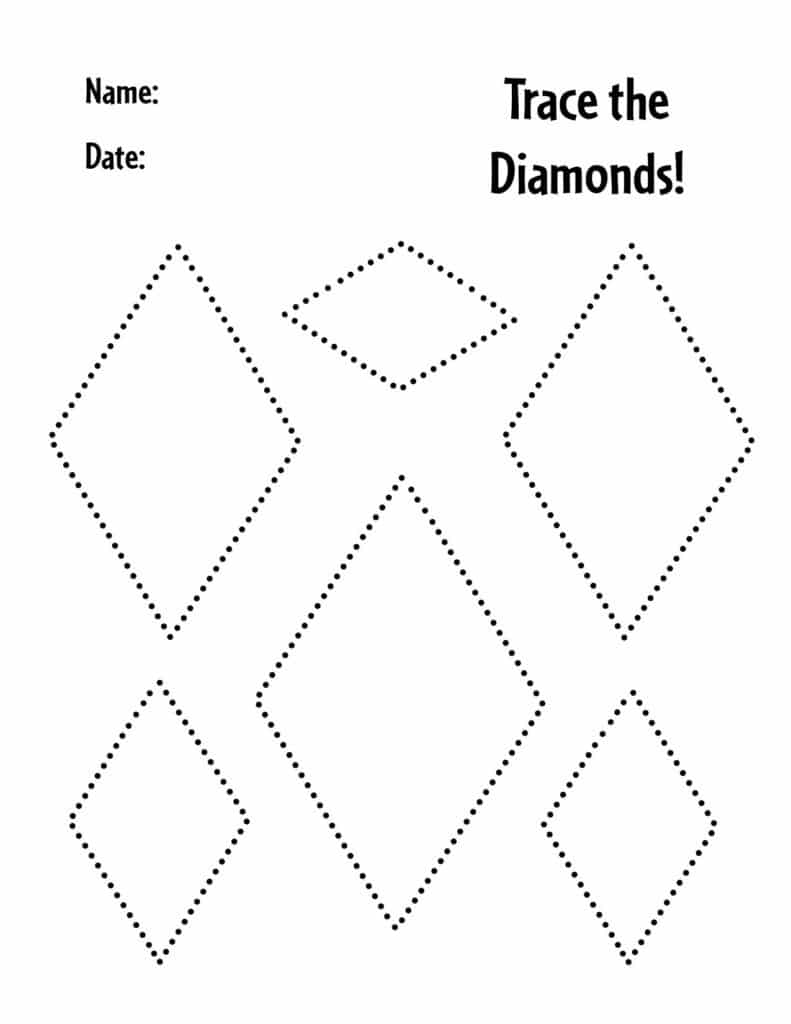
Mastering a diamond shape demands precise control over diagonal lines that change direction four times, making it one of the more challenging geometric figures for young children. This specific printable focuses on oblique line formation, directional changes, and pencil control. Unlike vertical or horizontal lines, diagonal strokes require the hand to cross the visual midline, challenging both visual-motor integration and proprioceptive feedback. The inclusion of a distinct start dot removes guesswork, teaching children where to anchor the pencil before beginning the stroke sequence. Furthermore, continuous line practice helps develop the fluid hand movements necessary for transitioning from printing basic shapes to forming letters like ‘v’, ‘w’, and ‘k’. For those looking to build foundational control before tackling complex angles, exploring resources dedicated to Shape and Line Tracing provides an effective way to strengthen hand-eye coordination.
Key Learning Outcomes
Working through this diamond tracing page fosters several foundational developmental milestones. Children refine visual-motor integration as the hand follows the visual path of the lines. Hand strength and endurance improve incrementally during repeated diagonal strokes. Spatial awareness develops organically as learners navigate the top, bottom, left, and right vertex points of the diamond. According to Reading Rockets, explicit instruction in directional stroke patterns significantly reduces letter reversals and improves overall writing fluency. Finally, completing the shape from the designated start dot reinforces impulse control and task persistence, helping children slow down and observe accuracy rather than rushing through the exercise.
How to Use This Worksheet
Success with pre-writing sheets relies heavily on setup and environmental encouragement rather than sheer repetition. Begin by placing the worksheet on a flat, stable surface directly in front of the child, ensuring both feet rest flat on the floor to provide proximal stability for the core and shoulders. Direct the child’s attention specifically to the diamond tracing start dot before allowing any marks on the page. Encourage verbalizing the direction of the strokes—such as “slant down to the left, then slant down to the right”—to integrate auditory feedback with visual and motor pathways. If the child shows signs of hand fatigue, such as a white-knuckle grip or drooping posture, pause the activity immediately to shake out the hands and reset.
Practical Tips for Parents and Teachers
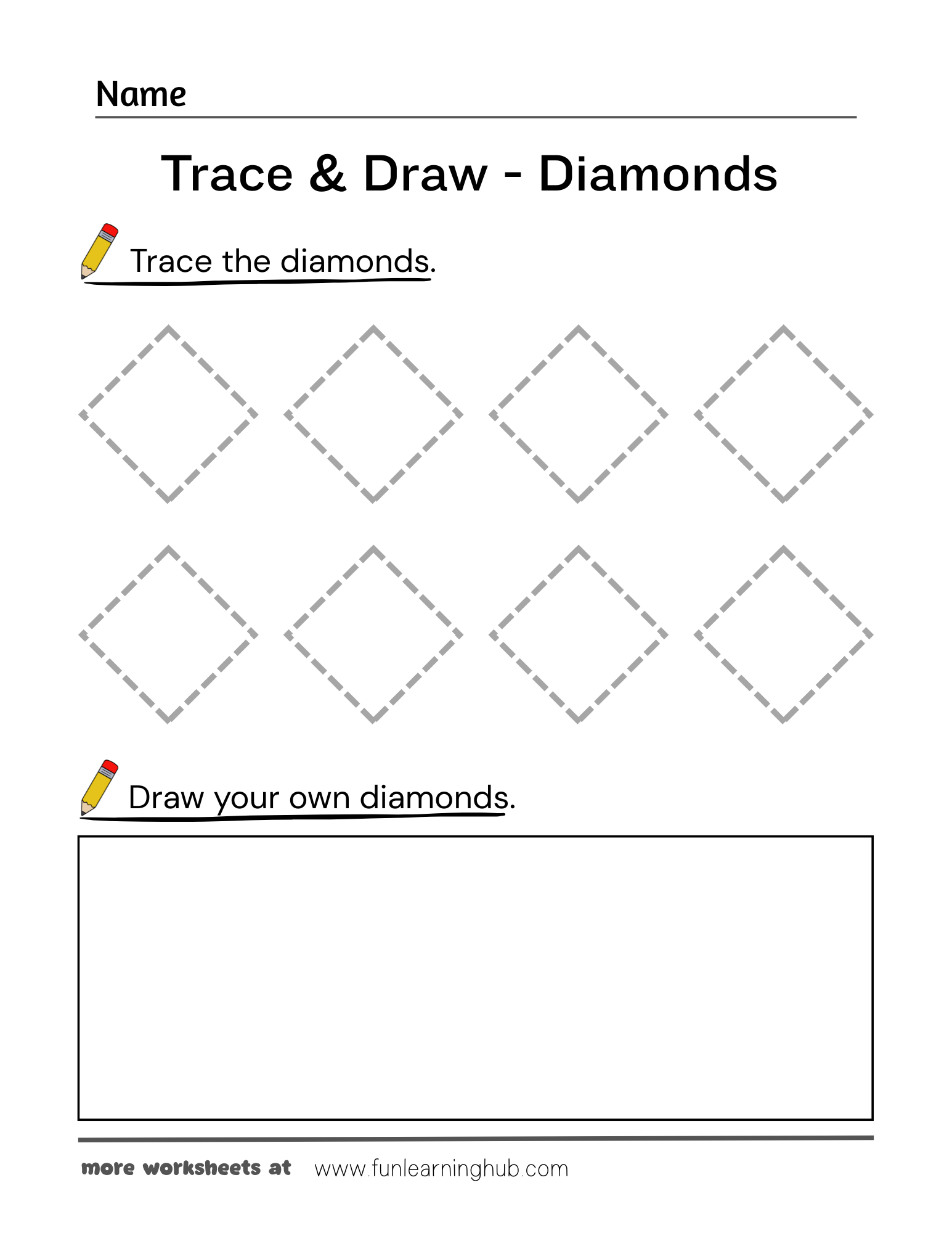
Modeling correct grip and movement before letting independent practice begin prevents the formation of rigid, inefficient hand habits. Adults can demonstrate the motion slowly in the air or directly on the paper using an index finger before picking up a writing utensil. Scaffolding the activity for younger learners might involve starting with thicker markers that offer sensory feedback and resistance, while older children can transition to standard pencils or colored pencils to refine precision. For broader skill development that transitions smoothly into letter formation, pairing this geometric practice with exercises found in Fine Motor and Pre-Writing Skills helps build comprehensive hand strength. When extending the activity, encourage children to draw their own diamonds independently next to the guided template, fostering creativity and confidence.
Age-Appropriate Recommendations
Aligning expectations with developmental frameworks ensures frustration-free learning. According to the National Association for the Education of Young Children (NAEYC) Developmentally Appropriate Practice guidelines, children aged two to four are typically refining vertical and horizontal strokes, making a guided diamond template an ideal challenge for older preschoolers who are beginning to master intersecting lines and diagonal movements. For children aged five to eight, diamond tracing serves as a warm-up activity to refine precision, pencil pressure, and spatial boundaries before tackling rigorous writing tasks. As hand strength matures, incorporating alphabet resources such as Alphabet And Numbers Tracing ensures a seamless bridge from geometric shapes to legible letter formation.
Foundational fine motor skills, including pencil grasp and bilateral coordination, are critical precursors to successful handwriting and academic performance — American Occupational Therapy Association
Frequently Asked Questions
Clear answers to common questions help caregivers maximize the educational value of every printing session.
Explicit instruction in directional stroke patterns significantly reduces letter reversals and improves overall writing fluency — Reading Rockets
Explore More Free Printable Tracing Worksheets
Supporting a child’s journey from early shapes to fluid handwriting takes a variety of engaging, low-pressure practice materials. The complete library of free printables offers targeted resources for every developmental stage, from foundational pencil control to advanced writing readiness. Discover the full collection of learning materials designed to support young hands by visiting KidTraces.com today.
Developmental Milestone & Activity Table
| Development Stage | Recommended Daily Duration | Primary Learning Objective |
|---|---|---|
| Preschool & Pre-K | 10 – 15 Minutes | Pencil grip development & basic pre-stroke lines |
| Kindergarten | 15 – 20 Minutes | Letter/number formation & spatial line awareness |
| Early Elementary (Grade 1–2) | 20 – 30 Minutes | Fluency, sentence construction & neatness |
Images References