Introduction
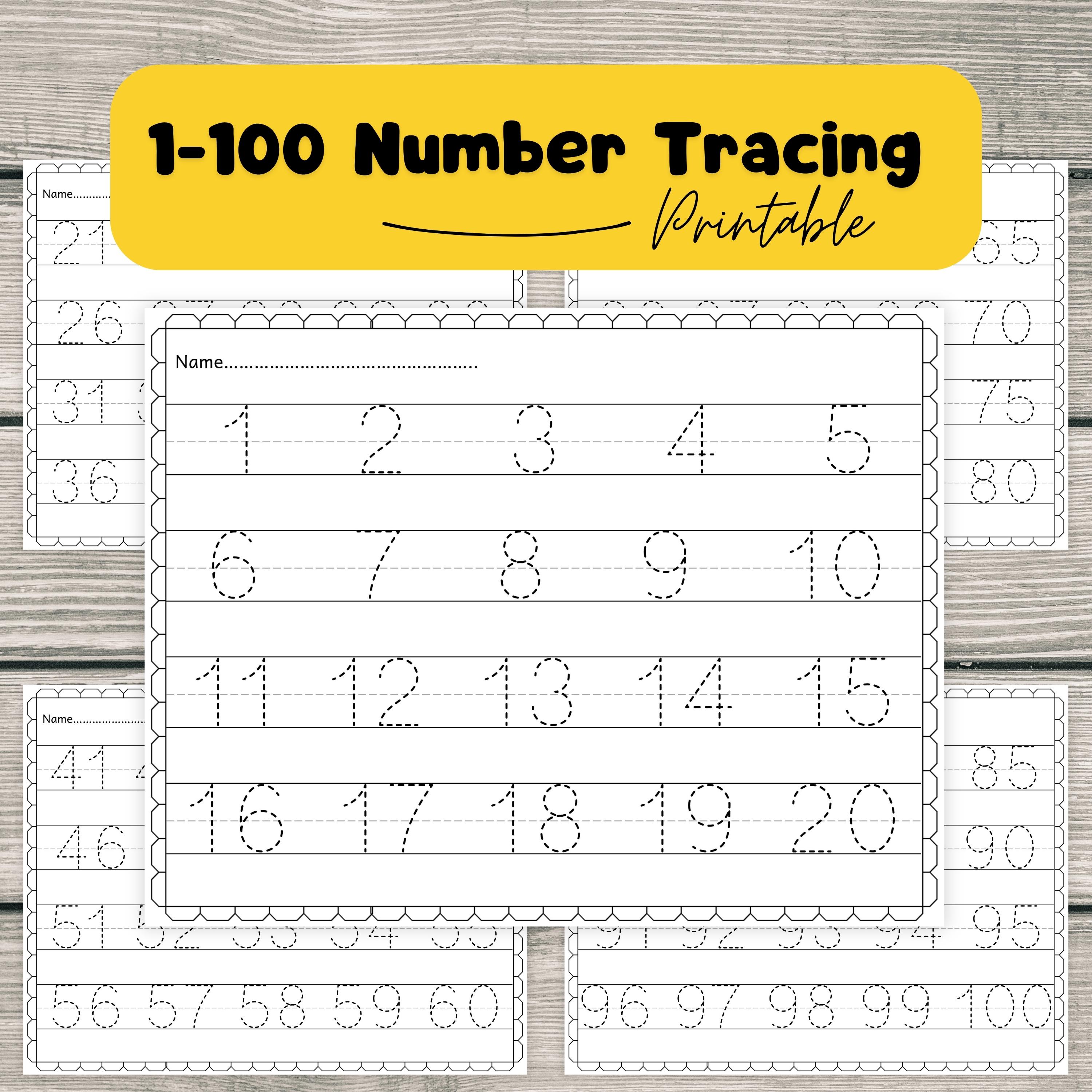
Many children recognize numerals and recite sequences long before their small hands possess the endurance and dexterity required to physically form them on paper. According to the American Occupational Therapy Association, foundational fine motor control and visual-motor integration are essential prerequisites for functional handwriting and numeral formation. Bridging this gap between cognitive understanding and physical execution requires intentional, structured practice that respects developmental timelines. The free printable numbers 1 100 tracing tool provides a systematic framework designed to guide young learners safely through this complex transition. It sounds simple, and that’s the point: removing extraneous visual clutter allows a child to focus entirely on pencil control, starting points, and stroke directionality. Here’s what makes this worksheet different: it scales incrementally from early recognition up to advanced sequencing, supporting children as they build both muscle memory and mathematical confidence simultaneously. Explore more in our Tracing Number collection.
💡 Educational Key Takeaways:
- Core Skill: Structured Numbers 1 100 Tracing focused on developing pencil grip, stroke control, and early literacy/math confidence.
- Target Scope: Suited for homeschoolers, preschool, kindergarten, and elementary learners.
- Best Recommendation: Practice 10–15 minutes daily with ergonomic writing tools to reinforce muscle memory without hand fatigue.
What This Worksheet Covers
Mastering numerical symbols demands immense spatial awareness, precise motor planning, and consistent directionality from the dominant hand. This resource breaks down every single digit from one to one hundred using carefully sequenced visual cues, directional arrows, and distinct starting dots. Children encounter structured opportunities to practice vertical strokes in the digit one, continuous curved motions in numbers like two and three, and sharp directional shifts found within complex figures such as eight and nine. Throughout therapeutic sessions and early childhood classrooms, practitioners frequently observe that children rush through writing numbers because they lack the wrist stability needed for sustained pacing. This material addresses that exact hurdle by providing ample white space, appropriately scaled font sizes, and dotted grids that encourage deliberate, controlled pencil movements rather than hurried scribbles. Foundational math and early literacy concepts intersect directly here, reinforcing left-to-right tracking and top-down habits that transfer seamlessly into general academic tasks, as supported by guidance from the National Association for the Education of Young Children regarding developmentally appropriate practice in early childhood settings.
Key Learning Outcomes
Engagement with these sequenced numerical pages yields remarkable growth across several distinct developmental domains. First, learners refine precise pencil grips and strengthen intrinsic hand muscles, which directly impacts their ability to execute clean pre-writing strokes and legible letter formations. Second, children internalize proper stroke order and consistent directionality, preventing frustrating habits like starting numbers from the bottom up. Third, visual-motor integration improves substantially as eyes and hands learn to work in synchronized harmony to stay inside guiding borders. Fourth, numerical recognition and sequential counting order solidify through repeated tactile and visual reinforcement. Finally, children build emotional resilience and self-regulation skills as they complete larger numerical challenges, transforming initial intimidation into genuine pride upon finishing the sequence from one to one hundred.
How to Use This Worksheet
Facilitating successful tracing sessions involves much more than simply handing a child a pencil and a printed sheet. Adults must carefully assess physical readiness and environmental setups to ensure optimal posture, adequate lighting, and supportive seating where feet flatly touch the floor for stability. It sounds simple, but breaking the full one-to-one-hundred sequence into smaller, manageable chunks prevents mental fatigue and hand cramping in younger participants. Adults should introduce a few digits at a time, pairing visual templates with tactile sensory methods like tracing numerals in salt trays or forming them with damp clay before returning to paper. Whenever children display signs of clenched fingers or awkward thumb wraps, gentle redirection toward a functional tripod grasp can instantly relieve tension and improve overall endurance.
Practical Tips for Parents and Teachers
Scaffolding instruction effectively means meeting the child precisely at their current developmental level rather than forcing rigid expectations too early. Begin by physically modeling the correct starting point and verbalizing the motion aloud, such as saying, “Start at the top and curve around,” to engage auditory processing alongside visual observation. Extend the learning experience for older children by having them count aloud by tens or twenties as they finish each row, linking motor output with mathematical fluency. When fatigue sets in, pause the activity immediately and encourage heavy work activities like wall pushes or bear crawls to wake up proprioceptive receptors in the arms and hands. Always prioritize quality of formation over speed, celebrating slow, deliberate, and accurate strokes over completed pages filled with hurried marks.
Age-Appropriate Recommendations
Tailoring these exercises to specific developmental stages ensures long-term success without causing undue frustration or motor burnout. For toddlers and preschoolers ages two through four, instruction aligns closely with early childhood milestones outlined in the CDC developmental framework, focusing primarily on vertical and horizontal pre-writing strokes, large-scale numeral exposure, and gross motor integration. Children in this younger bracket benefit immensely from practicing on enlarged templates or through sensory exploration found within Shape and Line Tracing activities. Conversely, kindergarteners and early elementary students ages five through eight are ready to tackle fine-tuned pencil control, precise spacing, and full numerical sequences. Educators and parents supporting this older group can seamlessly integrate targeted pages from Alphabet And Numbers Tracing alongside specialized numeral practice. Furthermore, utilizing supplementary resources found in Dotted Letters For Tracing helps maintain engagement while simultaneously reinforcing literacy alongside numeracy.
Appropriate fine motor skill progression requires moving from large proximal shoulder and elbow movements down to refined distal finger and wrist control over time. — American Occupational Therapy Association
Frequently Asked Questions
Consistent multisensory practice significantly enhances numerical retention and spatial planning in early childhood learners. — National Association for the Education of Young Children
Explore More Free Printable Tracing Worksheets
Expanding a child’s pencil control journey requires a diverse array of engaging materials that adapt to evolving interests and skill levels. Whether preparing a classroom for daily handwriting warm-ups or seeking quiet weekend practice for a homeschool environment, access to varied resources makes all the difference. Explore thematic options by browsing through Seasonal and Fun Themes, or build foundational hand strength by visiting the extensive collection dedicated to Fine Motor and Pre-Writing Skills. Discover the full, categorized library of learning materials waiting to be downloaded and printed directly at KidTraces.com today.
Developmental Milestone & Activity Table
| Development Stage | Recommended Daily Duration | Primary Learning Objective |
|---|---|---|
| Preschool & Pre-K | 10 – 15 Minutes | Pencil grip development & basic pre-stroke lines |
| Kindergarten | 15 – 20 Minutes | Letter/number formation & spatial line awareness |
| Early Elementary (Grade 1–2) | 20 – 30 Minutes | Fluency, sentence construction & neatness |
Images References