Introduction
Many children recognize letters, numbers, and geometric forms long before their fine motor control and hand strength allow them to successfully reproduce them on paper. According to the American Occupational Therapy Association, foundational fine motor skills—including bilateral coordination, hand dominance, and intrinsic muscle strength—are critical precursors to functional handwriting. Bridging that gap requires purposeful pre-writing practice that prepares small hands for complex strokes without causing frustration. Oval shape tracing practice for toddlers serves as an essential bridge in early childhood education. It moves children beyond simple vertical and horizontal lines into fluid, continuous curves. Mastering continuous curves builds the exact motor memory needed for letters like ‘o’, ‘a’, ‘c’, and ‘s’. This targeted resource provides structured opportunities for children to refine pencil control while engaging in meaningful early geometry and art exploration.
💡 Educational Key Takeaways:
- Core Skill: Structured Oval Shape Tracing Practice For Toddlers focused on developing pencil grip, stroke control, and early literacy/math confidence.
- Target Scope: Suited for homeschoolers, preschool, kindergarten, and elementary learners.
- Best Recommendation: Practice 10–15 minutes daily with ergonomic writing tools to reinforce muscle memory without hand fatigue.
What This Worksheet Covers
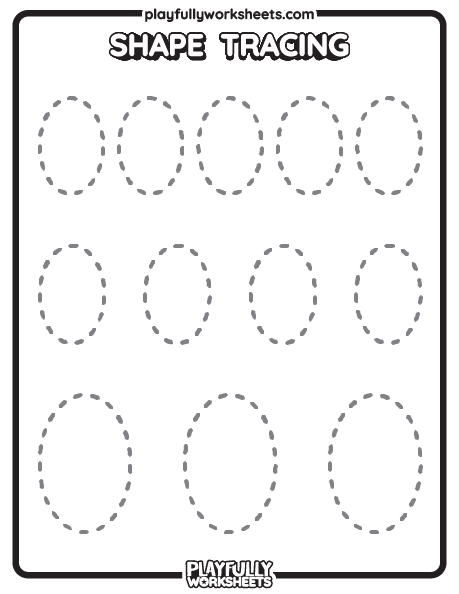
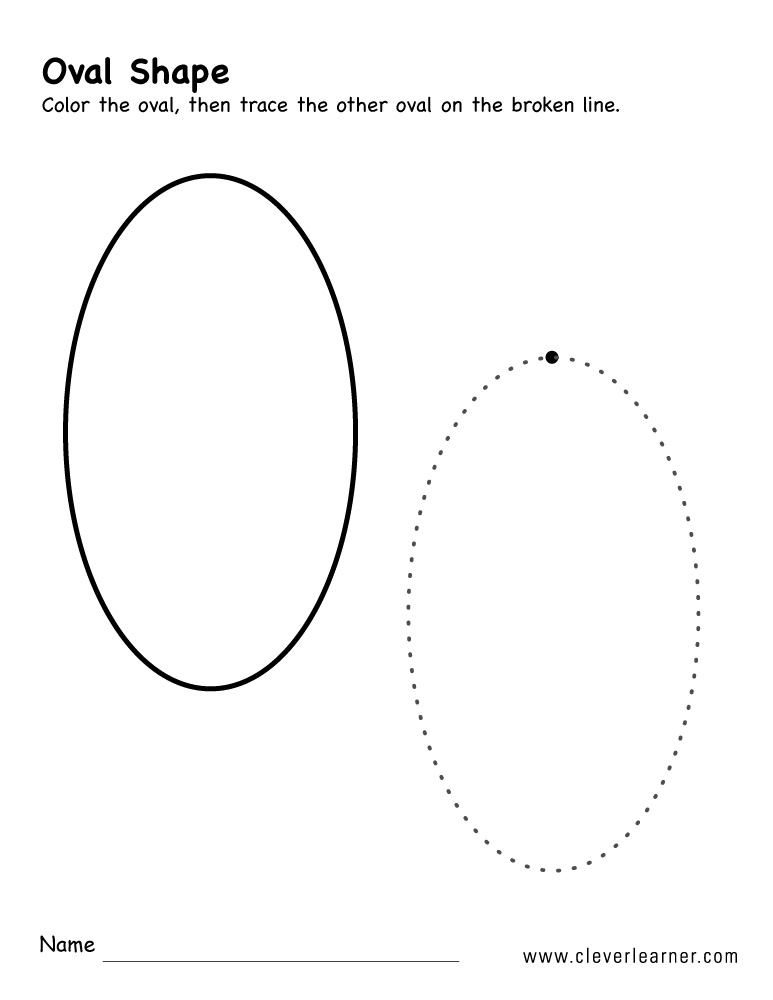
This printable resource focuses specifically on the continuous curved lines inherent to circular and elliptical forms. Rather than demanding rigid perfection, the layout guides young learners through progressive levels of visual-motor integration. Children encounter thick, friendly dotted lines that map out various sizes of ovals, ranging from large, sweeping loops that encourage whole-arm movement to smaller, controlled shapes that isolate wrist and finger action. The visual design minimizes distractions, keeping attention centered on the directional flow of the pencil. It sounds simple, and that’s the point. Stripping away unnecessary clutter allows the developing brain to focus entirely on the physical feedback of the writing tool meeting the page. As learners trace these closed curves, they simultaneously practice spatial awareness, boundary control, and bilateral coordination by holding the paper steady with one hand while drawing with the other.
Key Learning Outcomes
Engaging regularly with this material yields tangible developmental benefits that stretch far beyond simple shape recognition. Learners build critical hand-eye coordination by visually tracking the movement of the writing utensil along a designated path. Continuous curve control improves significantly as little fingers learn to smoothly transition around the top and bottom arches of the ellipse without stopping or lifting the pencil. Furthermore, this practice fosters sustained attention and visual-spatial processing, helping children understand concepts of inside, outside, top, and bottom. Hand strength and endurance also get a gentle workout, as maintaining continuous pressure on a crayon or pencil activates the small intrinsic muscles of the hand. These integrated outcomes lay a rock-solid foundation for future success across all Fine Motor and Pre-Writing Skills.
How to Use This Worksheet
Implementation in a home or classroom setting works best when kept light, playful, and responsive to the child’s current developmental stage. Begin by downloading the PDF and printing it on sturdy paper or cardstock if repeated use is desired. For younger toddlers, sliding the sheet inside a clear dry-erase pocket allows for multiple attempts using thick dry-erase markers, which are wonderful for building early grasp strength. Encourage starting points at the top of the oval, prompting children to trace in a counter-clockwise motion, which aligns with standard lowercase letter formation in English handwriting curricula. Pairing the visual tracing with tactile elements, such as tracing the large ovals with a finger dipped in paint or tracing over textured yarn glued to the lines, deepens the sensory-motor connection. Whenever a child displays hand fatigue, simply pause the activity and try again another day.
Practical Tips for Parents and Teachers
Supporting a developing grip requires patience and the right environmental setup. Here’s what makes this worksheet different: it accommodates various grasp styles by offering generous spacing that forgives early awkward hand postures. Adults should gently encourage a functional tripod or modified grasp, but forcing an unnatural hand position too early can cause tension and resistance. Scaffold the experience by physically guiding a hand through the first few curves if the concept of a closed loop feels entirely new. Extend the challenge for older children by asking them to draw their own ovals freehand next to the dotted templates, or incorporate additional practice using Shape and Line Tracing resources. Keep writing tools short, such as broken crayons or golf pencils, which naturally encourage fingers to choke up near the writing tip for better control.
Age-Appropriate Expectations
Developmental readiness spans a wide spectrum during early childhood. According to the National Association for the Education of Young Children guidelines for developmentally appropriate practice, two-year-old children typically explore writing tools through imitation, scribbling vigorously and beginning to make random horizontal, vertical, or circular strokes. By ages three and four, children transition into controlled circular movements and can often copy a circle or simple curved line when provided with a visual model. Children ages five through eight refine these abilities, gaining the precision required to produce uniform shapes, maintain proportional sizing, and apply consistent pressure for letter and number formation. Exploring a broader variety of developmental tasks becomes seamless when incorporating themed exercises from the Seasonal and Fun Themes collection.
According to the Centers for Disease Control and Prevention developmental milestones, children typically learn to copy a circle and draw simple shapes like ovals as part of crucial early visual-motor milestone progression between ages three and four. — CDC Milestones
Frequently Asked Questions
Explore More Free Printable Tracing Worksheets
Building a robust toolkit for early childhood development involves introducing a wide variety of lines, shapes, and patterns over time. The complete library at KidTraces.com offers endless opportunities to support early learners as they grow from tentative scribblers into confident writers. Whether exploring initial stroke control, refining letter formations, or preparing for formal schooling, having access to consistent, high-quality printables makes all the difference. Browse through specialized collections such as Alphabet And Numbers Tracing to find everything necessary to nurture a lifelong love of writing and learning.
Developmental Milestone & Activity Table
| Development Stage | Recommended Daily Duration | Primary Learning Objective |
|---|---|---|
| Preschool & Pre-K | 10 – 15 Minutes | Pencil grip development & basic pre-stroke lines |
| Kindergarten | 15 – 20 Minutes | Letter/number formation & spatial line awareness |
| Early Elementary (Grade 1–2) | 20 – 30 Minutes | Fluency, sentence construction & neatness |
Images References