Introduction
Many children recognize letters, shapes, and directional concepts long before their fine motor coordination and hand muscles are truly ready to form them consistently on paper. According to the American Occupational Therapy Association, foundational bilateral integration and hand-eye coordination are essential prerequisites for successful writing and spatial awareness. Watching a young learner navigate spatial sheets often reveals hesitation around crossing the body’s midline, which is a critical neurological milestone. This printable left hand right hand line tracing tool bridges the gap between cognitive understanding and physical execution. It sounds simple, and that’s the point. By directing visual attention from one side of the page to the other, children build the foundational pathways required for reading and writing fluency.
💡 Educational Key Takeaways:
- Core Skill: Structured Left Hand Right Hand Line Tracing focused on developing pencil grip, stroke control, and early literacy/math confidence.
- Target Scope: Suited for homeschoolers, preschool, kindergarten, and elementary learners.
- Best Recommendation: Practice 10–15 minutes daily with ergonomic writing tools to reinforce muscle memory without hand fatigue.
What This Worksheet Covers
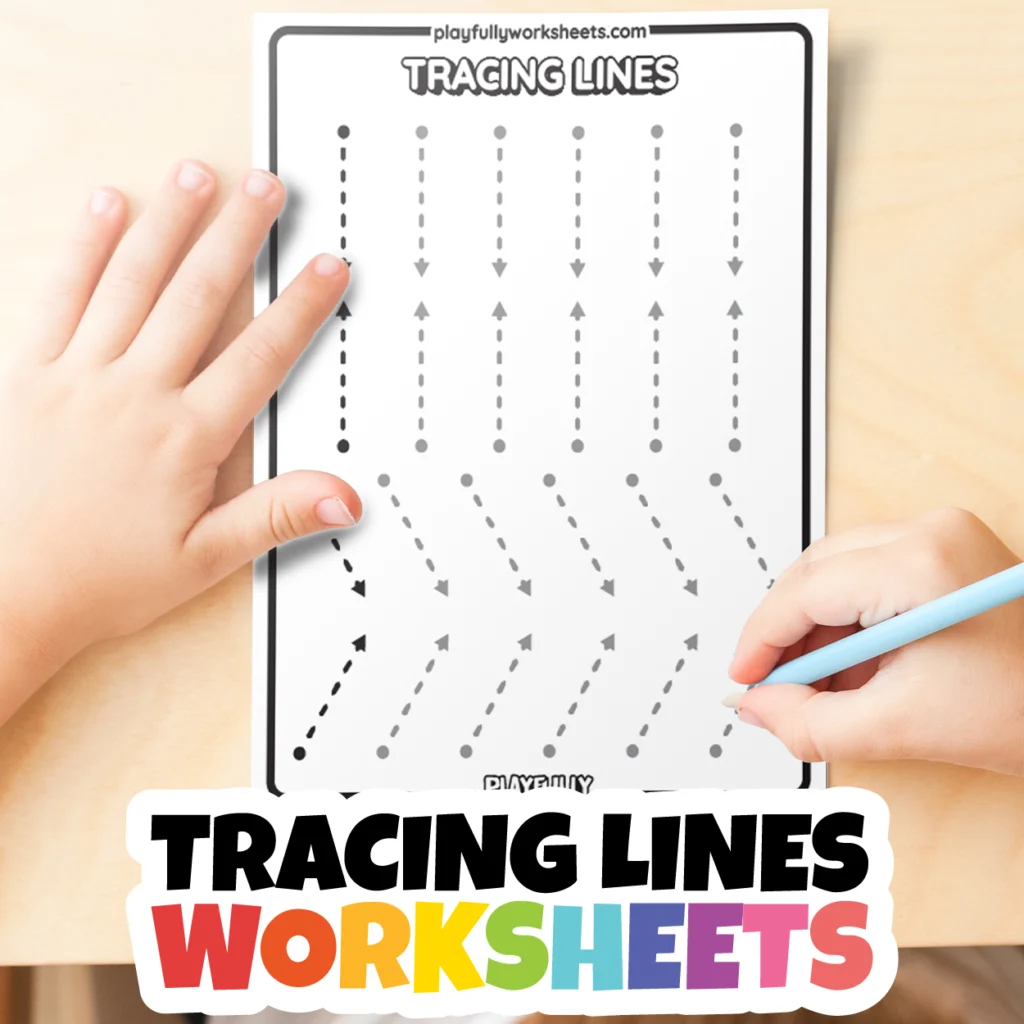
This specific tracing resource focuses heavily on bilateral coordination, directional tracking, and foundational Shape and Line Tracing patterns that move purposefully across the page. Children engage with horizontal, diagonal, and intersecting paths designed to encourage the hand to cross the vertical midline of the body. Hand dominance is naturally explored as youngsters travel from left to right, mirroring the exact ocular sweep required for future reading. Every path offers a clear starting point and a satisfying destination, which helps young learners regulate pencil speed and apply appropriate downward pressure. Educators often observe that children who struggle with spatial tracking benefit immensely from repetitive, structured visual paths that guide the hand naturally across the workspace without demanding immediate letter formation.
Key Learning Outcomes
Working consistently with these directional line sheets fosters robust visual-motor integration, teaching the brain and eyes to communicate seamlessly with the writing hand. Learners rapidly improve their pencil control, moving smoothly from choppy, hesitant marks to fluid, continuous strokes. Spatial awareness expands naturally as the hand moves from the left margin toward the right, establishing an intuitive directional habit that supports future literacy development. Furthermore, children strengthen the intrinsic hand muscles responsible for dynamic tripod grasps, reducing early writing fatigue during longer academic tasks. According to the National Association for the Education of Young Children, purposeful motor activities embedded in early childhood routines significantly enhance overall cognitive and physical school readiness. For more related activities, check out our Shape Tracing For 2 Yeqars Old.
How to Use This Worksheet
Successful implementation begins with setting up an optimal physical environment where the child’s feet flatly touch the floor and the desk sits comfortably at elbow height. Slide the printed page into a dry-erase sleeve or laminate it for reusable play, inviting learners to trace the paths with colorful dry-erase markers or even thick crayons. Encourage children to start each path on the left side, using their dominant hand while gently stabilizing the paper with their non-dominant hand. It sounds simple, but this stabilization technique prevents the paper from slipping and reinforces bilateral body awareness. Let the child move at a natural pace, pausing whenever hand fatigue sets in rather than rushing through the entire page in one sitting.
Practical Tips for Parents and Teachers
Adults play a vital role in scaffolding these pre-writing experiences by modeling an efficient pencil grasp and narrating the physical movement aloud. Phrases like “start on the left and glide smoothly to the right” help anchor the directional concept in the child’s mind. When a learner struggles with hand fatigue, try placing the paper on a slanted surface or vertical easel to naturally promote wrist extension and an upright posture. Extend the challenge by asking children to trace the lines using sensory tools, such as tracing over the printed lines with a finger dipped in paint or tracing textured yarn glued directly onto the paths. Keep sessions brief, joyful, and focused on process rather than perfection, celebrating every successful journey across the page.
Age-Appropriate Recommendations
According to the CDC developmental milestones, toddlers around age two and three typically begin imitating vertical and horizontal strokes, making simple straight-line tracking ideal for early explorers. By ages four to five, children align closely with the Head Start Early Learning Outcomes Framework, gaining the fine motor precision required to trace complex zigzags, curves, and diagonal lines that cross the midline. For older children in early elementary grades who still struggle with spatial orientation or pencil pressure, these sheets serve as an effective warm-up activity before writing tasks. Adjust the complexity of the tracing paths based on individual readiness, ensuring that the child experiences consistent success and builds genuine confidence in their motor capabilities.
Foundational bilateral integration and hand-eye coordination are essential prerequisites for successful writing and spatial awareness. — American Occupational Therapy Association
Frequently Asked Questions
Answers to common inquiries regarding the left hand right hand line tracing resource ensure a smooth and frustration-free experience for educators and families alike.
How do I download and print this resource? — Simply click the download link provided on the page to save the PDF file directly to your computer or mobile device, then print it on standard letter-sized paper using your home or classroom printer.
How does line tracing support fine motor development? — Tracing structured paths strengthens the small intrinsic muscles of the hand, refines hand-eye coordination, and builds the visual-motor control necessary for precise pencil grip and letter formation.
What does the American Occupational Therapy Association say about pre-writing skills? — The American Occupational Therapy Association emphasizes that foundational motor skills, postural stability, and bilateral coordination must be developed before children can achieve fluent, comfortable handwriting.
Explore More Free Printable Tracing Worksheets
Expanding a child’s pre-writing toolkit is simple when utilizing targeted practice materials designed for every stage of development. After mastering directional tracking, explore comprehensive collections like Alphabet And Numbers Tracing for early letter formation, or transition into guided writing with Dotted Letters For Tracing. Building essential hand strength and pencil control is also effortless when incorporating specialized practice from the Fine Motor and Pre-Writing Skills section. Explore the full library of resources available at KidTraces.com to support continuous growth, confidence, and foundational literacy in young learners.
Developmental Milestone & Activity Table
| Development Stage | Recommended Daily Duration | Primary Learning Objective |
|---|---|---|
| Preschool & Pre-K | 10 – 15 Minutes | Pencil grip development & basic pre-stroke lines |
| Kindergarten | 15 – 20 Minutes | Letter/number formation & spatial line awareness |
| Early Elementary (Grade 1–2) | 20 – 30 Minutes | Fluency, sentence construction & neatness |
Images References