Introduction
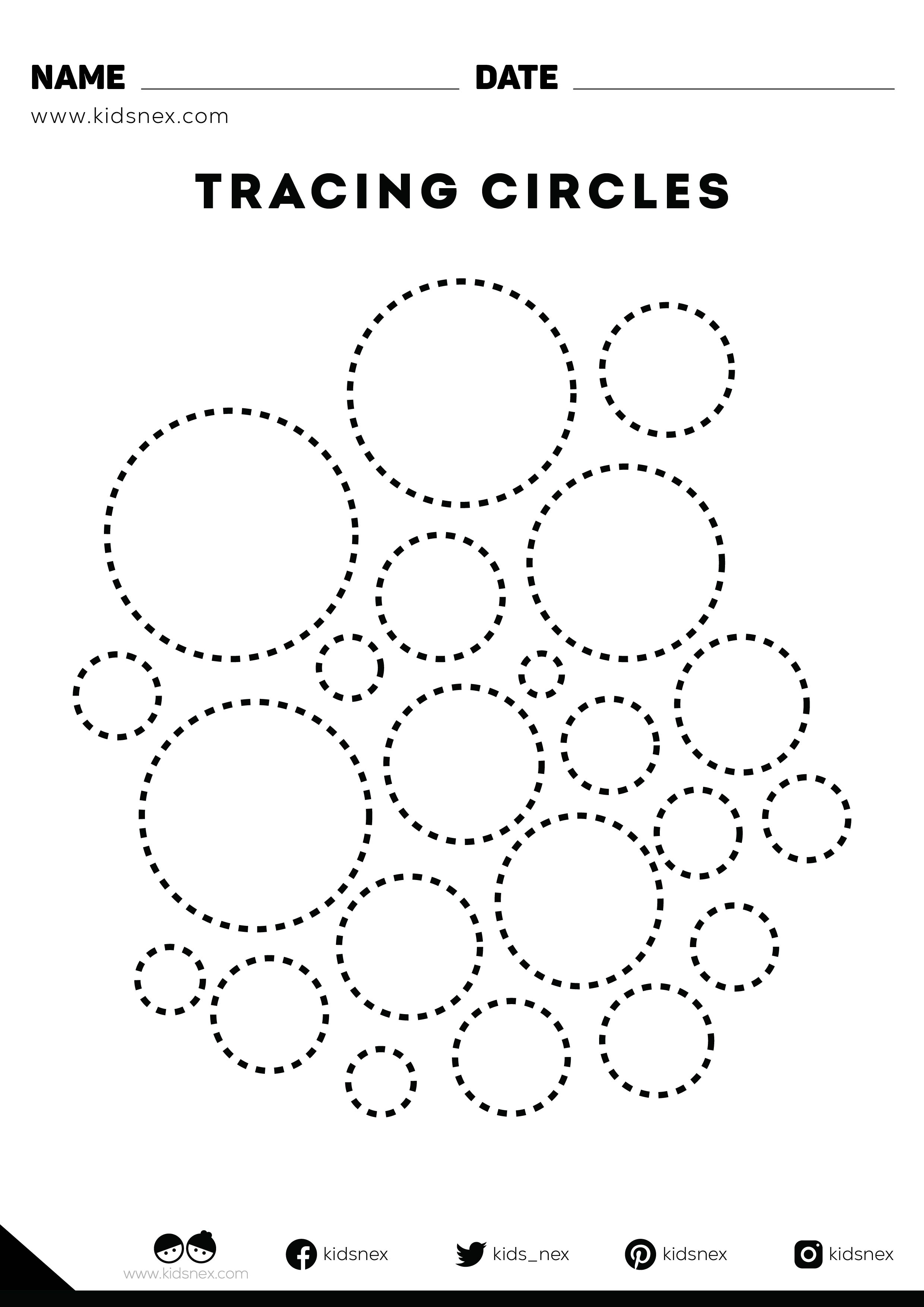
Many children recognize letters, shapes, and complex symbols long before their fine motor coordination allows them to form those same patterns on paper. According to the American Occupational Therapy Association, foundational hand strength and visual-motor integration must develop sequentially to support future academic tasks like handwriting. That milestone gap often frustrates eager learners who want to write words but lack the physical endurance in their hands. Introducing structured visual patterns through the free printable tracing curves and circles bridges this gap gently. It sounds simple, and that is the point. Mastering continuous loops, rolling waves, and closed ovals provides the exact biomechanical foundation required before tackling formal letters and numbers found within Alphabet And Numbers Tracing materials.
💡 Educational Key Takeaways:
- Core Skill: Structured Tracing Curves And Circles focused on developing pencil grip, stroke control, and early literacy/math confidence.
- Target Scope: Suited for homeschoolers, preschool, kindergarten, and elementary learners.
- Best Recommendation: Practice 10–15 minutes daily with ergonomic writing tools to reinforce muscle memory without hand fatigue.
What This Worksheet Covers
Curving lines and circular motions demand a sophisticated blend of wrist stability, finger dexterity, and visual tracking that straight lines alone cannot teach. Drawing a circle requires the hand to smoothly cross the visual midline while continuously adjusting the pencil angle, a complex neurological process. Worksheets dedicated to these continuous strokes train the small intrinsic muscles of the hand to sustain controlled pressure against the paper. Experience in classrooms shows that children who rush straight into letter formation without mastering circular pre-writing strokes often exhibit heavy-handed tension, awkward pencil grasps, and extreme hand fatigue. Establishing fluidity with loops and arcs transforms rigid, labored drawing into smooth, rhythmic motion. These foundational control sheets complement early mechanical practice found in Shape and Line Tracing packets.
Key Learning Outcomes
Working through circular and curved paths trains the visual tracking system to follow smooth, continuous trajectories across a page rather than relying on jerky, disjointed movements. Hand-eye coordination improves naturally as young learners visually anticipate the curve and adjust their finger pressure to stay inside the dotted path. Bilateral coordination also gets a subtle workout, requiring one hand to anchor the paper securely while the dominant hand executes the fluid drawing motion. Crucially, these exercises build essential motor memory for the counter-clockwise strokes needed later for letters like ‘c’, ‘o’, ‘a’, and ‘g’. Finally, completing these pages fosters sustained focus, building the frustration tolerance required for longer academic writing tasks.
How to Use This Worksheet
Success with pre-writing sheets depends heavily on the physical setup and the pacing of the activity rather than rushing to finish the page. Start by observing the child’s posture, making sure both feet rest flat on the floor and the paper sits at a slight upward slant to match the natural arc of the writing hand. Encourage a functional tripod grasp, but avoid making the session stressful if the hand strength is still developing; short, playful bursts yield better results than marathon tracing sessions. Letting children trace the paths first with an index finger provides crucial tactile feedback before introducing a writing utensil. Once confidence builds, transition to short-barreled crayons or golf pencils to naturally encourage a proper grasp.
Practical Tips for Parents and Teachers
Adults should model the correct starting point and directionality explicitly, using fun verbal cues like “sweep up like a roller coaster and loop around” to make the motion memorable. Scaffold the experience by placing transparent plastic pouches over the printable sheets, allowing children to use dry-erase markers so they can wipe away mistakes and try again without anxiety. Extend the learning beyond the paper by having children trace large circles in the air, in shaving cream, or across textured surfaces to reinforce the kinetic memory. According to the National Association for the Education of Young Children, active, hands-on motor play remains the most effective vehicle for cognitive and physical readiness in early childhood. When fatigue sets in, stop immediately to prevent the reinforcement of poor pencil habits.
Age-Appropriate Recommendations
For toddlers and preschoolers ages two to four, align expectations with the CDC developmental milestones regarding basic scribbling and imitating vertical or circular strokes. At this stage, focus heavily on large, sweeping motions, thick writing tools, and giant curves rather than strict line adherence. For children ages five to eight, integrate the framework of Handwriting Without Tears by emphasizing consistent starting points, proportional sizing, and fluid transitions between continuous loops. Older children needing targeted intervention can pair these curve-heavy printouts with specialized Fine Motor and Pre-Writing Skills exercises to build enduring hand stamina and precise control.
Visual-motor integration and foundational fine motor control significantly predict early academic success and writing legibility — American Occupational Therapy Association
Frequently Asked Questions
Answers to common questions regarding curved stroke practice and printable downloads appear below for quick reference.
Explore More Free Printable Tracing Worksheets
Supporting a young writer involves offering a rich variety of engaging, developmentally appropriate practice materials that keep motivation high every single day. Beyond curved lines and loops, children benefit immensely from exploring thematic paths, structural shapes, and early literacy concepts across different learning stages. Educators and families can browse the entire collection of resources, including seasonal challenges and letter progression guides, by visiting the main library at KidTraces.com to find the right fit for every unique learner.
Developmental Milestone & Activity Table
| Development Stage | Recommended Daily Duration | Primary Learning Objective |
|---|---|---|
| Preschool & Pre-K | 10 – 15 Minutes | Pencil grip development & basic pre-stroke lines |
| Kindergarten | 15 – 20 Minutes | Letter/number formation & spatial line awareness |
| Early Elementary (Grade 1–2) | 20 – 30 Minutes | Fluency, sentence construction & neatness |
Images References