Introduction
Many children recognize letters, shapes, and numbers long before their fine motor systems possess the strength and coordination to form those symbols on paper. According to the American Occupational Therapy Association, foundational fine motor control and visual-motor integration are essential precursors to functional handwriting in early childhood. This developmental gap often leads to frustration when adults push standard, narrow writing lines too early. The free printable tracing lines thick resource bridges that exact gap. It offers wide visual pathways that accommodate developing pencil control without demanding immediate precision. It sounds simple, and that’s the point.
💡 Educational Key Takeaways:
- Core Skill: Structured Tracing Lines Thick focused on developing pencil grip, stroke control, and early literacy/math confidence.
- Target Scope: Suited for homeschoolers, preschool, kindergarten, and elementary learners.
- Best Recommendation: Practice 10–15 minutes daily with ergonomic writing tools to reinforce muscle memory without hand fatigue.
What This Worksheet Covers
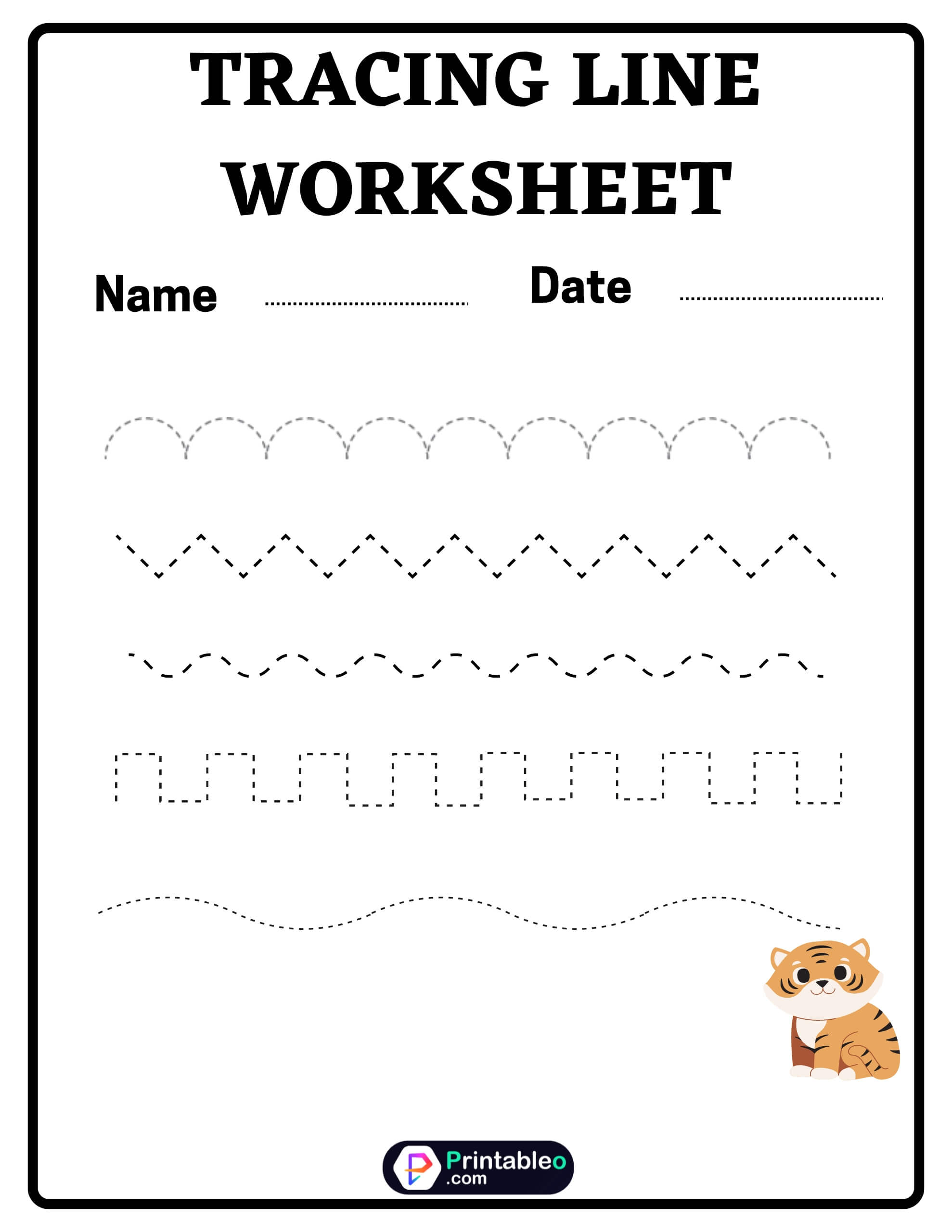
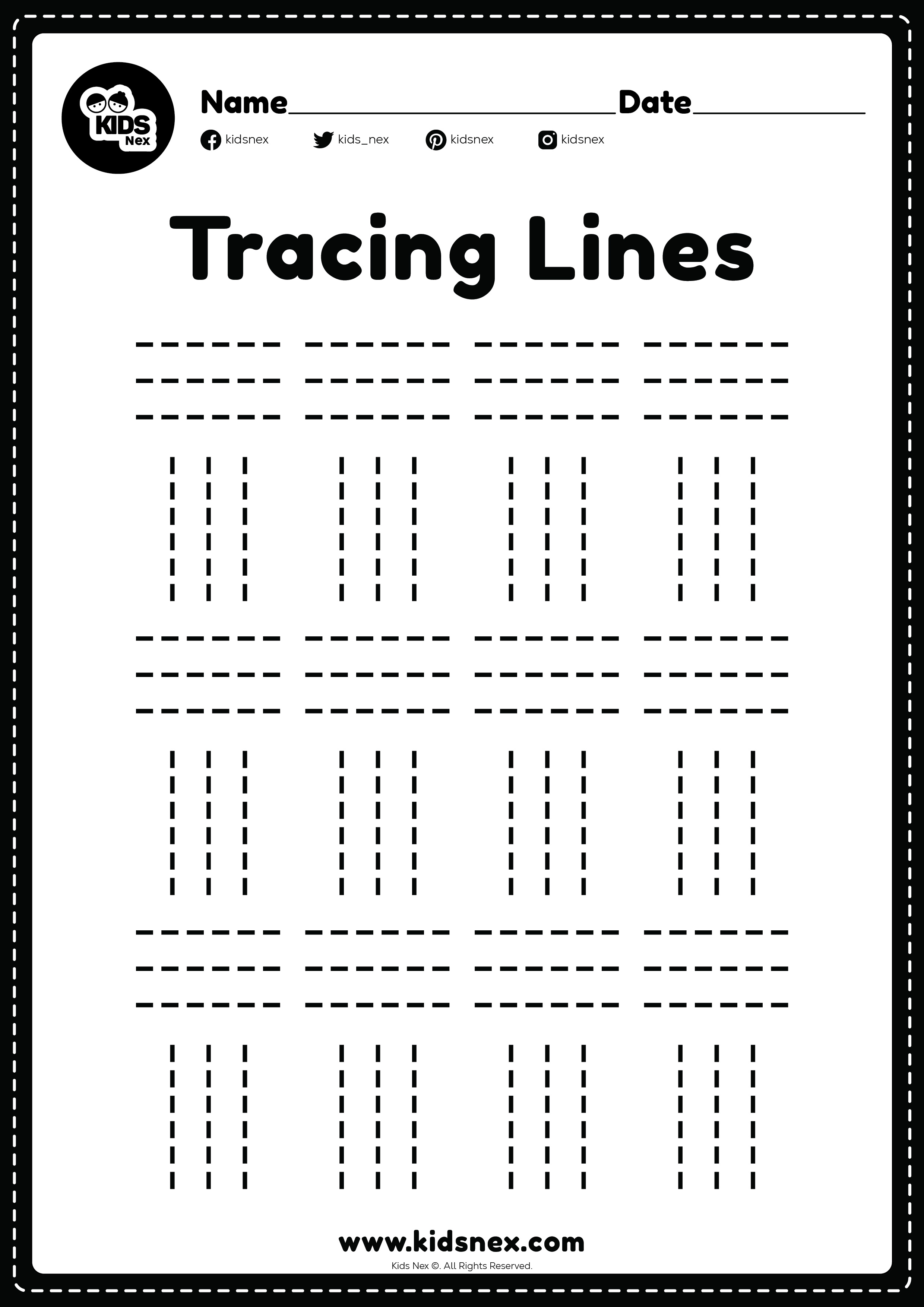
This specific printable targets the foundational architecture of pre-writing strokes, moving from simple horizontal paths to complex zigzags and continuous loops. Wide boundaries allow learners to focus purely on fluid arm movements, wrist stability, and sustained pencil pressure rather than getting stuck on staying inside razor-thin borders. Children experience success immediately, building the intrinsic motivation necessary for longer writing sessions. Furthermore, engaging with these expansive tracks helps synchronize hand-eye coordination as the eyes guide the hand across the page.
Key Learning Outcomes
Working consistently with broad pre-writing sheets yields measurable gains in several developmental domains. Learners naturally refine their palmar and digital pencil grasps as they navigate extended paths. Visual tracking improves significantly as eyes learn to scan smoothly from left to right across the page. Hand strength increases naturally through the sustained resistance required to keep a crayon or pencil moving smoothly along the page. Additionally, spatial awareness solidifies as children learn to perceive boundaries, corners, and directionality within a forgiving physical layout.
How to Use This Worksheet
Success with pre-writing materials depends heavily on setting up the physical environment before the writing tool touches the paper. Positioning the child with feet flat on the floor and hips at a ninety-degree angle instantly provides the core stability needed for distal hand control. Securing the paper with painter’s tape prevents frustrating slips for learners who still rely on a dominant-hand anchor. Adults should encourage a functional grasp, such as a tripod or quadrupod hold, while keeping the atmosphere relaxed and playful.
Practical Tips for Parents and Teachers
Scaffolding these exercises transforms a standard drill into an engaging sensory experience. When a child struggles with staying inside the thick borders, try transitioning from standard pencils to thick, short crayons or chalk, which naturally encourage a proper developmental grasp. Adults can scaffold the activity by physically guiding the child’s hand for the first few repetitions, then gradually fading support until the child initiates the motion independently. To extend the learning, invite learners to drive toy cars or trace with their fingers along the paths before introducing writing utensils. These strategies align closely with methods found in Shape and Line Tracing collections.
Age-Appropriate Recommendations
Early childhood frameworks, including the National Association for the Education of Young Children Developmentally Appropriate Practice, emphasize that motor learning must match neurological readiness. For toddlers and preschoolers aged two to four, these broad tracks serve as an introduction to directional strokes, vertical lines, and simple horizontal sweeps. Children in this bracket benefit from large-scale movements originating from the shoulder rather than the wrist. For older children aged five to eight who may exhibit fine motor delays or grasp fatigue, these same sheets offer a low-pressure way to build endurance, transitioning smoothly into activities found within Fine Motor and Pre-Writing Skills.
Visual-motor integration and tactile feedback are critical components of early academic success and pencil control — American Occupational Therapy Association
Frequently Asked Questions
Understanding the mechanics of pre-writing materials helps adults maximize their educational impact during daily routines.
According to the Centers for Disease Control and Prevention, typical developmental milestones include the ability to draw simple vertical lines and circles by age three.
Explore More Free Printable Tracing Worksheets
Supporting a developing writer involves introducing a wide variety of engaging visual stimuli and structured practice materials over time. When learners master broad pre-writing strokes, expanding into targeted letter and number practice becomes the next natural step in their educational journey. Exploring specialized resources like Dotted Letters For Tracing or diving into structured Alphabet And Numbers Tracing keeps practice fresh and motivating. The entire collection of educational printables is available for parents, educators, and therapists to explore anytime at KidTraces.com.
Developmental Milestone & Activity Table
| Development Stage | Recommended Daily Duration | Primary Learning Objective |
|---|---|---|
| Preschool & Pre-K | 10 – 15 Minutes | Pencil grip development & basic pre-stroke lines |
| Kindergarten | 15 – 20 Minutes | Letter/number formation & spatial line awareness |
| Early Elementary (Grade 1–2) | 20 – 30 Minutes | Fluency, sentence construction & neatness |
Images References