Introduction
Many children recognize letters, shapes, and patterns long before their hands possess the muscular endurance to form them on paper. According to the American Occupational Therapy Association, foundational fine motor control and bilateral coordination are essential prerequisites for functional handwriting and classroom success. Bridging that gap requires purposeful practice that engages both the visual and kinesthetic systems. The 5 year old school activity book line tracing provides a structured, low-stress pathway for young learners to build the hand strength necessary for academic tasks. It sounds simple, and that is the exact point. By breaking writing down into manageable strokes, children gain confidence without the frustration of instant letter mastery. Explore more in our Shape and Line Tracing collection.
💡 Educational Key Takeaways:
- Core Skill: Structured 5 Year Old School Activity Book Line Tracing focused on developing pencil grip, stroke control, and early literacy/math confidence.
- Target Scope: Suited for homeschoolers, preschool, kindergarten, and elementary learners.
- Best Recommendation: Practice 10–15 minutes daily with ergonomic writing tools to reinforce muscle memory without hand fatigue.
What This Worksheet Covers
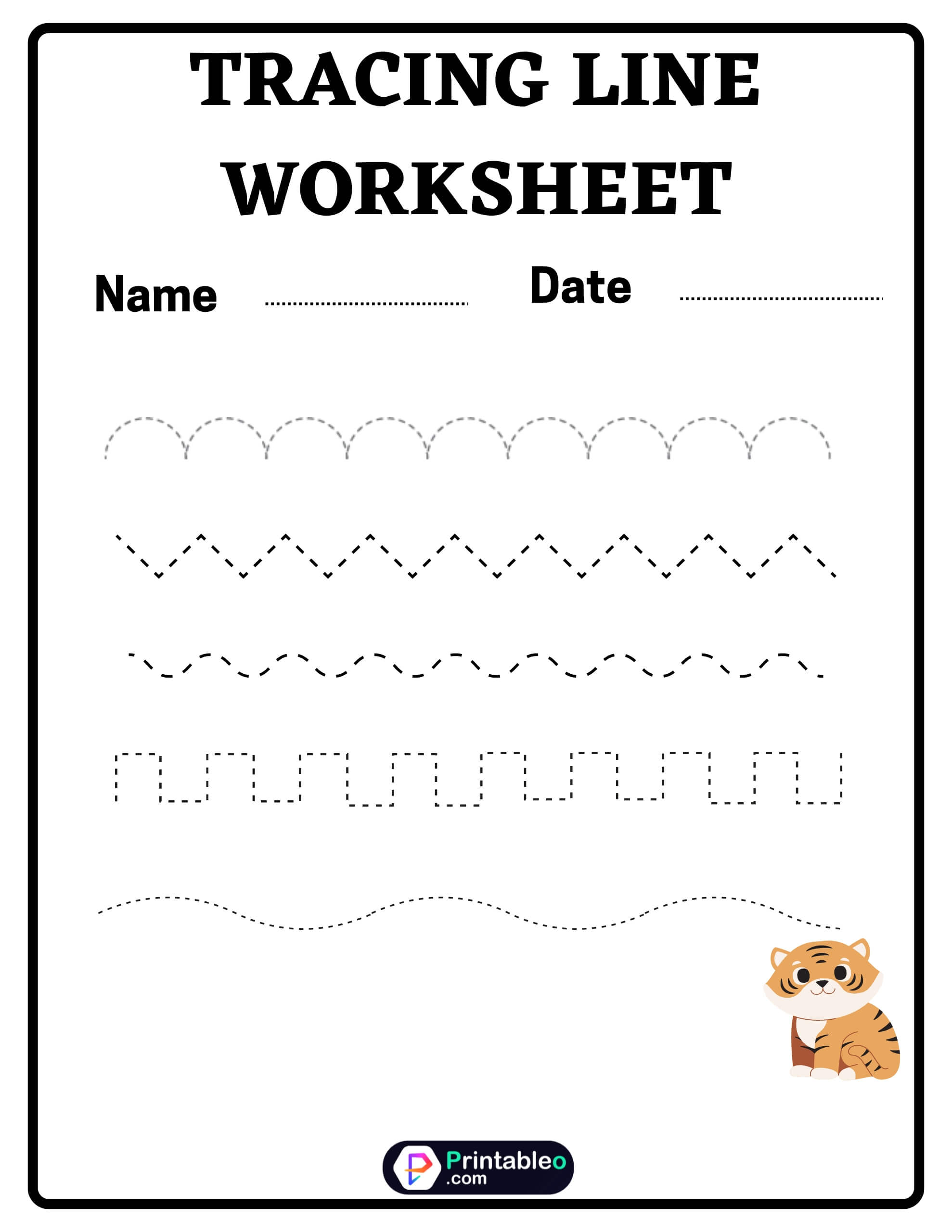
This specific printable focuses on fundamental pre-writing strokes, including horizontal, vertical, diagonal, circular, and zig-zag lines. Children often recognize letters long before their fine motor skills can reliably produce those same shapes, making shape and line control a vital stepping stone. Tracing these foundational patterns trains the eyes to track smoothly across a page while teaching the hand to maintain consistent pressure against the paper. Here is what makes this worksheet different: it emphasizes fluid movement and directional control rather than rigid perfection, allowing the hand to build muscle memory organically. For more related activities, check out our Square Trace For Toddlers.
Key Learning Outcomes
Working through these tracing exercises fosters visual-motor integration, teaching the hand to replicate what the eyes perceive. Learners develop superior pencil control, transitioning from a whole-fist grasp to a mature dynamic tripod grip as finger dexterity improves. Spatial awareness is refined naturally as children navigate starting points, boundaries, and directional arrows. Furthermore, the practice builds sustained attention span and hand stamina, reducing fatigue during longer drawing or writing sessions.
How to Use This Worksheet
Preparation and environment dictate the success of any fine motor activity. Printing the pages on heavier cardstock or sliding them into transparent dry-erase sleeves allows for repeated attempts, removing the anxiety of making a permanent mistake. Pairing the activity with short, thick writing tools like broken crayons or short markers naturally encourages an optimal grip by leaving no room for a fist grasp. It helps to keep sessions brief, lasting roughly five to ten minutes, to protect tiny hand muscles from premature fatigue.
Practical Tips for Parents and Teachers
Adults play a crucial role in scaffolding this process without taking over the pencil. Modeling the correct stroke direction in the air or directly on the page before letting the child try provides a clear visual blueprint. When a child struggles with a particular curve, gently guiding their hand through the motion once or twice can establish the correct neuromuscular pathway. It remains important to celebrate effort and fluid movement over precise adherence to the dotted lines, keeping frustration at bay and intrinsic motivation high.
Age-Appropriate Recommendations
For younger children around ages two to four, the focus rests heavily on large motor pre-writing strokes, thick markers, and vertical surfaces like easels to encourage wrist extension. As children enter kindergarten and early elementary school, aligned with the National Association for the Education of Young Children Developmentally Appropriate Practice, expectations shift toward controlled pencil grasp, precise line tracking, and letter-like forms. Five-year-old learners benefit immensely from targeted line tracing as they transition from free-form scribbling to intentional, letter-based writing structures. According to the National Center for Learning Disabilities, explicit instruction in foundational visual-motor skills significantly supports subsequent reading and writing fluency.
Foundational visual-motor integration and fine motor control significantly predict early academic success and writing proficiency in kindergarten. — National Center for Learning Disabilities
Frequently Asked Questions
Answers to common inquiries regarding the implementation and developmental benefits of early tracing resources are detailed below.
Explore More Free Printable Tracing Worksheets
Supporting a young learner through the foundational stages of handwriting requires a diverse collection of engaging resources that grow alongside the child. Beyond these initial line control exercises, expanding practice into specialized areas ensures well-rounded fine motor development. Explore the complete collection of learning materials available across the KidTraces.com library. Discover targeted foundational practice in Fine Motor and Pre-Writing Skills, explore structured letter journeys with Dotted Letters For Tracing, or build early literacy and numeracy foundations using Alphabet And Numbers Tracing resources. Every printable is designed to make learning joyful, accessible, and developmentally sound for every child.
Developmental Milestone & Activity Table
| Development Stage | Recommended Daily Duration | Primary Learning Objective |
|---|---|---|
| Preschool & Pre-K | 10 – 15 Minutes | Pencil grip development & basic pre-stroke lines |
| Kindergarten | 15 – 20 Minutes | Letter/number formation & spatial line awareness |
| Early Elementary (Grade 1–2) | 20 – 30 Minutes | Fluency, sentence construction & neatness |
Images References