Introduction
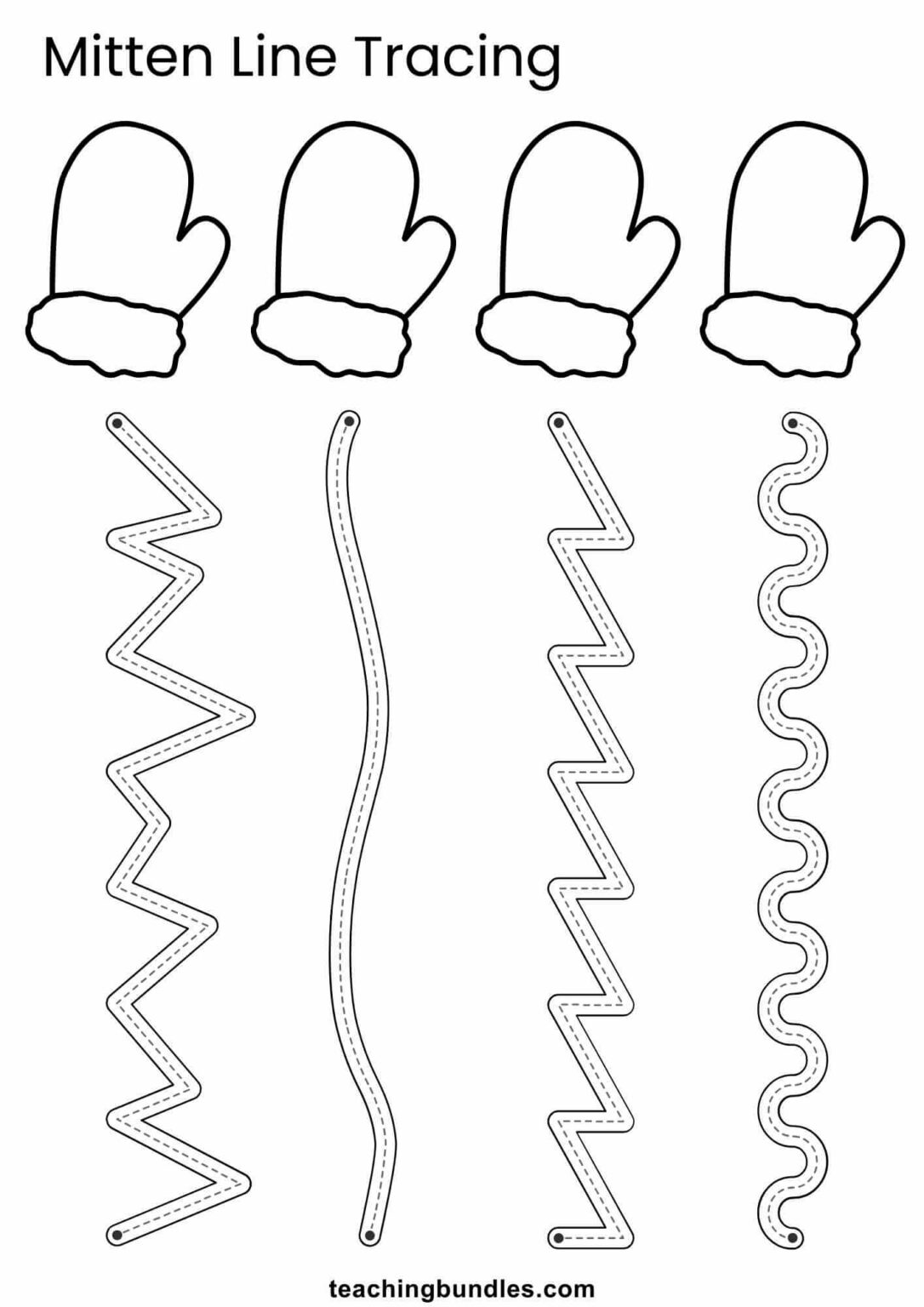
Many young children recognize letters long before their fine motor skills can actually form them on paper. According to the American Occupational Therapy Association, foundational hand strength and pencil control must develop systematically before children can master complex writing tasks. Adults often rush straight to alphabet drills, but small hands need targeted practice with lines and curves first. Seasonal activities bridge this gap by bringing playful engagement to essential hand-eye coordination exercises. Integrating the free mitten line tracing sheet into daily routines turns standard pencil practice into an inviting winter game. It sounds simple, and that is precisely the point. Children thrive when skill-building feels accessible rather than overwhelming.
💡 Educational Key Takeaways:
- Core Skill: Structured Free Mitten Line Tracing focused on developing pencil grip, stroke control, and early literacy/math confidence.
- Target Scope: Suited for homeschoolers, preschool, kindergarten, and elementary learners.
- Best Recommendation: Practice 10–15 minutes daily with ergonomic writing tools to reinforce muscle memory without hand fatigue.
What This Worksheet Covers
This printable focuses on foundational pre-writing strokes through festive winter imagery that appeals directly to early learners. Every line variation on the page targets a specific muscle group and visual-tracking skill required for future handwriting fluency. Children navigate vertical, horizontal, diagonal, and wavy paths connecting one mitten to another. These directional pathways prepare the hand for the fluid movements needed later in life. Exploring the Shape and Line Tracing section reveals similar resources designed to build this critical visual-motor foundation. Working through these templates helps children stabilize the wrist while isolating finger movements for precise control.
Key Learning Outcomes
Engagement with these winter-themed paths directly reinforces bilateral coordination, visual tracking, and spatial awareness. According to the National Association for the Education of Young Children, purposeful play and guided practice through hands-on materials remain vital for physical development in early childhood. As children guide their pencils from cuff to cuff, they naturally build the intrinsic hand muscles responsible for maintaining a functional tripod grasp. Spatial boundaries on the page teach young learners how to control pencil pressure and stop at designated targets. This repetitive stroke practice transforms jerky, hesitant motions into smooth, confident trajectories across the sheet. For more related activities, check out our Turkey Trace Lines.
How to Use This Worksheet
Success with pre-writing sheets begins with environmental setup and mindful preparation before any writing utensils touch the paper. Securing the page to a flat surface with painter’s tape prevents frustrating slipping for children who are still developing stable hand dominance. Thicker writing tools, such as short crayons or broken chalk pieces, encourage a natural grasp by preventing children from wrapping their fists around long pencils. Adults can invite children to trace the lines first with an index finger to build kinesthetic memory before picking up a drawing tool. For extra durability, slipping the sheet inside a clear dry-erase sleeve allows for endless practice and easy mistake recovery.
Practical Tips for Parents and Teachers
Scaffolding the experience ensures that frustration stays low and confidence remains high throughout the activity. Adults should model proper posture, making sure feet rest flat on the floor and the non-dominant hand stabilizes the paper edge. If a child struggles with continuous lines, breaking the path into smaller visual chunks by placing small star stickers along the route helps maintain focus. Extending the activity involves having children cut along the traced lines with safety scissors to incorporate scissor skills and bilateral coordination. Consistency matters far more than volume, meaning brief, five-minute tracing sessions yield much better results than long, exhausting drills.
Age-Appropriate Recommendations
Children between ages two and four benefit most from using thick markers or finger-painting directly over the paths to emphasize gross motor control, aligning closely with the CDC developmental milestones for early childhood physical coordination. By ages five through eight, expectations shift toward refined pencil control, accurate stroke directionality, and precise starting points in accordance with Handwriting Without Tears principles. During these older years, children should comfortably keep their pencils within narrow tracks, demonstrating sustained attention and refined hand strength. Providing the right level of challenge ensures that every child experiences steady developmental progress without undue strain on developing joints.
Foundational hand strength and pencil control must develop systematically before children can master complex writing tasks. — American Occupational Therapy Association
Frequently Asked Questions
Navigating early childhood resources is easier with clear guidance on printing, development, and developmental standards. The answers below address the most common questions from educators and families looking to support young writers.
Explore More Free Printable Tracing Worksheets
Expanding a child’s collection of learning materials keeps engagement high and targeted skill practice fresh throughout the entire school year. The complete library at KidTraces.com offers countless opportunities to practice letter formation, seasonal themes, and fundamental penmanship strokes. Discovering fresh resources in categories like Seasonal and Fun Themes ensures that young learners always find exciting new challenges waiting on the desk. Supporting early literacy and fine motor milestones becomes an enjoyable daily journey when the right tools are readily accessible.
Developmental Milestone & Activity Table
| Development Stage | Recommended Daily Duration | Primary Learning Objective |
|---|---|---|
| Preschool & Pre-K | 10 – 15 Minutes | Pencil grip development & basic pre-stroke lines |
| Kindergarten | 15 – 20 Minutes | Letter/number formation & spatial line awareness |
| Early Elementary (Grade 1–2) | 20 – 30 Minutes | Fluency, sentence construction & neatness |
Images References