Introduction
Many young children recognize letters and shapes long before their fine motor control allows them to form those same symbols on paper. According to the American Occupational Therapy Association, foundational fine motor skills and controlled hand movements are critical precursors to functional handwriting and academic success. Bridging that gap requires more than just handing over a pencil; young learners benefit immensely from structured visual cues that connect the eye, hand, and brain. The free printable tracing lines and circles with directional arrows offers a direct solution, providing the exact visual scaffolding needed to transform abstract shapes into confident, fluid pencil strokes. It sounds simple, and that is the point. By stripping away visual clutter, children can focus entirely on the mechanics of movement.
💡 Educational Key Takeaways:
- Core Skill: Structured Tracing Lines And Circles With Directional Arrows focused on developing pencil grip, stroke control, and early literacy/math confidence.
- Target Scope: Suited for homeschoolers, preschool, kindergarten, and elementary learners.
- Best Recommendation: Practice 10–15 minutes daily with ergonomic writing tools to reinforce muscle memory without hand fatigue.
What This Worksheet Covers
This specific worksheet targets the fundamental building blocks of all handwriting by combining linear progression with continuous circular motion. Children encounter a carefully curated sequence of horizontal lines, vertical paths, diagonal slants, and closed circles, each marked with explicit directional arrows. These directional cues teach young learners where to begin and which way to travel, establishing correct habits from the very first stroke. Many children naturally fall into the habit of drawing circles from the bottom up or tracing lines from right to left, which creates future bottlenecks in spelling and writing speed. Guided pathways correct this habit gently through visual reinforcement. Exploring tools found within resources like Shape and Line Tracing helps children build the muscle memory required for complex symbol formation.
Key Learning Outcomes
Working through these guided paths yields visible improvements in several developmental domains simultaneously. Pencil control strengthens as little fingers learn to regulate pressure and maintain continuous contact with the paper without lifting the writing utensil prematurely. Visual-motor integration improves significantly as the eyes track ahead of the moving pencil tip to anticipate turns, corners, and closures. Crossing the midline occurs naturally when tracing horizontal lines that stretch across the page, an essential neurological milestone for bilateral coordination. Spatial awareness also deepens because children must navigate boundaries, estimate distances, and judge proportions correctly within the provided path parameters. Furthermore, following directional arrows builds executive functioning skills by requiring children to plan their actions sequentially rather than reacting impulsively on the page.
How to Use This Worksheet
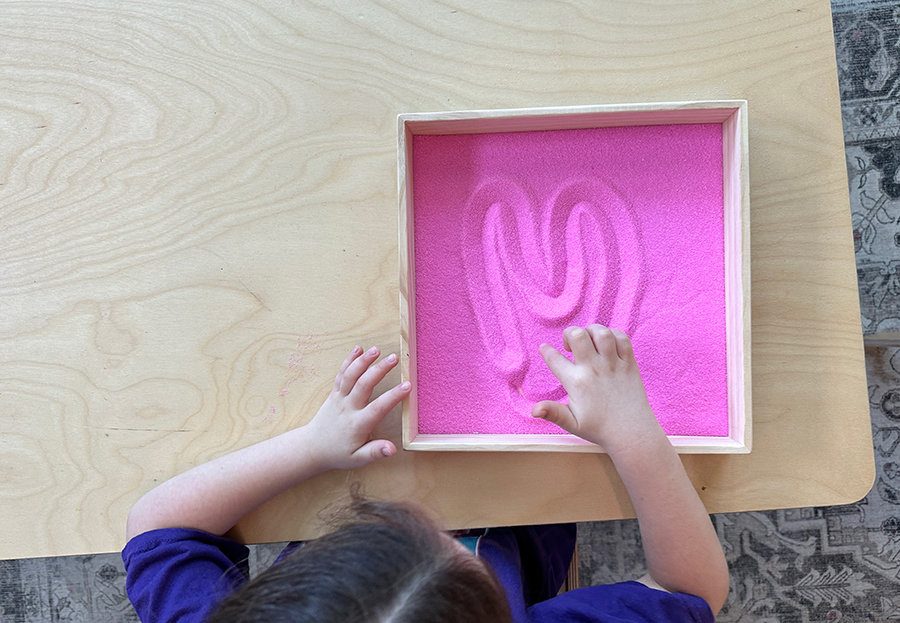
Success with pre-writing sheets depends heavily on the initial setup and the environment surrounding the practice session. Start by ensuring the workspace features child-sized seating where feet rest flat on the floor, providing proximal stability for distal fine motor precision. Position the paper slightly tilted to match the natural arc of the child’s forearm, which prevents awkward wrist bending and premature fatigue. Encourage a functional grasp, whether that is a tripod grip or a mature quadrapod, but avoid rigid enforcement that causes hand cramping or frustration in younger toddlers. Introducing multisensory variations can also boost engagement; children might trace the paths with a thick finger in shaving cream or sidewalk chalk before ever touching a pencil to paper. For broader developmental support, pairing these sheets with materials from Fine Motor and Pre-Writing Skills ensures a well-rounded approach to hand strengthening.
Practical Tips for Parents and Teachers
Scaffolding the experience makes the difference between a joyful learning moment and a reluctant struggle. Adults should sit beside the learner to model the motion first, verbalizing the direction while pointing out the arrow cue. Phrases like “start at the green dot, follow the arrow, and sweep around in a big circle” anchor the visual cue with auditory reinforcement. When a child begins to rush and scribble outside the lines, pause the session and gently guide their hand through one slow, controlled repetition to reset their pacing. To extend the challenge for older or more advanced children, reduce the visual cueing or ask them to complete the sheet using a colored marker that highlights any deviations from the path. It is always wise to keep sessions short, stopping while enthusiasm remains high rather than pushing until the hand tires completely.
Age-Appropriate Recommendations
Developmental readiness spans a wide spectrum between toddlerhood and early elementary school, aligning closely with the National Association for the Education of Young Children Developmentally Appropriate Practice guidelines. For younger children ages two through four, the primary objective involves exploring vertical and horizontal lines, large circles, and basic scribbles with thick crayons or markers. According to the Centers for Disease Control and Prevention developmental milestones, children in this age bracket typically master drawing a circle and copying simple vertical lines as their hand-eye coordination matures. For older children ages five through eight, the focus shifts toward precision, spatial orientation, and fluid control required for formal letter and number formation. Those looking to expand practice into early literacy can seamlessly transition to resources such as Alphabet And Numbers Tracing once basic line control is firmly established.
Foundational fine motor control and visual-motor integration are essential predictors of later academic achievement and functional handwriting fluency. — American Occupational Therapy Association
Frequently Asked Questions
Parents and educators frequently ask how to integrate these printables effectively into daily routines without causing burnout. Clear answers help maximize the developmental impact of every single practice session.
Tracing lines and circles with directional arrows provides essential kinesthetic feedback that strengthens hand-eye coordination and prepares young brains for letter formation. — Reading Rockets
Explore More Free Printable Tracing Worksheets
Building confident writers is an incremental journey that benefits from a diverse variety of engaging, low-pressure practice materials. Exploring alternative themes and formats keeps children motivated as their fine motor endurance grows stronger over time. The complete library housed at KidTraces.com offers countless free resources designed to support every stage of early writing development, from basic shape control to complex letter sequencing. Educators and caregivers can easily find targeted printables that meet the unique needs of every learner, ensuring that pencil practice remains a rewarding, creative part of the daily routine.
Developmental Milestone & Activity Table
| Development Stage | Recommended Daily Duration | Primary Learning Objective |
|---|---|---|
| Preschool & Pre-K | 10 – 15 Minutes | Pencil grip development & basic pre-stroke lines |
| Kindergarten | 15 – 20 Minutes | Letter/number formation & spatial line awareness |
| Early Elementary (Grade 1–2) | 20 – 30 Minutes | Fluency, sentence construction & neatness |
Images References