Introduction
Many children recognize letters, numbers, and geometric shapes long before their fine motor control and hand strength allow them to cleanly reproduce them on paper. According to the American Occupational Therapy Association, foundational fine motor skills—such as proper grasp development, bilateral coordination, and visual-motor integration—are essential precursors to successful handwriting and daily functional independence. Bridging the gap between visual recognition and physical execution requires targeted, low-pressure practice with foundational shapes. The free printable tracing diamond for kids offers a purposeful pathway for developing the exact visual-motor control needed for advanced writing tasks. It sounds simple, and that is the point. By focusing on diagonal lines and sharp directional changes, young learners build the crucial hand-eye coordination required for navigating complex letter formations in resources found within Shape and Line Tracing collections.
💡 Educational Key Takeaways:
- Core Skill: Structured Tracing Diamond For Kids focused on developing pencil grip, stroke control, and early literacy/math confidence.
- Target Scope: Suited for homeschoolers, preschool, kindergarten, and elementary learners.
- Best Recommendation: Practice 10–15 minutes daily with ergonomic writing tools to reinforce muscle memory without hand fatigue.
What This Worksheet Covers
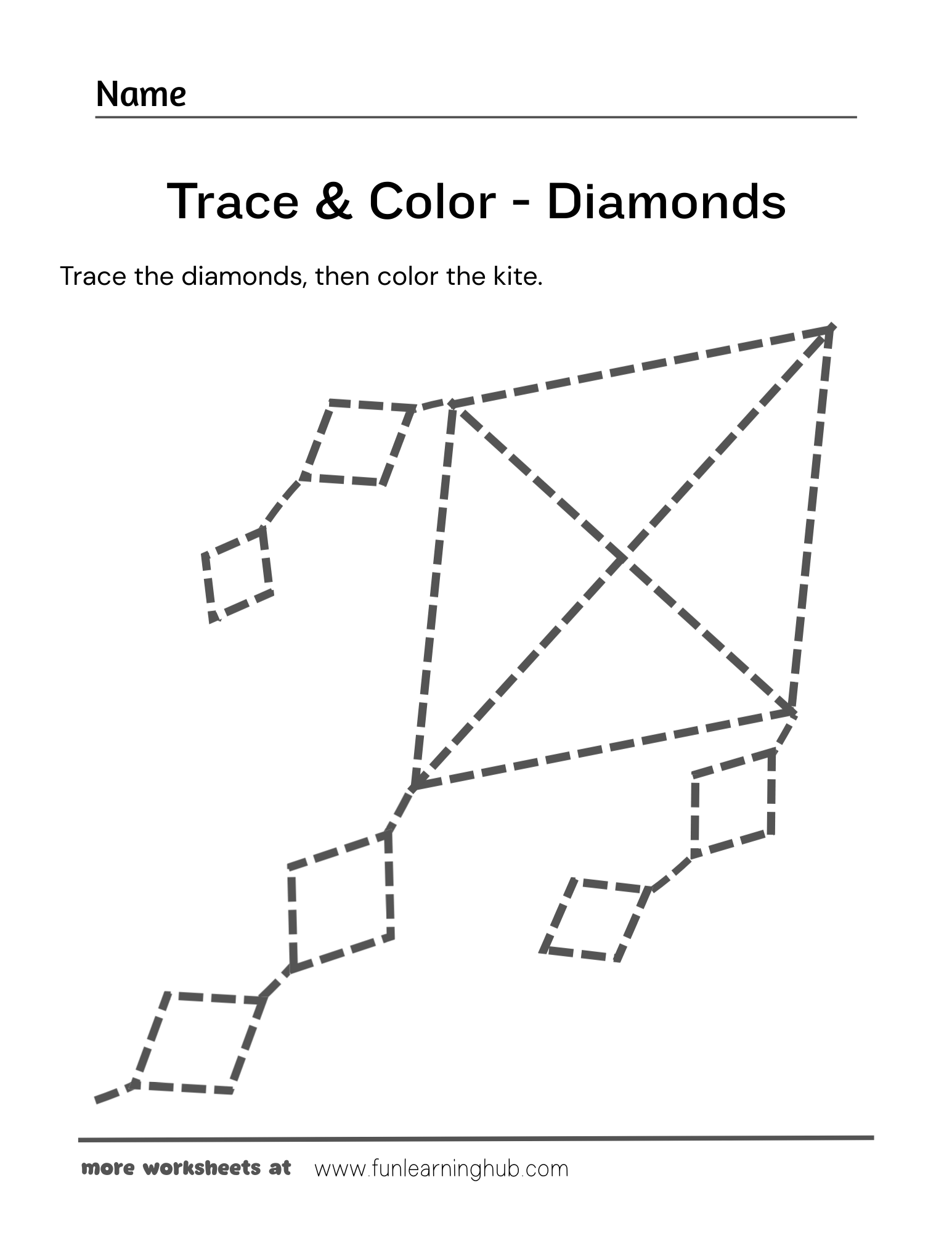
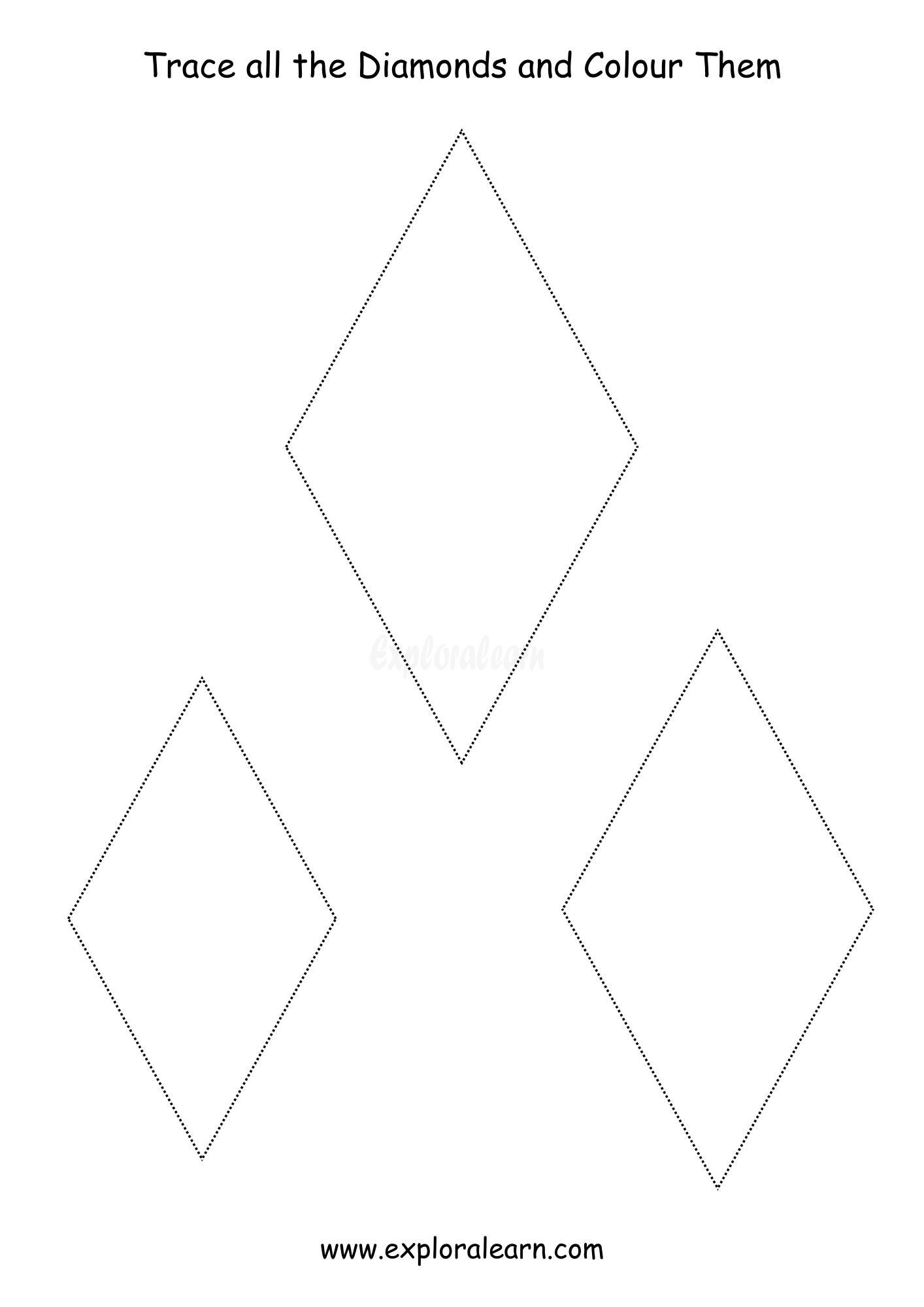
This specific worksheet focuses on the geometric diamond shape, which introduces unique biomechanical challenges compared to circles and vertical lines. Unlike a round circle that flows continuously, a diamond requires the hand to make four distinct directional shifts at precise angles. Mastering these sharp corners trains the wrist, fingers, and hand muscles to slow down, pivot, and execute controlled strokes. The layout provides dotted guidelines, clear starting points, and directional arrows that encourage proper stroke sequencing from the very first pencil stroke. Children move from gross motor arm movements toward refined finger and wrist maneuvers, laying robust groundwork for future work with Fine Motor and Pre-Writing Skills. This focused practice reduces hand fatigue while building confidence through repetition and visual feedback.
Key Learning Outcomes
Engaging with this geometric tracing page yields several distinct developmental benefits. First, children drastically improve their pencil control by learning to regulate speed and pressure along diagonal trajectories. Second, visual-motor integration is strengthened as the eyes guide the hand across intersecting and slanted pathways. Third, directional awareness improves significantly as learners navigate sharp apexes and bottom points without lifting the writing utensil. Fourth, bilateral coordination is fostered by stabilizing the paper with one hand while the dominant hand traces with intention. Finally, early spatial awareness blossoms, helping children understand boundaries, symmetry, and proportions that translate directly into reading and mathematical concepts down the road.
How to Use This Worksheet
Successful implementation begins with selecting a quiet, well-lit workspace where the child can sit with feet flat on the floor and hips, knees, and elbows bent at ninety-degree angles. Tape the paper to the table surface if the child tends to push the page around while working. Encourage starting at the top point of the diamond, moving down the right diagonal, pivoting sharply at the side vertex, and continuing down to the bottom point. According to the National Association for the Education of Young Children, learning environments are most effective when adults scaffold tasks to match developmental readiness while allowing children space for independent exploration. If frustration arises, take a brief movement break or use multi-sensory tracing alternatives before returning to the paper.
Practical Tips for Parents and Teachers
Here’s what makes this worksheet different: it targets the exact diagonal control often missed by traditional horizontal and vertical drills. Adults should model proper pencil grip proactively, encouraging a functional tripod grasp rather than a tight fist. Scaffolding the activity can involve starting with a thick, soft-lead pencil or a broken crayon to increase sensory feedback through the paper. For children who struggle with staying on the dotted lines, invite them to trace the shape with a finger or a dry-erase marker inside a protective plastic sleeve first. Extending the challenge can be as simple as having older children draw their own independent diamond next to the tracing model, comparing sizes, and coloring inside the final shape to build endurance for broader Tracing Worksheets activities.
Age-Appropriate Recommendations
For children ages two through four, aligning with early childhood development frameworks like the NAEYC Developmentally Appropriate Practice, the emphasis should remain on sensory exploration, large-arm movements, and pre-writing strokes rather than perfection. Toddlers and preschoolers benefit from tracing larger representations using thick writing tools or finger paints. For children ages five through eight, the focus shifts toward precision, neatness, pencil grip endurance, and deliberate control over complex geometric forms. During these early elementary years, tracing intricate shapes reinforces the motor plans necessary for forming uppercase letters with diagonal lines like A, K, M, N, V, W, X, and Y.
Foundational fine motor skills, including visual-motor integration and grasp development, are essential precursors to successful handwriting and daily functional independence. — American Occupational Therapy Association
Frequently Asked Questions
Understanding how to implement and maximize these resources helps caregivers feel confident during practice sessions. Below are answers to common questions regarding downloading, printing, and the developmental value of geometric tracing practice.
Visual-motor integration allows children to translate what they see into accurate physical movements on paper. — National Center for Learning Disabilities
Explore More Free Printable Tracing Worksheets
Supporting a child’s writing journey is an ongoing process that benefits from variety, consistency, and engaging themes. Exploring additional collections allows learners to maintain high motivation while refining different aspects of pencil control and stroke mastery. Discover a comprehensive library of resources, spanning from letter formation to seasonal activities, by visiting KidTraces.com. Whether expanding into Alphabet And Numbers Tracing or adding excitement through Seasonal and Fun Themes, every printable is designed to make skill development fun, accessible, and effective.
Developmental Milestone & Activity Table
| Development Stage | Recommended Daily Duration | Primary Learning Objective |
|---|---|---|
| Preschool & Pre-K | 10 – 15 Minutes | Pencil grip development & basic pre-stroke lines |
| Kindergarten | 15 – 20 Minutes | Letter/number formation & spatial line awareness |
| Early Elementary (Grade 1–2) | 20 – 30 Minutes | Fluency, sentence construction & neatness |
Images References