Introduction
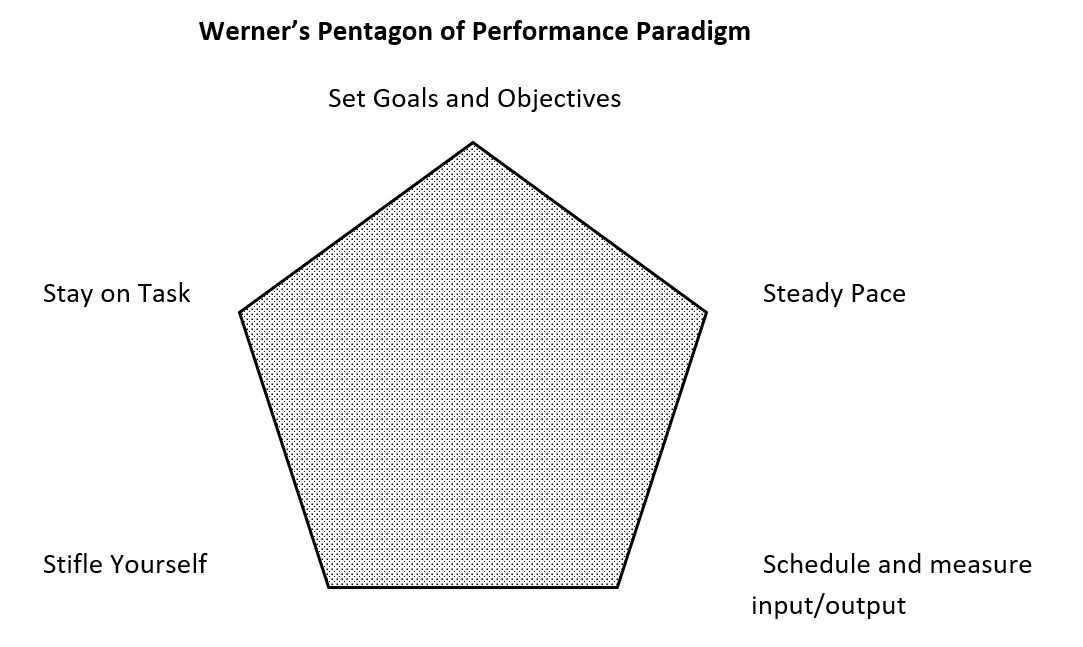
Many children recognize letters, numbers, and basic geometric shapes long before their fine motor skills can consistently form them on paper. According to the National Association for the Education of Young Children (NAEYC), young children develop foundational pre-writing capabilities through purposeful play, sensory integration, and guided graphic practice that respects natural physical maturation. The free printable pentagon skills diagram bridges this exact gap by offering structured geometry and line control exercises designed to reinforce early visual-motor integration. Years of observing preschool and kindergarten classrooms reveal that children frequently struggle with angular turns and directional shifts when drawing shapes. It sounds simple, and that’s the point. Mastering multi-sided polygons requires sustained pencil control, visual tracking, and finger dexterity that directly translate into stronger letter and numeral formation down the road.
💡 Technical Key Takeaways:
- Core Focus: Diagnostic schematic and terminal connection layout for Pentagon Skills Diagram.
- Target Scope: Field technicians, automotive DIYers, and residential/commercial electricians.
- Safety Rule: Always disconnect the primary power source/battery terminal and verify zero voltage with a multimeter before touching wires.
What This Worksheet Covers
The pentagon skills diagram focuses heavily on shape and line tracing principles to strengthen the intrinsic muscles of the hand. Young learners navigate specific geometric parameters, moving from basic vertex connections to continuous path tracing that challenges both speed and accuracy. Many classrooms see children rush through geometric tracing sheets without paying attention to starting points or directional arrows. This particular layout provides targeted spatial markers to encourage intentional pacing. By tackling closed shapes with multiple angles, children refine the same motor pathways utilized when writing letters like ‘k’, ‘v’, ‘z’, and numbers like ‘4’ and ‘5’. Furthermore, the visual structure demands sustained bilateral coordination, requiring one hand to stabilize the paper while the dominant hand executes controlled line work.
Key Learning Outcomes
Children engaging with this resource build exceptional stroke precision, hand-eye coordination, and spatial awareness. The multi-directional nature of the pentagon design strengthens visual closure abilities, helping young learners recognize and replicate complete forms rather than disjointed strokes. Regular practice supports pencil control by requiring dynamic shifts in finger positioning as the writing utensil moves from one angled corner to the next. According to the American Occupational Therapy Association (AOTA), foundational pre-writing shapes must be mastered sequentially before children can successfully transition to complex cursive or manuscript handwriting. Consequently, working through geometric diagrams provides the essential muscle memory required for maintaining uniform letter sizing and alignment on standard ruled paper.
How to Use This Worksheet
Successful implementation relies on keeping the practice sessions short, engaging, and stress-free. Educators and caregivers should introduce the sheet during calm times of the day when attention spans are naturally refreshed. Placing the paper on a slightly sloped surface can significantly improve wrist extension, placing the hand in an optimal mechanical posture for maintaining an efficient tripod grasp. Adults should monitor the child’s grip pressure, ensuring fingers do not blanch from excessive tension or hyperextend across the shaft of the pencil. Rather than demanding perfection on the first try, encouraging the child to trace the outline slowly while verbalizing the direction—such as “slant down, straight across, slant up”—helps anchor the physical movement through auditory and visual feedback loops.
Practical Tips for Parents and Teachers
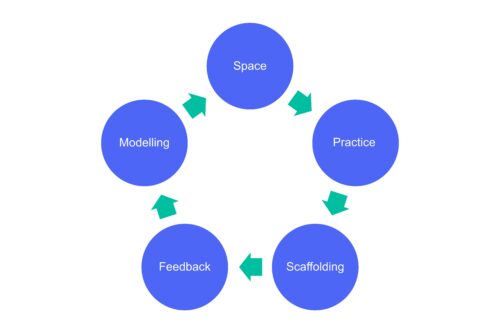
Scaffolding the activity makes a tremendous difference for children who tire easily or experience hand fatigue. Adults can begin by modeling the stroke sequence in the air or highlighting the starting dot with a bright marker to draw the child’s focus. For children struggling with fine motor endurance, slipping the printable inside a heavy-duty dry erase sleeve allows them to practice using a dry erase marker, which provides a smoother glide and reduces physical resistance against the paper. If a child begins to slouch or drift off-task, take a brief movement break involving heavy work activities like wall pushes or bear crawls to reset the proprioceptive system. Extending the activity might involve asking the child to find real-world pentagons around the room, connecting abstract geometry back to concrete everyday environments.
Age-Appropriate Recommendations
For children ages 2 to 4, aligned with early childhood developmental milestones, the focus remains on gross motor warm-ups, finger plays, and tracing oversized shapes with thick crayons or finger paint to build gross visual-motor schemas. Children aged 5 to 8 fall under specific educational frameworks like Common Core ELA standard K.G.A.2, which mandates the correct identification and drawing of two-dimensional shapes including triangles, rectangles, squares, circles, and hexagons or pentagons. At this older stage, the expectations shift toward precision, pencil control, and maintaining a functional grasp throughout the entire drawing process without hand cramping or awkward wrist flexion.
Foundational pre-writing shapes, including vertical lines, horizontal lines, circles, and intersecting crosses, must be mastered sequentially before children can successfully transition to complex manuscript handwriting. — American Occupational Therapy Association (AOTA)
Frequently Asked Questions
Explore More Free Printable Tracing Worksheets
Building a robust foundation in pre-writing and early literacy requires access to a diverse array of targeted resources. Caregivers and educators can explore structured Shape and Line Tracing activities to reinforce foundational strokes before moving on to letters. To support early reading and writing readiness, consider incorporating Dotted Letters For Tracing into daily routines. For numeric development and counting skills, the collection of Alphabet And Numbers Tracing pages offers comprehensive practice opportunities. Discover the complete library of teacher-approved resources by visiting KidTraces.com and finding the ideal printables to support every child’s unique developmental journey.
Quick Wiring Specifications & Terminal Guide
| Component / Circuit | Standard Wire Gauge | Recommended Protection |
|---|---|---|
| Control & Trigger Signals | 18 – 20 AWG | 5A – 7.5A Inline Fuse |
| Standard Auxiliary Load | 14 – 16 AWG | 15A – 20A Circuit Breaker |
| Main Power Feed / Supply | 10 – 12 AWG | 30A – 40A Heavy-Duty Relay |
Images References