Introduction
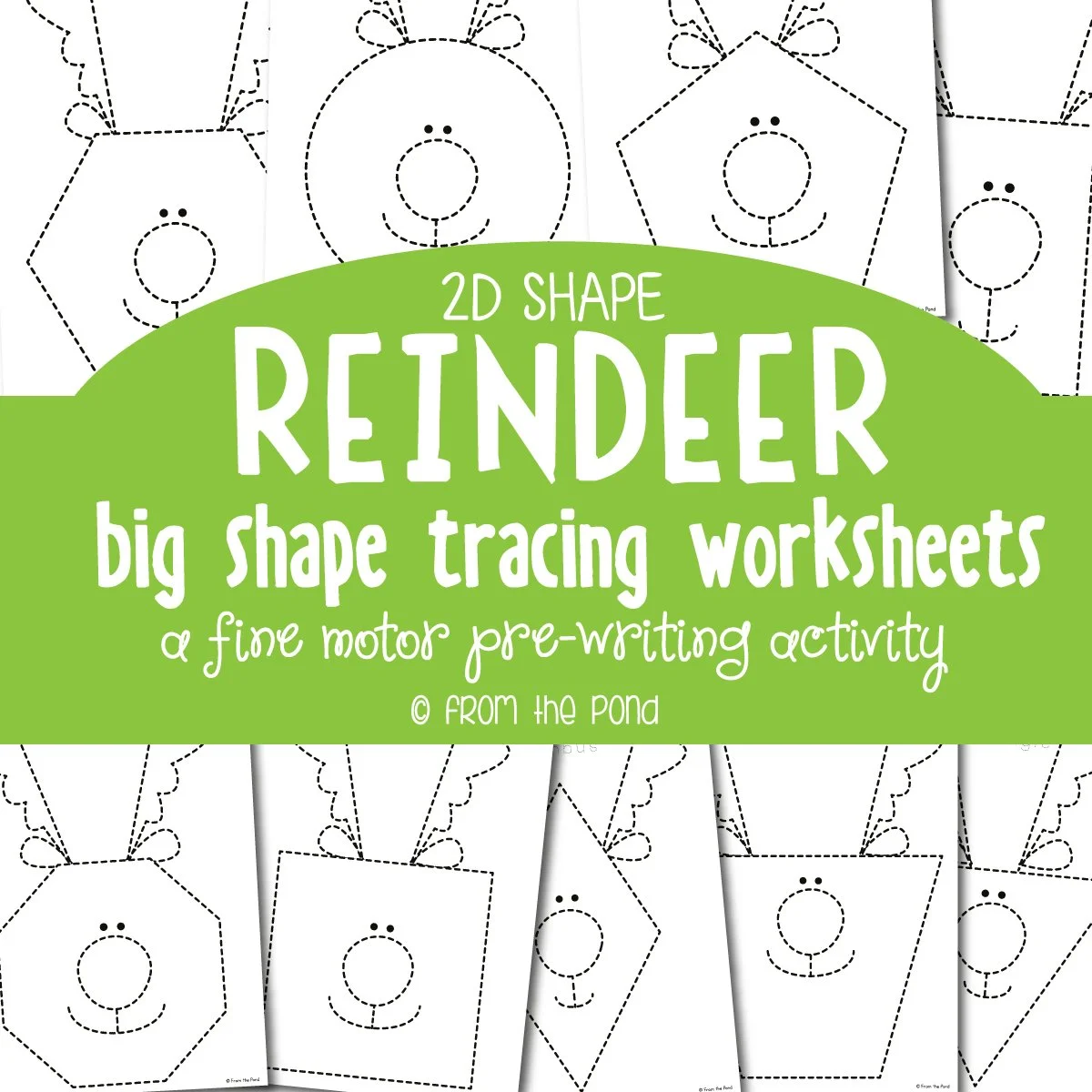
Many young children recognize letters and symbols long before their fine motor coordination and hand strength allow them to cleanly form those same shapes on paper. According to the American Occupational Therapy Association, foundational fine motor skills—such as intrinsic hand muscle strength, pincer grasp development, and bilateral hand coordination—must be deliberately built through playful manipulation and structured pre-writing tasks before fluent handwriting can emerge. Seasonal activities bridge this gap by transforming repetitive pencil control drills into engaging, imaginative play. The reindeer shapes tracing printable offers children a playful pathway to build spatial awareness, pencil grip endurance, and visual-motor integration without the pressure of formal writing instruction.
💡 Educational Key Takeaways:
- Core Skill: Structured Reindeer Shapes Tracing focused on developing pencil grip, stroke control, and early literacy/math confidence.
- Target Scope: Suited for homeschoolers, preschool, kindergarten, and elementary learners.
- Best Recommendation: Practice 10–15 minutes daily with ergonomic writing tools to reinforce muscle memory without hand fatigue.
What This Worksheet Covers
This seasonal resource focuses on fundamental geometric shapes embedded within cheerful holiday artwork, guiding little hands along predictable paths that mirror the foundational strokes required for both printing and drawing. Children encounter circles, triangles, squares, and complex angular variations disguised as antlers, holiday ornaments, and festive body segments. By tracing these distinct contours, learners practice smooth directional shifts, continuous line flow, and controlled stops and starts. It sounds simple, and that’s the point. Stripping away abstract black-and-white grids in favor of themed visual cues helps sustain attention, allowing young learners to log essential repetition for muscle memory development while staying thoroughly absorbed in the task.
Key Learning Outcomes
Engaging regularly with targeted Shape and Line Tracing activities yields measurable growth across multiple developmental domains. Children enhance bilateral integration by using a stabilizing non-dominant hand to hold the page steady while the dominant hand executes controlled pencil movements. Visual-motor integration strengthens as the brain translates visual targets on the page into precise hand and finger adjustments. Learners also refine spatial perception by navigating corners, curves, and intersections within bounded boundaries. Additionally, completing these festive exercises builds essential stamina for longer writing tasks, encouraging proper pencil pressure and fluid stroke execution that easily transfers to other Tracing Worksheets.
How to Use This Worksheet
Successful implementation relies on meeting children at their exact developmental level rather than demanding rigid perfection on the first try. Placing the printed sheet on a flat, well-lit surface with an ergonomically sized seat ensures optimal posture and core stability, which directly supports fine motor output. Adults can introduce the page by having children trace the reindeer shapes first with an index finger, building a sensory memory of the movement pattern before introducing a writing utensil. Once the pencil touches the paper, observe hand position closely and gently encourage a dynamic tripod or quadrapod grasp that minimizes hand fatigue.
Practical Tips for Parents and Teachers
Scaffolding instruction effectively means adapting the medium to match current hand strength and endurance levels. For children struggling with traditional crayons or pencils, slipping the sheet inside a heavy-duty dry-erase pocket and using thick markers provides immediate visual feedback while offering sensory resistance that strengthens intrinsic hand muscles. Adults should model proper starting points and directional strokes explicitly, pointing out where lines begin and end. To extend the learning experience beyond simple pencil control, encourage children to color the completed reindeer artwork, practice scissor cutting along the traced borders, or explore related activities found within the broader Seasonal and Fun Themes collection.
Age-Appropriate Recommendations
Developmental expectations vary significantly across early childhood, requiring tailored approaches for toddlers versus early elementary students. According to the National Association for the Education of Young Children (NAEYC) Developmentally Appropriate Practice guidelines, two- and three-year-olds benefit most from large-scale pre-writing strokes, thick writing tools, and tracing simple vertical, horizontal, and circular outlines to build core shoulder and elbow stability. By ages five through eight, children transition toward refined pencil control, accurate geometric shape formation, and smaller, more detailed motor tasks. During these primary years, seasonal shape tracing supports complex visual-perceptual processing and prepares the hand for precise letter and number sequencing found across various foundational Fine Motor and Pre-Writing Skills exercises.
Fine motor competence in early childhood serves as a strong predictor of later academic success, influencing performance across both literacy and mathematical domains. — American Occupational Therapy Association (AOTA)
Frequently Asked Questions
Answers to common questions regarding downloading, printing, and integrating seasonal tracing sheets into learning environments:
Explore More Free Printable Tracing Worksheets
Discovering fresh ways to keep young learners motivated and excited about pencil practice makes all the difference throughout the school year. Exploring the complete library of teacher-approved printables at KidTraces.com provides endless opportunities to target specific developmental milestones through engaging, themed practice pages designed for every stage of early childhood growth.
Developmental Milestone & Activity Table
| Development Stage | Recommended Daily Duration | Primary Learning Objective |
|---|---|---|
| Preschool & Pre-K | 10 – 15 Minutes | Pencil grip development & basic pre-stroke lines |
| Kindergarten | 15 – 20 Minutes | Letter/number formation & spatial line awareness |
| Early Elementary (Grade 1–2) | 20 – 30 Minutes | Fluency, sentence construction & neatness |
Images References