Introduction
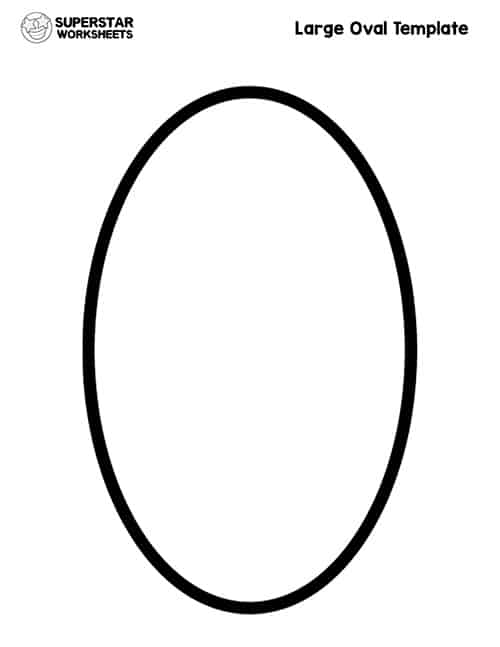
Many children recognize letters, numbers, and shapes long before their fine motor control allows them to form those same symbols on paper. According to the American Occupational Therapy Association, foundational motor skills like hand strength and visual-motor integration must develop before children can master complex writing tasks. Tracing simple geometric forms bridges this gap by training the hand to move in continuous, fluid curves. The free printable big oval for tracing serves as an essential tool in this developmental progression. It sounds simple, and that’s the point. By focusing on a single, large shape, children can concentrate entirely on pencil control, fluid motion, and spatial awareness without the cognitive load of letter formation.
💡 Educational Key Takeaways:
- Core Skill: Structured Big Oval For Tracing focused on developing pencil grip, stroke control, and early literacy/math confidence.
- Target Scope: Suited for homeschoolers, preschool, kindergarten, and elementary learners.
- Best Recommendation: Practice 10–15 minutes daily with ergonomic writing tools to reinforce muscle memory without hand fatigue.
What This Worksheet Covers
This resource features a prominent, uncluttered geometric form designed specifically to encourage continuous line movement and wrist flexibility. Geometric shapes act as the fundamental building blocks for both early mathematics and handwriting readiness. When learners trace a curved path, they practice maintaining constant visual attention while synchronizing hand movements with what the eye perceives. Furthermore, mastering continuous loops and curves helps prevent the habit of choppy, segmented strokes that often plague early writers. Integrating resources from the broader Shape and Line Tracing collection ensures that children build the necessary muscle memory for complex curved letters like ‘c’, ‘o’, ‘s’, and ‘a’.
Key Learning Outcomes
Engaging with this specific sheet fosters enhanced hand-eye coordination as small muscles in the fingers and wrist learn to make micro-adjustments along a curved path. Learners develop directional awareness by practicing counter-clockwise and clockwise motions, which align directly with standard handwriting conventions. Additionally, children cultivate sustained visual attention, learning to track a line from a clear starting point all the way back to the origin. This repetition builds foundational bilateral coordination, encouraging the non-dominant hand to stabilize the paper while the dominant hand executes the tracing movement.
How to Use This Worksheet
Preparation involves printing the sheet on standard paper or cardstock for added durability, especially when working with younger toddlers who tend to press down heavily with writing utensils. Encourage the child to start at the designated top marker and glide smoothly around the curve without lifting the pencil. According to Reading Rockets, multisensory strategies significantly improve early literacy and writing acquisition. Adults can enhance the experience by having children trace the outline with a finger first, or lay down yarn along the path before picking up a marker or crayon. For additional practice with curved paths and foundational strokes, exploring tools within the Fine Motor and Pre-Writing Skills directory provides endless opportunities for skill reinforcement.
Practical Tips for Parents and Teachers
Observing children during tracing sessions reveals much about their current grip development and muscle fatigue. Adults should monitor hand placement to ensure a functional grasp, gently encouraging a three-point finger grip rather than an awkward fist. Scaffolding the activity makes a tremendous difference for struggling learners; if a child finds paper and pencil frustrating, try placing the printout inside a dry-erase sleeve and using thick markers. To extend the challenge for older or more advanced children, invite them to trace the shape multiple times in different colors to create vibrant rainbow patterns, or ask them to draw a smaller oval independently inside the original template. Discovering more engaging ideas is easy when browsing through the Seasonal and Fun Themes section for creative ways to keep practice fresh.
Age-Appropriate Recommendations
According to the National Association for the Education of Young Children Developmentally Appropriate Practice framework, two- and three-year-olds benefit most from large, gross-motor arm movements, making oversized templates ideal for wall or floor tracing. Children aged four to five can transition to tabletop work using crayons, pencils, or short markers to encourage proper finger positioning. By ages six to eight, mastering precise curves helps refine cursive readiness and letter proportionality. Aligning these activities with developmental stages ensures that expectations match individual physical capabilities rather than rigid chronological age.
Foundational motor skills, including hand strength and visual-motor integration, are essential prerequisites for academic tasks such as handwriting and cutting. — American Occupational Therapy Association
Frequently Asked Questions
Answers to common questions regarding printing, skill development, and expert recommendations provide clarity for adults guiding early learners.
Explore More Free Printable Tracing Worksheets
Supporting a young writer involves offering a diverse array of practice materials that grow alongside the child’s abilities. Exploring the comprehensive library available at KidTraces.com provides educators, parents, and therapists with endless resources tailored to every stage of early development. From foundational lines to complex letter sequences, consistent and joyful practice lays the groundwork for a lifetime of confident communication.
Developmental Milestone & Activity Table
| Development Stage | Recommended Daily Duration | Primary Learning Objective |
|---|---|---|
| Preschool & Pre-K | 10 – 15 Minutes | Pencil grip development & basic pre-stroke lines |
| Kindergarten | 15 – 20 Minutes | Letter/number formation & spatial line awareness |
| Early Elementary (Grade 1–2) | 20 – 30 Minutes | Fluency, sentence construction & neatness |
Images References


