Introduction
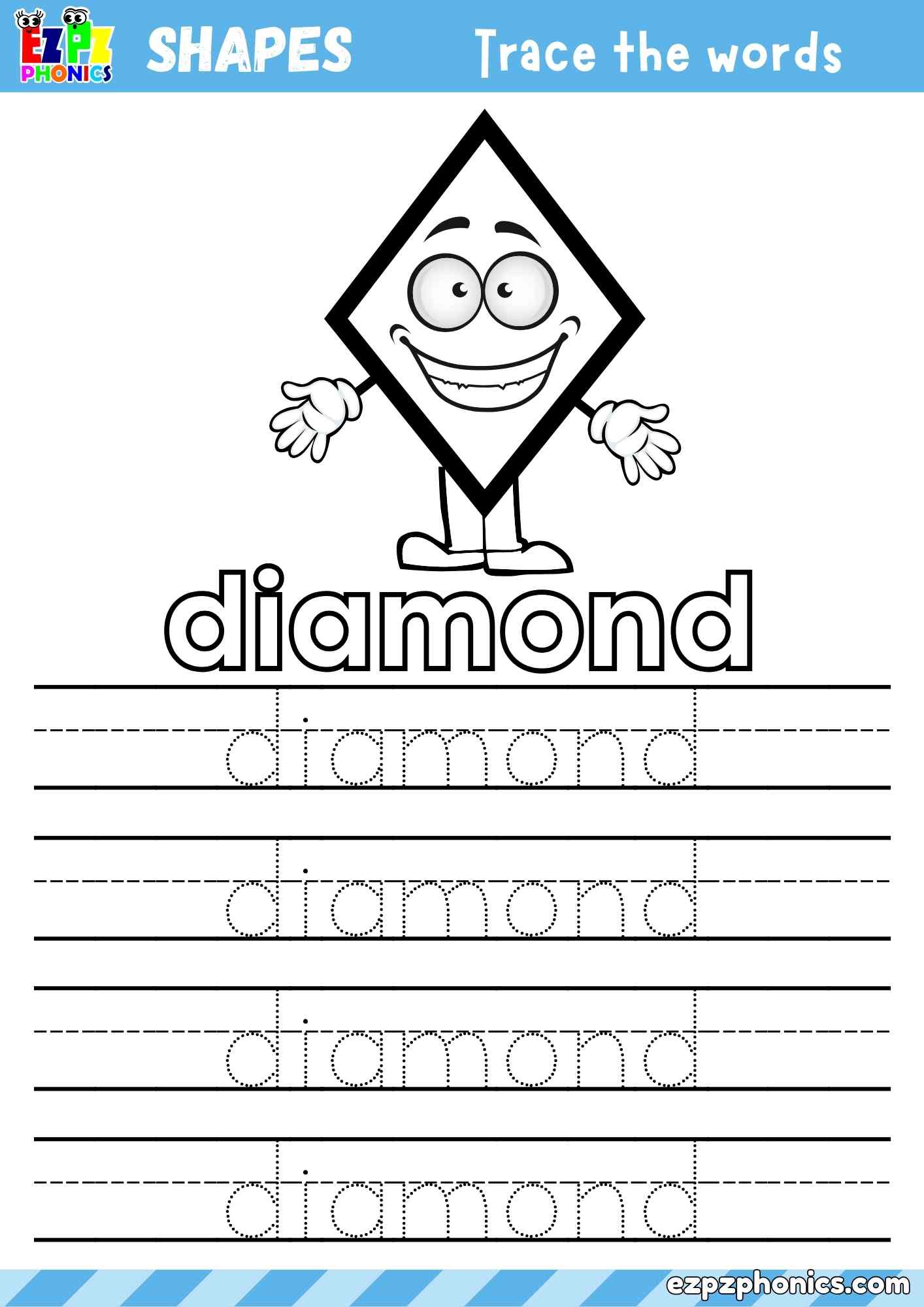
Watch any group of preschoolers and a clear pattern emerges quickly. Children recognize letters, symbols, and geometric forms long before their fine motor control allows them to replicate those shapes accurately on paper. According to the American Occupational Therapy Association, foundational fine motor skills—such as hand strength, bilateral coordination, and precise visual-motor integration—must develop steadily before a child can master complex writing tasks. Closing this gap between cognitive understanding and physical execution requires targeted, playful practice. That is where the diamond shape tracing worksheet becomes an invaluable tool for early childhood development. Geometric shape practice bridges simple vertical and horizontal lines with the advanced diagonal strokes required for true handwriting fluency. It sounds simple, and that’s the point. By focusing on diagonal control, young learners build the exact muscle memory needed for letters like A, K, V, W, and X.
💡 Educational Key Takeaways:
- Core Skill: Structured Diamond Shape Tracing Worksheet focused on developing pencil grip, stroke control, and early literacy/math confidence.
- Target Scope: Suited for homeschoolers, preschool, kindergarten, and elementary learners.
- Best Recommendation: Practice 10–15 minutes daily with ergonomic writing tools to reinforce muscle memory without hand fatigue.
WhatThisWorksheetCovers
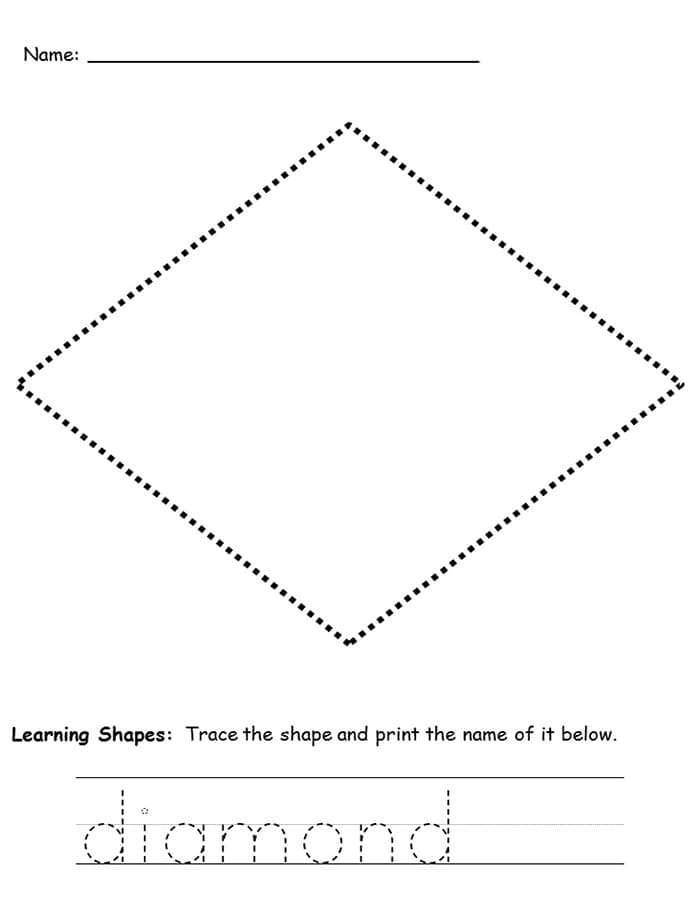
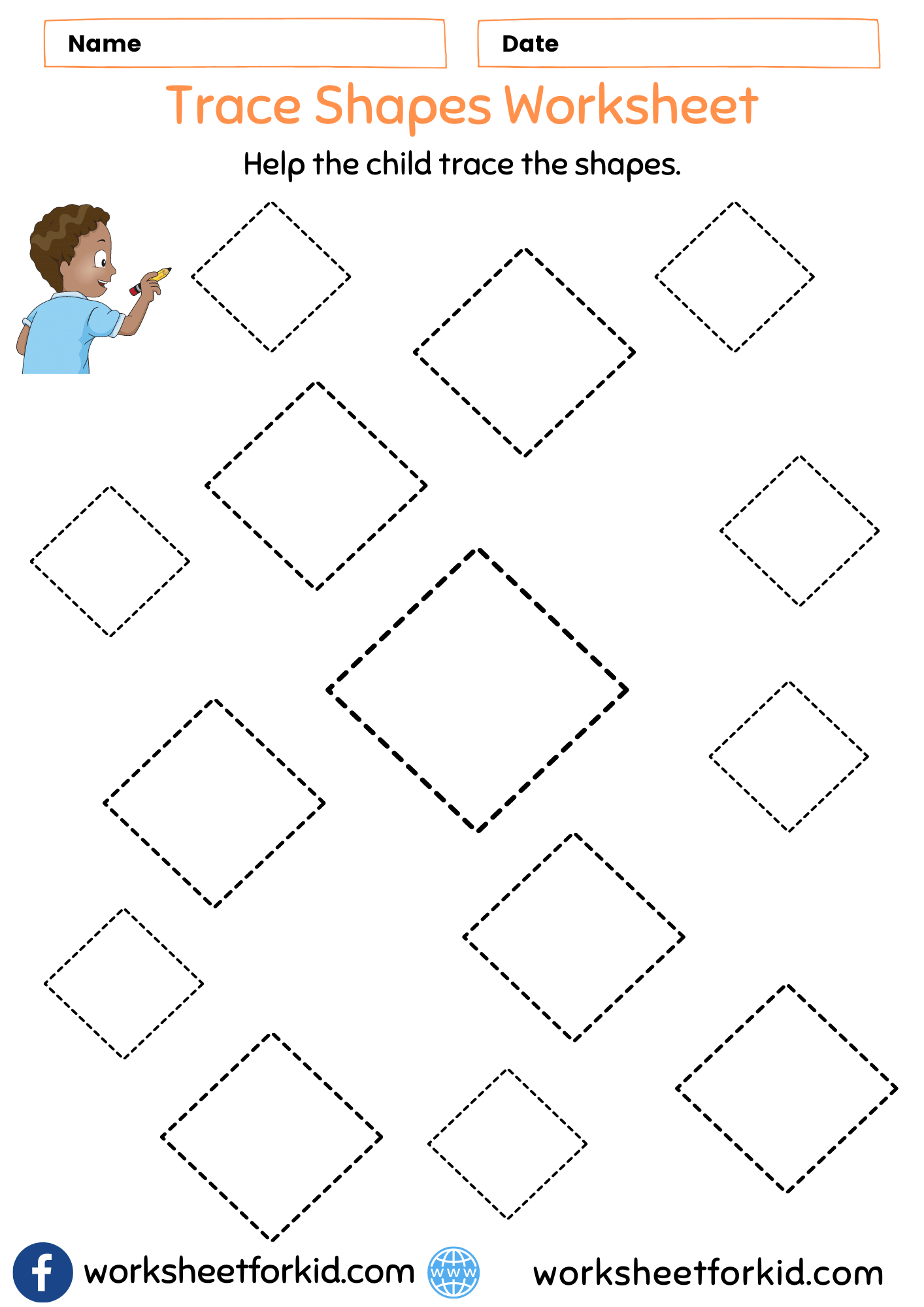
The diamond shape tracing worksheet isolates a specific and challenging geometry: intersecting diagonal lines that require continuous hand-eye coordination and constant redirection of pencil pressure. Unlike circles or vertical squares, diamonds force the hand to cross the midline while changing direction abruptly at four distinct vertices. This movement demands refined distal finger control rather than relying solely on gross shoulder and elbow movements. Children must decelerate as they approach each corner, pause momentarily to shift the pencil angle, and accelerate smoothly down the next slant. Such control builds foundational pre-writing strokes essential for Shape and Line Tracing success.
Key Learning Outcomes
Mastering this printable yields multiple developmental milestones. Learners refine bilateral integration by holding the stabilization paper steady with one hand while the dominant hand maneuvers the writing utensil. Visual-motor integration improves significantly as the eyes guide the hand along precise dotted pathways. Stroke directional awareness solidifies, teaching children how to begin at a designated starting point and complete a continuous geometric circuit without losing control. Additionally, hand strength and endurance increase organically through sustained engagement, laying the muscular groundwork necessary for daily writing tasks found throughout Fine Motor and Pre-Writing Skills curricula.
How to Use This Worksheet
Implementation requires more than simply handing a child a pencil and a paper. Success depends heavily on preparation, posture, and environmental support. Start by ensuring the seating arrangement promotes proper biomechanics: feet flat on the floor, hips and knees at ninety-degree angles, and the paper slanted to match the natural arc of the child’s forearm. Encourage a functional tripod grasp, but allow for adaptive tools or vertical surface work if hand fatigue sets in quickly. Taping the sheet to a vertical easel or wall instantly activates wrist extension and shoulder stability, which transforms a standard desk activity into an incredible therapeutic exercise.
Practical Tips for Parents and Teachers
Scaffolding makes all the difference when a child encounters frustration with diagonal lines. Adults should model proper stroke directionality first in the air or on a sensory tray filled with sand before touching a pencil to paper. Verbal cues help tremendously, such as reminding the learner to “slant down and slide left, then slant down and slide right.” When fatigue occurs, switch things up by having the child trace the dotted lines with a thick, brightly scented marker, a small toy car, or a damp paintbrush. Extending the activity further involves asking the child to find diamond shapes hidden around the classroom or living room, connecting paper practice directly to the real physical world.
Age-Appropriate Recommendations
Aligning expectations with developmental frameworks prevents burnout and frustration. According to the CDC developmental milestones, children typically master copying basic vertical lines and circles by age three, while more complex intersecting lines, crosses, and diagonal shapes like diamonds emerge around ages four to five. For toddlers and young preschoolers ages two to four, focus strictly on sensory exploration, thick crayons, and large-scale tracing to build core strength. For older children ages five to eight, the diamond worksheet serves as an advanced fine-motor tuning exercise that supports precise letter formation, pencil pressure modulation, and spatial awareness as outlined in the NAEYC Developmentally Appropriate Practice guidelines.
Foundational fine motor skills, including hand strength and visual-motor integration, must develop steadily before a child can master complex writing and geometric tasks. — American Occupational Therapy Association (AOTA)
Frequently Asked Questions
Caregivers and educators frequently ask specific questions regarding the implementation, printing, and developmental benefits of shape tracing materials.
Explore More Free Printable Tracing Worksheets
Supporting a developing writer involves providing a rich variety of engaging, developmentally appropriate practice materials tailored to every milestone. The complete library at KidTraces.com offers countless free resources, ranging from Alphabet And Numbers Tracing pages to seasonal activities found in Seasonal and Fun Themes. Every printable is designed by educators and therapists to make learning joyful, structured, and accessible for every child.
Developmental Milestone & Activity Table
| Development Stage | Recommended Daily Duration | Primary Learning Objective |
|---|---|---|
| Preschool & Pre-K | 10 – 15 Minutes | Pencil grip development & basic pre-stroke lines |
| Kindergarten | 15 – 20 Minutes | Letter/number formation & spatial line awareness |
| Early Elementary (Grade 1–2) | 20 – 30 Minutes | Fluency, sentence construction & neatness |
Images References