Introduction
Many children recognize geometric shapes and letters long before their fine motor control allows them to form those shapes on paper. According to the American Occupational Therapy Association, foundational visual-motor integration and pencil control must develop sequentially before complex writing tasks can be mastered effectively. Young learners frequently grip pencils with a tight, whole-fist grasp because small intrinsic hand muscles are still building the necessary strength and endurance for precise tool manipulation. Rectangle writing for kid addresses this exact developmental gap by offering structured, repeatable tracing paths that train the hand and eye to work in tandem. Introducing geometric shapes like rectangles provides a vital bridge between basic curved scribbles and the sharp, controlled corner turns required for uppercase letters such as E, F, L, and H. Tracing activities of this nature transform abstract motor planning into concrete physical memory through guided repetition.
💡 Educational Key Takeaways:
- Core Skill: Structured Rectangle Writing For Kid focused on developing pencil grip, stroke control, and early literacy/math confidence.
- Target Scope: Suited for homeschoolers, preschool, kindergarten, and elementary learners.
- Best Recommendation: Practice 10–15 minutes daily with ergonomic writing tools to reinforce muscle memory without hand fatigue.
WhatThis Worksheet Covers
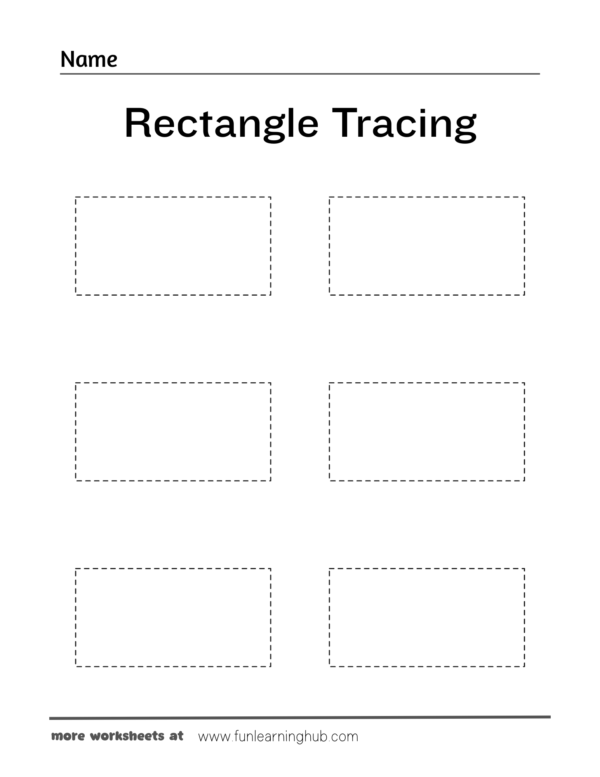
This printable resource focuses specifically on the physical mechanics of drawing and tracing four-sided geometric figures with parallel sides of varying proportions. Children encounter large boundary boxes, dotted directional lines, and internal routing paths that demand sustained visual attention and physical adjustment. It sounds simple, and that’s the point. Mastering the rectangle requires a child to execute four distinct straight lines and four distinct 90-degree corner pivots, which directly challenges bilateral coordination and spatial awareness. The layout supports visual-spatial processing by encouraging children to track lines from top to bottom and left to right, mirroring the exact ocular sweep utilized during independent reading and writing.
Key Learning Outcomes
Working through these geometric tracing exercises helps children build foundational hand strength, establish consistent stroke directionality, and refine pencil pressure regulation. According to the National Association for the Education of Young Children, purposeful motor exploration during early childhood directly enhances cognitive mapping and foundational literacy readiness. Learners naturally develop improved visual-motor integration, allowing their eyes to guide their hands accurately along predefined paths without frequent deviation. The consistent practice of navigating sharp corners trains the wrist and fingers to stop, pivot, and restart a stroke with precision. Over time, these controlled linear movements translate directly into cleaner, more legible letter formation across various early writing curricula.
How to Use This Worksheet
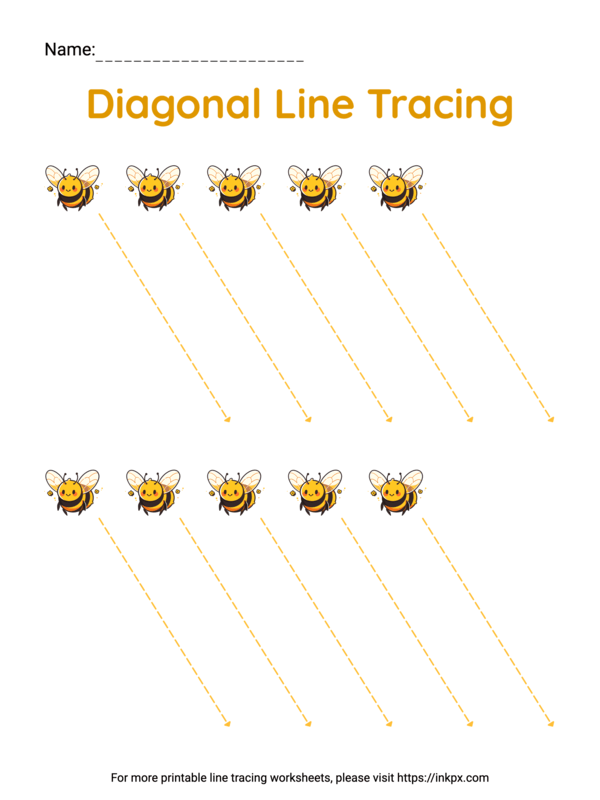
Adults can integrate this resource into daily learning routines by establishing a calm, well-lit workspace where the child sits with feet flat on the floor and elbows resting comfortably at a 90-degree angle. It helps to let the child explore the page first with a finger, tracing the outer perimeter of the rectangle to feel the shape before introducing a writing utensil. Pairing these sheets with Shape and Line Tracing activities ensures that learners encounter a diverse range of linear challenges, keeping engagement high and hand fatigue manageable.
Practical Tips for Parents and Teachers
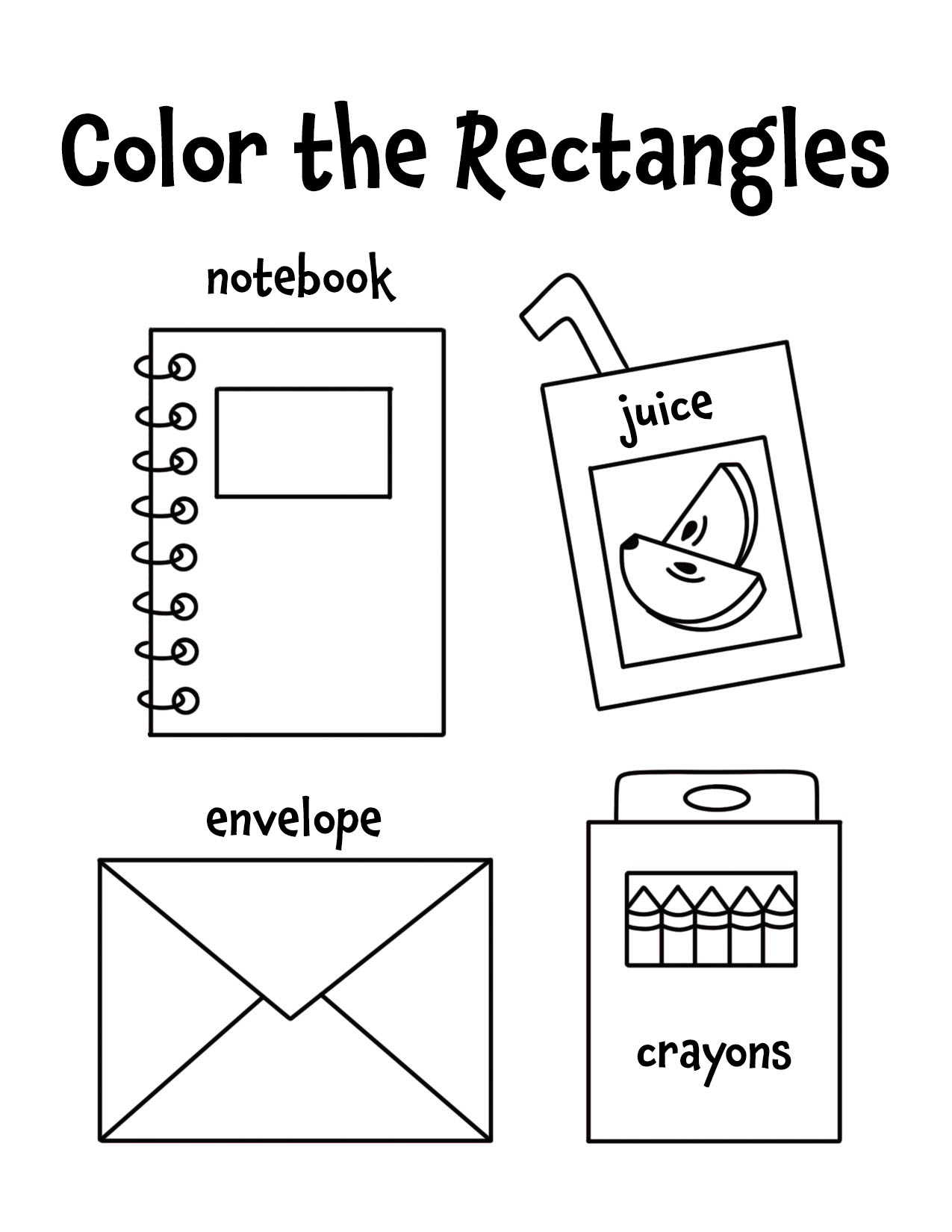
Here’s what makes this worksheet different: it emphasizes the quality of movement over the speed of completion. Adults should gently model an efficient tripod or quadripod pencil grasp, ensuring fingers remain positioned roughly one inch above the writing tip to maintain clear visibility of the line. Scaffolding the activity is essential for younger learners who tire quickly; adults can guide the child’s hand gently through the first two corners before stepping back to allow independent execution. Extending the exercise involves asking children to identify real-world rectangular objects in the room immediately after tracing the page, thereby bridging paper-based motor tasks with concrete environmental awareness. Integrating these worksheets alongside Fine Motor and Pre-Writing Skills resources helps build the comprehensive muscle endurance required for sustained writing tasks.
Age-Appropriate Recommendations
For toddlers and preschoolers ages two through four, the focus centers on gross arm movements, large-format shape recognition, and developing a comfortable tool grasp in alignment with CDC developmental milestones. At this stage, adults should accept thick crayons or short markers that encourage natural fist or transitional grasps while building basic stroke awareness. For older children ages five through eight, expectations shift toward refined pencil control, precise corner execution, and independent stroke initiation that satisfies foundational handwriting expectations. During these early elementary years, tracing tasks serve to correct pencil grip habits and reinforce directional consistency before bad habits become permanent.
Foundational visual-motor integration and pencil control must develop sequentially before complex writing tasks can be mastered effectively. — American Occupational Therapy Association
Frequently Asked Questions
Navigating how best to support early writing development often raises practical questions for educators and families working with young children at home or inside busy classrooms.
Explore More Free Printable Tracing Worksheets
Supporting a child through early literacy and motor skill milestones requires a diverse library of engaging, adaptable practice materials. Beyond geometric forms, exploring resources like Alphabet And Numbers Tracing or Dotted Letters For Tracing provides continuous opportunities for skill reinforcement. Families and educators can browse the full collection of developmental materials at KidTraces.com to find additional printables designed to make early learning structured, accessible, and enjoyable.
Developmental Milestone & Activity Table
| Development Stage | Recommended Daily Duration | Primary Learning Objective |
|---|---|---|
| Preschool & Pre-K | 10 – 15 Minutes | Pencil grip development & basic pre-stroke lines |
| Kindergarten | 15 – 20 Minutes | Letter/number formation & spatial line awareness |
| Early Elementary (Grade 1–2) | 20 – 30 Minutes | Fluency, sentence construction & neatness |
Images References