Introduction
Many children recognize shapes, colors, and letters long before their fine motor coordination can actually form them on paper. According to the American Occupational Therapy Association, foundational visual-motor integration skills are essential precursors to functional handwriting and academic success. Young hands require intentional practice with geometric forms to build the muscle memory necessary for controlled pencil movement. Integrating hexagon tracing into early learning routines bridges the gap between cognitive understanding and physical execution. Geometric shapes provide structured pathways that teach young learners how to navigate corners, change directions, and maintain steady pressure. This fundamental readiness practice supports children as they transition from scribbling to controlled, purposeful writing.
💡 Educational Key Takeaways:
- Core Skill: Structured Hexagon Tracing focused on developing pencil grip, stroke control, and early literacy/math confidence.
- Target Scope: Suited for homeschoolers, preschool, kindergarten, and elementary learners.
- Best Recommendation: Practice 10–15 minutes daily with ergonomic writing tools to reinforce muscle memory without hand fatigue.
What This Worksheet Covers
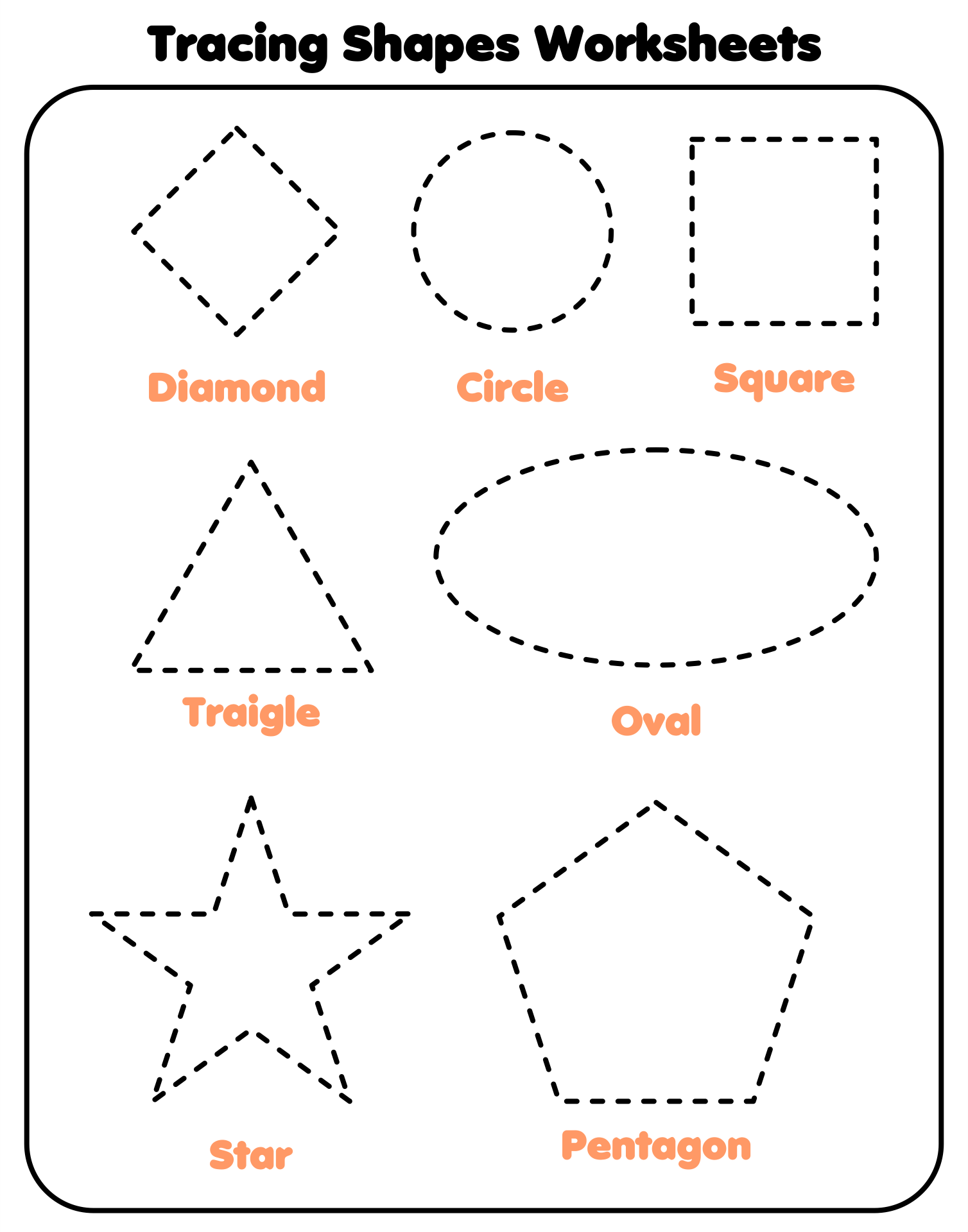
The hexagon tracing printable focuses heavily on shape and line tracing, targeting the specific pre-writing strokes required for early childhood development. Six-sided polygons offer a unique motor challenge because they require the hand to pause, pivot, and alter trajectory six distinct times per shape. Children must coordinate visual input with hand movement to keep pencils on the dotted pathways. This practice strengthens the intrinsic muscles of the hand while refining spatial awareness on a two-dimensional surface. Beyond basic motor control, repeated exposure to closed geometric figures helps learners understand boundaries, symmetry, and visual closure.
Key Learning Outcomes
Working through these geometric tracing sheets helps children master directional control by requiring deliberate stops and turns at every angle. Learners develop enhanced visual-motor integration as their eyes guide the writing hand along precise trajectories. Hand and finger strength naturally improve from maintaining a consistent pencil grasp over multi-directional paths. Furthermore, children build sustained attention span and task persistence by completing structured geometric patterns from start to finish. These accumulated benefits create a solid foundation that translates seamlessly into more complex Shape and Line Tracing activities and early literacy tasks.
How to Use This Worksheet
Begin by introducing the printable on a flat, stable surface where feet rest flat on the floor to provide optimal postural stability. Encourage the learner to trace the outer perimeter of the hexagon using an index finger first to build a mental map of the shape before adding a writing utensil. Once tactile familiarity is established, provide a short-barreled crayon or a well-sharpened pencil to encourage a functional tripod or quadrupod grasp. It sounds simple, and that’s the point: repetitive, low-stress engagement with clear visual boundaries allows young minds to focus entirely on physical execution rather than cognitive overload.
Practical Tips for Parents and Teachers
Model correct stroke execution by drawing a hexagon slowly in the air or on a separate page while verbally describing the directional changes. Scaffolding the activity by starting with larger, oversized shapes before moving to standard worksheet scales reduces frustration for developing hands. According to Reading Rockets, early print awareness and pre-writing proficiency are deeply intertwined, making multisensory shape practice a valuable literacy booster. Avoid correcting every slight deviation from the dotted line, as independent trial and error are vital for motor learning. When children show fatigue, extend the learning by transitioning to gross motor floor tracing or tactile salt-tray tracing to keep engagement high.
Age-Appropriate Recommendations
For toddlers and preschoolers ages two through four, focus primarily on large-scale motor planning, finger isolation, and simple sensory exploration of geometric contours in alignment with NAEYC Developmentally Appropriate Practice. At this stage, perfection is secondary to enjoying the tactile sensation of making marks and exploring spatial boundaries. Kindergarteners and early elementary students ages five through eight refine these skills through precision tasks, focusing on corner accuracy, proportional sizing, and smooth transitions. For older children developing foundational literacy blocks, pairing geometric sheets with structured Fine Motor and Pre-Writing Skills exercises reinforces overall pencil control.
Occupational Therapy Insight: Multi-directional shapes like hexagons require the hand to execute sudden angular shifts, which directly improves the wrist stability and finger dexterity needed for legible letter formation. — American Occupational Therapy Association
Frequently Asked Questions
Answers to common inquiries regarding preparation, printing, and skill development for early learners.
Explore More Free Printable Tracing Worksheets
Supporting a young learner’s developmental journey involves offering a wide variety of engaging, low-pressure practice materials. Exploring diverse modalities keeps motivation high and addresses every facet of early childhood readiness. Educators and caregivers can discover a comprehensive collection of resources designed to build confidence at KidTraces.com. Whether expanding into Alphabet And Numbers Tracing or adding creative flair through Seasonal and Fun Themes, every printable is crafted to nurture growing minds and hands.
Developmental Milestone & Activity Table
| Development Stage | Recommended Daily Duration | Primary Learning Objective |
|---|---|---|
| Preschool & Pre-K | 10 – 15 Minutes | Pencil grip development & basic pre-stroke lines |
| Kindergarten | 15 – 20 Minutes | Letter/number formation & spatial line awareness |
| Early Elementary (Grade 1–2) | 20 – 30 Minutes | Fluency, sentence construction & neatness |
Images References