Introduction
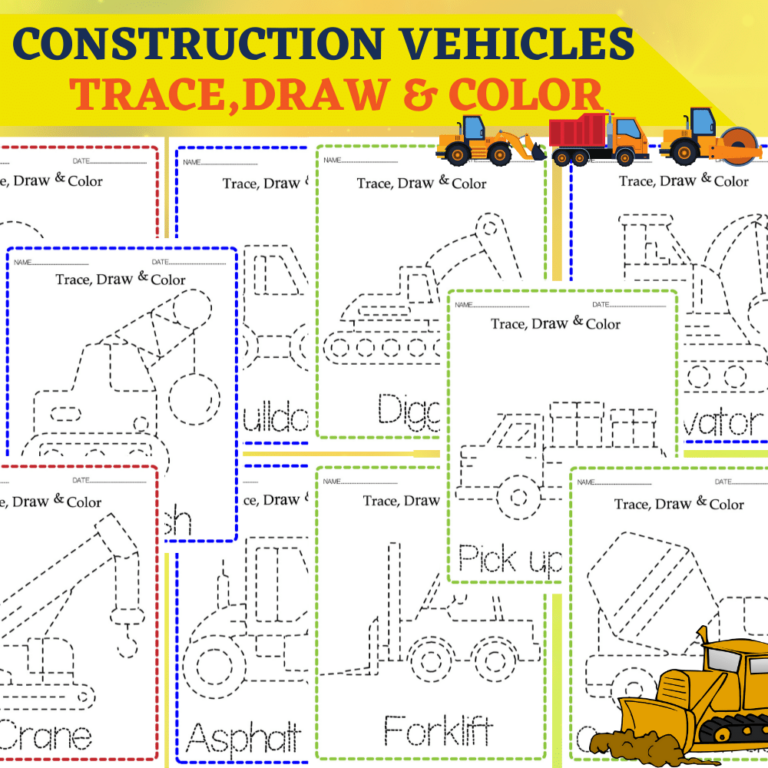
Many children recognize letters, shapes, and numbers long before their fine motor skills can consistently form them on paper. According to the National Association for the Education of Young Children, young learners thrive when early writing experiences connect directly to play-based, engaging contexts rather than rigid, rote drills. Transforming pencil control practice into an exciting expedition transforms a frustrating chore into an eagerly anticipated activity. Utilizing construction vehicle tracing worksheets bridges the gap between cognitive readiness and physical execution. Heavy machinery themes capture immediate attention, turning fine motor skill development into an imaginative mission across the page.
💡 Educational Key Takeaways:
- Core Skill: Structured Construction Vehicle Tracing Worksheets focused on developing pencil grip, stroke control, and early literacy/math confidence.
- Target Scope: Suited for homeschoolers, preschool, kindergarten, and elementary learners.
- Best Recommendation: Practice 10–15 minutes daily with ergonomic writing tools to reinforce muscle memory without hand fatigue.
What This Worksheet Covers
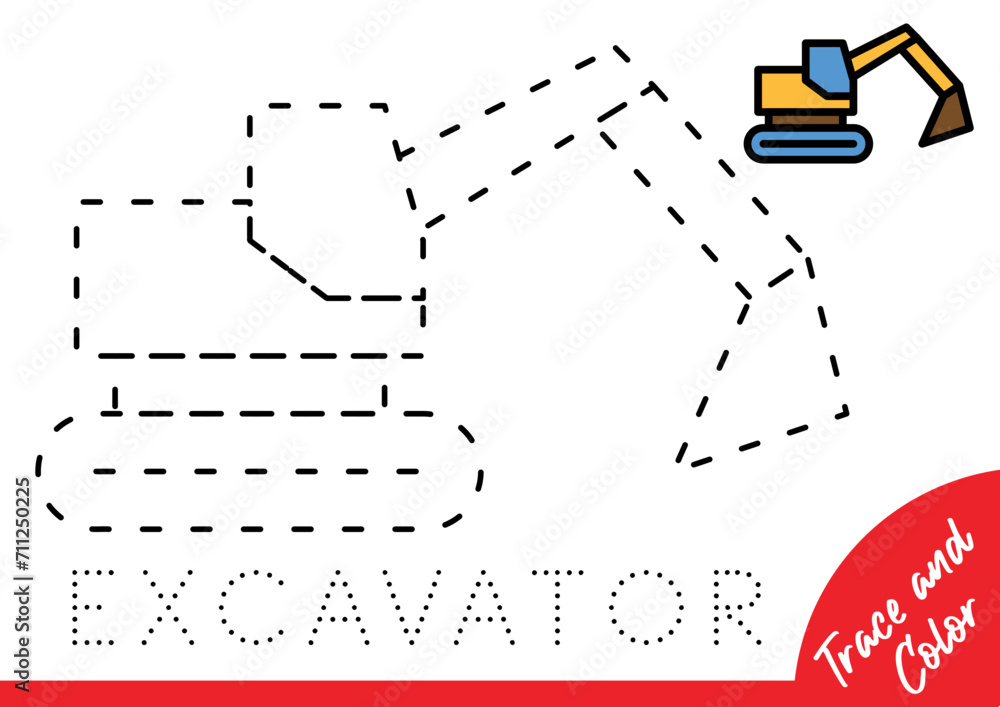
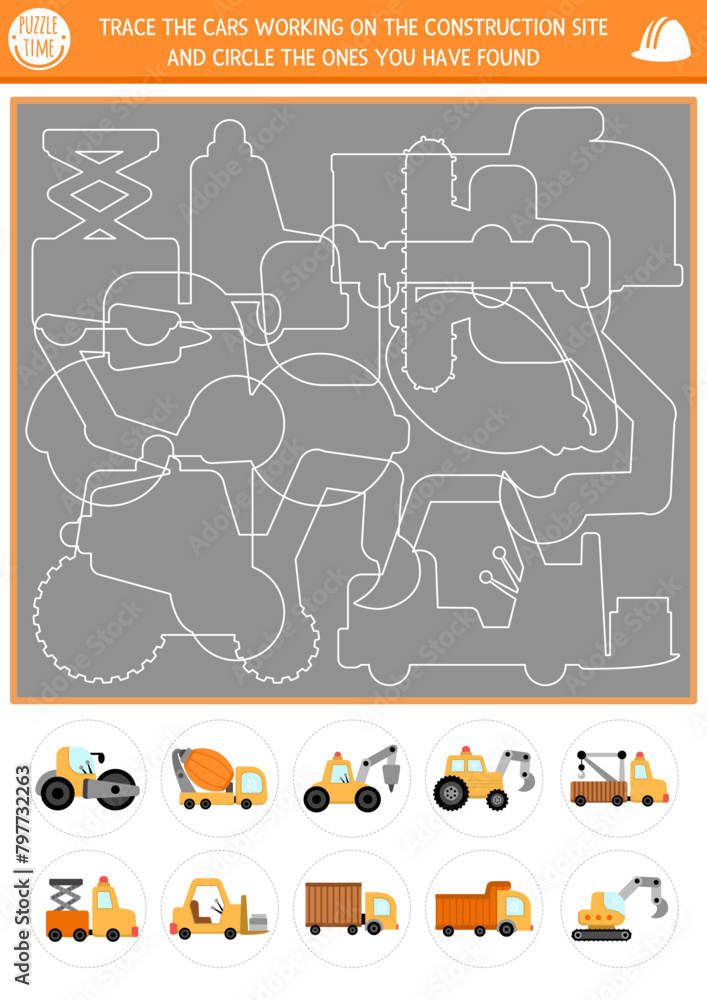
These specialized printable pages focus heavily on essential pre-writing strokes, directional lines, and foundational pencil control necessary for future handwriting success. Young hands navigate roads, crane cables, and bulldozer tracks, practicing the exact horizontal, vertical, diagonal, and curved lines that form the building blocks of both letters and numbers. Working through these distinct pathways directly strengthens the intrinsic muscles of the hand while building critical visual-motor integration. As children guide dump trucks and steamrollers along the designated tracks, they naturally refine the precise hand-eye coordination required for lifelong literacy development.
Key Learning Outcomes
Engaging regularly with themed tracing materials yields noticeable improvements in hand strength, bilateral coordination, and stroke fluidity. Learners master pencil pressure regulation, transitioning effortlessly from heavy, frustrated grips to smooth, controlled glides across the paper. Additionally, children internalize proper directional habits, naturally learning to trace from left to right and top to bottom without constant verbal reminders. This deliberate practice supports the broader Shape and Line Tracing progression, ensuring that foundational strokes become second nature before complex letter formation begins. Ultimately, the activity fosters sustained attention span, working memory, and spatial awareness within a supportive, joyful environment.
How to Use This Worksheet
Successful implementation relies heavily on creating a low-stress, highly inviting workspace with proper seating and child-sized writing utensils. Placing the printable sheets on a flat, stable surface ensures the non-dominant hand can successfully stabilize the paper while the dominant hand executes the tracing strokes. According to the American Occupational Therapy Association, utilizing vertical surfaces like easels or taped wall sheets can also dramatically improve wrist extension and core stability during fine motor tasks. Adults should encourage a functional grasp without forcing an unnatural position too early, allowing natural hand development to unfold alongside structured practice. Exploring broader resources like Fine Motor and Pre-Writing Skills helps adults discover complementary hands-on activities that reinforce these same physical foundations.
Practical Tips for Parents and Teachers
Scaffolding the experience makes all the difference when frustration flares or focus wanes during a tracing session. Adults can model the starting points explicitly, using playful sound effects like revving engines to indicate where the heavy machinery begins its journey. If traditional pencils feel too demanding initially, thick crayons, chunky markers, or even finger-tracing through textured materials provide wonderful alternative entry points. For expanded alphabet practice, pairing these themed sheets with Alphabet And Numbers Tracing creates a well-rounded curriculum that balances thematic motivation with standard skill mastery. Rotating writing tools keeps novelty high, ensuring children remain eager to complete each new construction challenge without burnout.
Age-Appropriate Recommendations
Tailoring expectations to developmental stages ensures that learning remains joyful rather than overwhelming for developing hands and minds. For toddlers and preschoolers ages two to four, align activities with NAEYC Developmentally Appropriate Practice by emphasizing gross motor line exploration, thick zig-zags, and simple horizontal paths without strict boundary enforcement. Children ages five to eight transition smoothly into precise pencil control, tackling intricate loops, complex mazes, and detailed letter or number pathways found in Seasonal and Fun Themes collections. Recognizing individual readiness rather than enforcing strict chronological benchmarks allows every child to progress at a healthy, sustainable pace.
Young children develop foundational fine motor control and visual-motor integration most effectively through playful, hands-on tracing activities that incorporate meaningful real-world themes. — American Occupational Therapy Association
Frequently Asked Questions
Q: How do I download and print the construction vehicle tracing worksheets?
A: Click the download link on the resource page to save the PDF file directly to a computer or mobile device, then send it to any standard home or classroom printer.
Q: How does tracing heavy machinery themes support early writing development?
A: Tracing engaging vehicle pathways strengthens hand muscles, improves pencil grip, and builds the visual-motor control required to form letters and numbers smoothly.
Q: According to the American Occupational Therapy Association, why are pre-writing strokes important?
A: The American Occupational Therapy Association notes that mastering basic lines and shapes forms the essential motor foundation required for legible, efficient handwriting.
Explore More Free Printable Tracing Worksheets
Expanding a child’s collection of learning materials keeps enthusiasm vibrant and addresses diverse developmental milestones across the board. The complete library at KidTraces.com offers an extensive variety of printables designed by educators and therapists to support every stage of early childhood growth. Discover additional engaging resources within the Dotted Letters For Tracing category to further refine letter formation accuracy. Every printable is crafted to nurture confidence, independence, and a lifelong love for learning through play.
Developmental Milestone & Activity Table
| Development Stage | Recommended Daily Duration | Primary Learning Objective |
|---|---|---|
| Preschool & Pre-K | 10 – 15 Minutes | Pencil grip development & basic pre-stroke lines |
| Kindergarten | 15 – 20 Minutes | Letter/number formation & spatial line awareness |
| Early Elementary (Grade 1–2) | 20 – 30 Minutes | Fluency, sentence construction & neatness |
Images References