Introduction
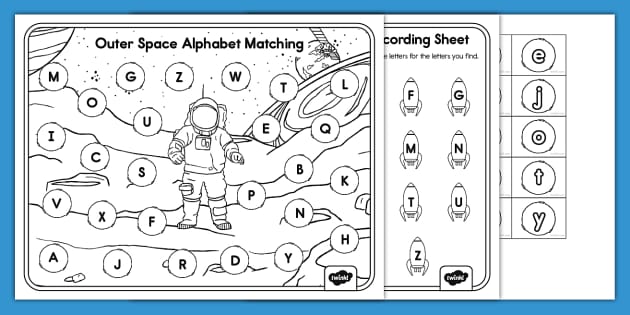
Many children recognize letters, spell out their own names, and tell elaborate stories long before their fine motor systems possess the strength and dexterity required to physically form those letters on a page. According to Reading Rockets, early literacy development relies heavily on the connection between oral language comprehension and foundational writing mechanics, highlighting why bridging the gap between cognitive readiness and physical execution is so critical. Transforming mundane handwriting drills into an engaging voyage changes the entire learning dynamic. The letter tracing for kindergarten outer space printable leverages thematic motivation to capture attention, turning standard stroke practice into a mission across the stars. Educators often notice that when children are genuinely captivated by a cosmic theme, frustration drops and hand endurance noticeably increases. It sounds simple, and that is precisely the point; engagement drives repetition, and repetition builds neural pathways for fluent writing.
💡 Educational Key Takeaways:
- Core Skill: Structured Letter Tracing For Kindergarten Outer Space focused on developing pencil grip, stroke control, and early literacy/math confidence.
- Target Scope: Suited for homeschoolers, preschool, kindergarten, and elementary learners.
- Best Recommendation: Practice 10–15 minutes daily with ergonomic writing tools to reinforce muscle memory without hand fatigue.
What This Worksheet Covers
Cosmic-themed tracing pages guide young learners through structured alphabet and number formations using specialized celestial paths. Instead of plain, uninspired rows of letters, children trace rockets, comets, and stars that naturally dictate stroke direction and pencil movement. Starting dots indicate precisely where the pencil touches the paper, while directional arrows eliminate guesswork regarding top-to-bottom and left-to-right sequencing. This careful scaffolding supports the transition from basic pre-writing strokes to controlled letter formation. Exploring dotted letters for tracing helps learners refine hand-eye coordination by keeping pencil tips anchored to precise visual paths. The outer space motif introduces varied line types, moving from straight rocket trails to sweeping planetary curves, ensuring children engage multiple muscle groups in the hand and wrist.
Key Learning Outcomes
Engaging with space-themed printables fosters precise pencil control, proper stroke order, and sustained visual-motor attention. Children master letter and numeral formation by following structured directional cues embedded directly within the cosmic graphics. Consistent practice reinforces muscle memory in the intrinsic hand muscles, which directly supports endurance during longer writing tasks. Furthermore, learners strengthen spatial awareness as they navigate letters between baseline and midline boundaries across the page. This targeted skill reinforcement builds foundational confidence, allowing young writers to focus on creative expression rather than physical hand fatigue.
How to Use This Worksheet
Introducing a new tracing sheet works best when adults model the exact starting point and vocalize the directional path aloud. Beginning with a warm-up phase, such as drawing imaginary rocket loops in the air, activates the shoulder and elbow joints before fine motor work begins. Placing the printed sheet on a slight vertical slant often improves wrist positioning and visibility for developing hands. It helps to observe pencil grasps without forcing an immediate, rigid correction if the hand is still transitioning through normal developmental grips. Providing thick pencils or broken crayons can also encourage an effective tripod grip by naturally limiting awkward fist holds.
Practical Tips for Parents and Teachers
Scaffolding instruction means letting children trace with a finger first to experience the movement kinesthetically before introducing a writing utensil. Extending the activity might involve sliding the printed sheet inside a clear plastic sleeve and using dry-erase markers, which removes the permanence anxiety that often paralyzes perfectionist learners. Alternating between seated desk work and wall-surface tracing helps build essential core and shoulder stability required for endurance. Adults should celebrate small victories, focusing on smooth directional flow rather than expecting immediate perfection inside every single dotted line. Integrating related exercises from alphabet and numbers tracing collections keeps daily practice fresh while maintaining rigorous skill progression.
Age-Appropriate Recommendations
According to NAEYC Developmentally Appropriate Practice, children aged two to four benefit most from large-scale pre-writing lines, finger tracing, and sensory exploration that builds gross motor foundation. By kindergarten, typically ages five to six, children develop the specific finger dexterity needed for controlled letter and numeral formation on standard lines. Pushing children into formal writing before their hand arches and finger webs are physically ready often leads to unnecessary fatigue and grip compensation. Utilizing structured frameworks like Handwriting Without Tears ensures that each developmental phase receives appropriate support, moving safely from simple vertical and horizontal lines to complex diagonal intersections and curved letter forms. When working with older children needing extra support, exploring fine motor and pre-writing skills resources provides valuable stepping stones for lasting progress.
Foundational writing mechanics improve significantly when children engage in multisensory pre-writing activities before transitioning to paper. — National Association for the Education of Young Children (NAEYC)
Frequently Asked Questions
Explore More Free Printable Tracing Worksheets
Supporting a young writer involves providing a diverse array of engaging practice materials that grow alongside developing capabilities. Exploring the full library at KidTraces.com reveals countless ways to keep handwriting practice joyful, structured, and effective. From seasonal motifs to foundational skill builders, every printable is designed by developmental specialists to foster confidence and precise pencil control. Adults can easily curate a comprehensive binder of activities tailored to specific learning milestones, ensuring children always have access to inspiring, skill-building resources.
Developmental Milestone & Activity Table
| Development Stage | Recommended Daily Duration | Primary Learning Objective |
|---|---|---|
| Preschool & Pre-K | 10 – 15 Minutes | Pencil grip development & basic pre-stroke lines |
| Kindergarten | 15 – 20 Minutes | Letter/number formation & spatial line awareness |
| Early Elementary (Grade 1–2) | 20 – 30 Minutes | Fluency, sentence construction & neatness |
Images References