Introduction
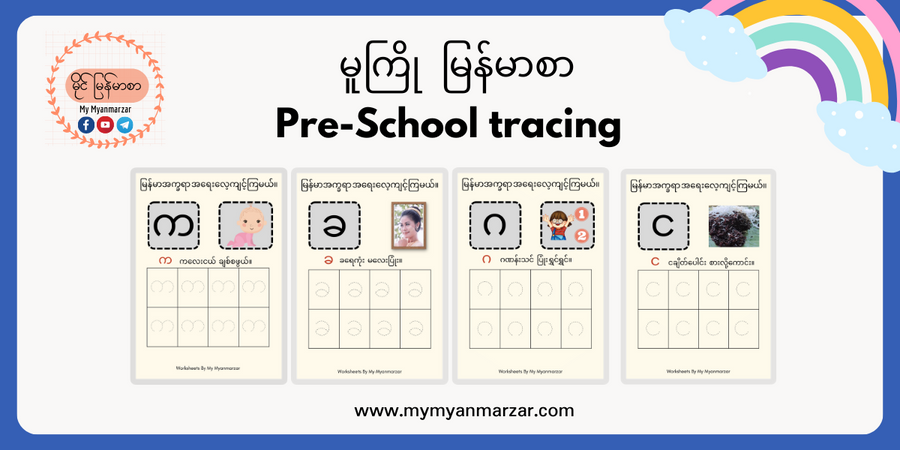
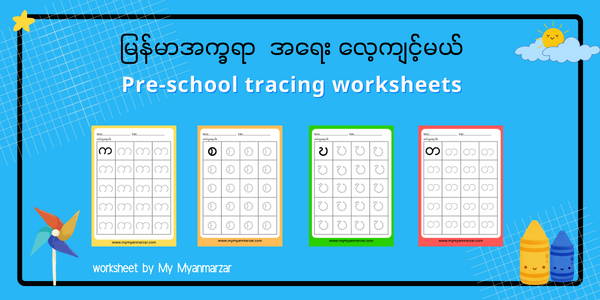
Many children recognize letters, shapes, and complex symbols long before their tiny hand muscles possess the endurance or dexterity to form them on paper. According to the American Occupational Therapy Association, foundational fine motor control and visual-motor integration are essential prerequisites for successful handwriting and academic participation. Bridging this gap requires targeted tools that guide hand movements without causing frustration. The free printable myanmar alphabet tracing worksheet serves as a purposeful bridge between cognitive recognition and physical execution, introducing learners to unique circular loops and precise horizontal strokes.
💡 Educational Key Takeaways:
- Core Skill: Structured Myanmar Alphabet Tracing Worksheet focused on developing pencil grip, stroke control, and early literacy/math confidence.
- Target Scope: Suited for homeschoolers, preschool, kindergarten, and elementary learners.
- Best Recommendation: Practice 10–15 minutes daily with ergonomic writing tools to reinforce muscle memory without hand fatigue.
What This Worksheet Covers
Mastering the intricacies of the Burmese script involves understanding a writing system where most letters are composed of circles and curved arcs rather than the straight vertical and diagonal lines found in Latin alphabets. This layout provides structured practice on letter and numeral formation, emphasizing correct stroke order and directional awareness. Through guided formation and clear starting points, learners trace each distinct circular character, cultivating the fluidity needed to navigate scripts that lack traditional spaces between words. It sounds simple, and that’s the point: repetition of these specific curved motions builds muscle memory in the intrinsic muscles of the hand. Exploring a broader range of similar materials can be found within Alphabet And Numbers Tracing, which supports comprehensive script mastery.
Key Learning Outcomes
Engaging with these specialized writing sheets yields several interconnected developmental milestones. First, children refine their visual-motor integration by visually mapping a circular stroke and instructing the hand to replicate that exact trajectory. Second, directional consistency improves as learners repeatedly practice starting each loop from the correct top or side position, preventing the formation of inefficient motor habits. Third, hand-eye coordination strengthens as pencil tips stay securely on the designated dotted paths. Finally, patience and focus naturally expand as children navigate complex, continuous curves that require sustained attention from start to finish.
How to Use This Worksheet
Introducing a new script requires a scaffolded approach that prioritizes comfort and accuracy over sheer speed. Adults should begin by demonstrating the stroke in the air, exaggerating the circular motion with an entire arm before bringing the pencil to the page. It helps to laminate the sheets or slide them into heavy-duty plastic sleeves so learners can practice with dry-erase markers, reducing the anxiety of making permanent mistakes. According to Reading Rockets, multisensory strategies significantly improve letter retention and motor planning in early childhood. For additional practice with linear control and pencil manipulation, educators often pair these pages with resources from Fine Motor and Pre-Writing Skills to build baseline hand strength.
Practical Tips for Parents and Teachers
Observing children during tracing sessions reveals much about their current physical readiness and grip adaptations. Adults should check for a functional tripod grasp, ensuring fingers remain flexible rather than clenched in a tight fist that restricts movement. Scaffolding the activity means starting with larger, finger-painted versions of the letters before moving down to standard pencil sizes on paper. If a child shows signs of hand fatigue or frustration, pause the session immediately and incorporate a quick hand-stretching game. Extending the learning can involve molding the circular shapes out of playdough first, allowing the tactile senses to fully comprehend the unique geometry of the Burmese characters before putting graphite to paper.
Age-Appropriate Recommendations
For younger children aged two to four, the focus centers on gross motor loops, finger strength, and exploratory tracing using thick crayons or fingers. Aligned with the National Association for the Education of Young Children Developmentally Appropriate Practice, toddlers and preschoolers benefit most from open-ended exposure that prioritizes fun and sensory engagement over rigid perfection. Older children aged five to eight transition smoothly into refined pencil control, accurate stroke sequences, and independent execution of complex characters. During these early elementary years, structured tracing helps solidify spatial awareness on the page, paving the way for fluent, legible writing across multiple languages and writing systems.
Proficiency in visual-motor integration and fine motor control significantly predicts early academic success and writing legibility — American Occupational Therapy Association
Frequently Asked Questions
Clear answers to common questions ensure that adults can maximize the developmental benefits of these specialized tracing materials at home or in the classroom.
Explore More Free Printable Tracing Worksheets
Supporting a child’s journey toward confident handwriting involves offering a diverse array of practice materials tailored to every developmental stage. Exploring the full library at KidTraces.com reveals countless options designed to make skill-building engaging, accessible, and fun. Whether targeting foundational lines or advanced letter sequences, consistent and joyful practice makes all the difference.
Developmental Milestone & Activity Table
| Development Stage | Recommended Daily Duration | Primary Learning Objective |
|---|---|---|
| Preschool & Pre-K | 10 – 15 Minutes | Pencil grip development & basic pre-stroke lines |
| Kindergarten | 15 – 20 Minutes | Letter/number formation & spatial line awareness |
| Early Elementary (Grade 1–2) | 20 – 30 Minutes | Fluency, sentence construction & neatness |
Images References