Introduction
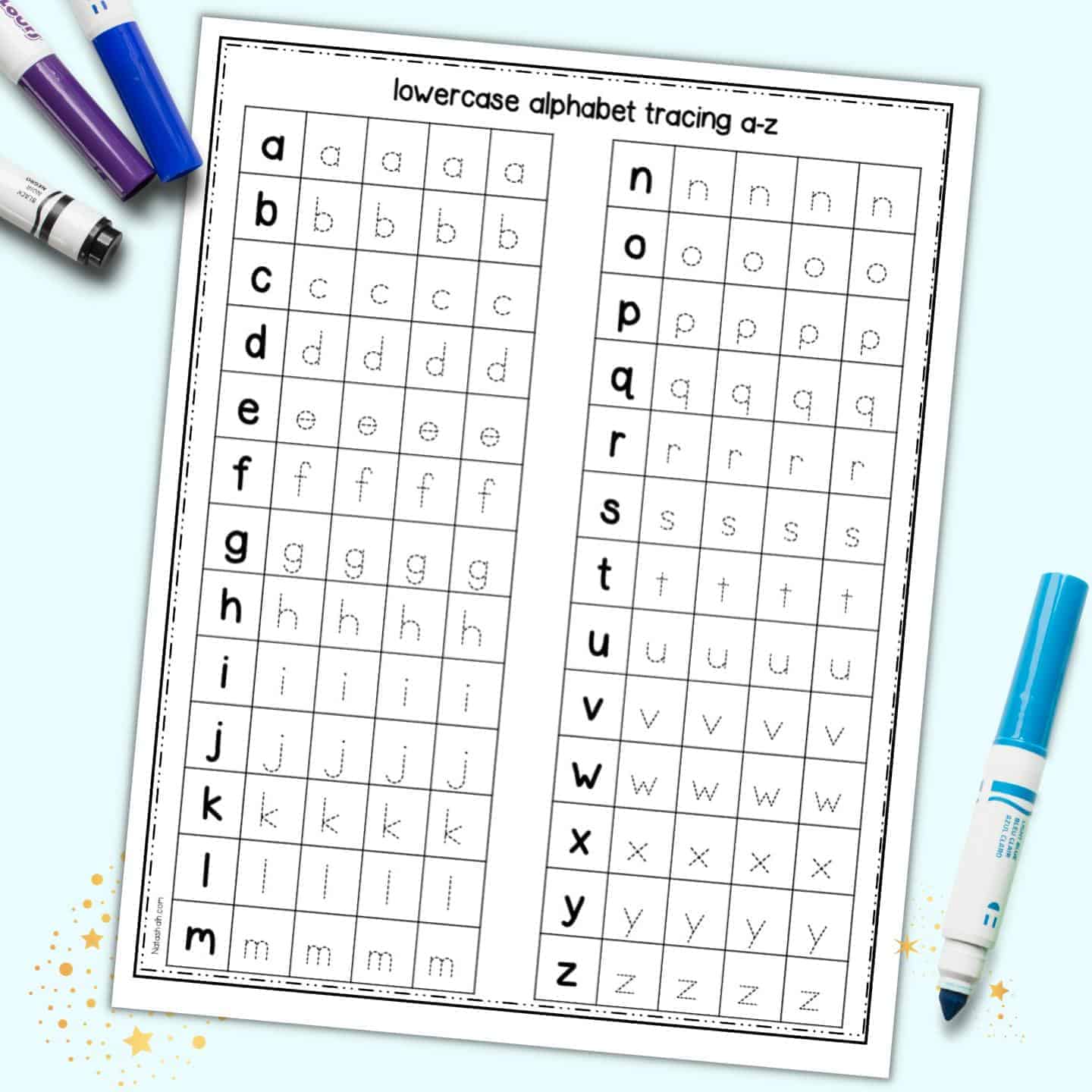
Many children recognize and point out letters on street signs and cereal boxes long before their developing fine motor skills can actually form those same symbols on paper. According to Reading Rockets, early handwriting instruction builds foundational neural pathways that directly support reading fluency and spelling acquisition. Bridging that gap between visual recognition and physical execution requires intentional, guided practice. A structured lowercase tracing worksheet provides the scaffolding young learners need to transition from conceptual letter awareness to confident pencil control. It sounds simple, and that is precisely the point. By focusing exclusively on lowercase forms, children master the letters they will encounter most frequently in early reading materials. Explore more in our Alphabet And Numbers Tracing collection.
💡 Educational Key Takeaways:
- Core Skill: Structured Lowercase Tracing Worksheet”,3″,0″,0%”,10″ focused on developing pencil grip, stroke control, and early literacy/math confidence.
- Target Scope: Suited for homeschoolers, preschool, kindergarten, and elementary learners.
- Best Recommendation: Practice 10–15 minutes daily with ergonomic writing tools to reinforce muscle memory without hand fatigue.
What This Worksheet Covers
Letter formation mastery demands more than random scribbling; it requires precise visual-motor integration. This specific resource targets the foundational mechanics of lowercase letter writing, emphasizing consistent stroke order, proportional sizing, and correct spatial placement between writing baselines. Children repeatedly trace dotted models to internalize the kinetic memory required for fluid writing, moving from initial visual cues toward independent execution. Each row is designed to reduce cognitive overload, allowing the hand and brain to synchronize without distraction. For more related activities, check out our The Aim Of Letter Tracing Activity For 4 Year Olds.
Key Learning Outcomes
Learners using this resource develop reliable directional habits by consistently starting strokes at the correct visual anchor points. Muscle memory solidifies as tiny hands navigate ascenders and descenders, training the neuromuscular system to execute loops and curves smoothly. Furthermore, consistent engagement with these letters builds the intrinsic hand strength necessary to prevent early writing fatigue during longer academic tasks. Children also enhance visual-spatial awareness, learning to maintain uniform letter spacing and baseline alignment across the page.
How to Use This Worksheet
Successful implementation begins long before putting pencil to paper. Adults should first invite children to trace the dotted letters using an index finger to map out the physical trajectory of each stroke in the air or directly on the page. Transitioning to a writing utensil requires close attention to ergonomics, ensuring a functional grasp that prevents finger cramping. When children tire or begin rushing through strokes, pausing the activity protects the integrity of the practice. Quality consistently supersedes quantity in early handwriting development.
Practical Tips for Parents and Teachers
Adults play a vital role as modeling partners by writing letters slowly while verbalizing the stroke directions aloud, such as starting at the top and pulling straight down. Scaffolding the activity through physical hand-over-hand guidance helps hesitant learners feel the correct movement patterns before attempting independent lines. To extend the learning beyond flat paper, encourage children to form the exact same letters using tactile mediums like playdough or sensory salt trays. Establishing a relaxed, low-stress environment ensures positive associations with writing tasks endure over time.
Age-Appropriate Recommendations
According to the National Association for the Education of Young Children (NAEYC) guidelines on developmentally appropriate practice, children aged two to four benefit most from large-scale pre-writing strokes and sensory letter exploration rather than rigid pencil drills. As children progress into the five to eight age bracket, aligning with standards like Common Core ELA addressing print concepts and legible manuscript writing, they are ready for targeted lowercase tracing worksheets. During these older elementary years, educators and caregivers should focus refinement efforts on letter proportionality, consistent baseline placement, and reducing reliance on dotted guides.
According to the American Occupational Therapy Association (AOTA), fine motor control and visual-motor integration are primary predictors of academic success in early elementary school. — AOTA Practice Guidelines
Frequently Asked Questions
Regular pencil control practice directly strengthens the intrinsic hand muscles required for sustained academic writing tasks. — Pediatric Occupational Therapy Findings
Explore More Free Printable Tracing Worksheets
Expanding a child’s early literacy and fine motor toolkit requires access to a wide variety of engaging practice materials. Caregivers and educators can discover additional resources across multiple developmental categories, including comprehensive Alphabet And Numbers Tracing pages and targeted Dotted Letters For Tracing. Building foundational hand control is also wonderfully supported through specialized Fine Motor and Pre-Writing Skills exercises. For learners who thrive on creative variety, exploring Seasonal and Fun Themes keeps motivation high throughout the entire school year. The complete collection of resources is always available at KidTraces.com to support every stage of early childhood learning.
Developmental Milestone & Activity Table
| Development Stage | Recommended Daily Duration | Primary Learning Objective |
|---|---|---|
| Preschool & Pre-K | 10 – 15 Minutes | Pencil grip development & basic pre-stroke lines |
| Kindergarten | 15 – 20 Minutes | Letter/number formation & spatial line awareness |
| Early Elementary (Grade 1–2) | 20 – 30 Minutes | Fluency, sentence construction & neatness |
Images References